

Session expired

Due to inactivity your session has expired. Please login again.


Switch to United States
 Technologies

O2 assist.

Smarter oxygen titration in prehospital care

"" ""

Keep your oxygen delivery in check. This is O2 assist

Manual O2 management in the back of an ambulance, in a helicopter, or in a disaster setting is demanding and complex. With the O2 assist option, your transport ventilator continuously adjusts the oxygen concentration based on real-time SpO2 measurements.

It can be used in all invasive and noninvasive modes (Except CPR and INTELLiVENT®-ASV®A​) including high flow oxygen therapy (Use active humidifactionB​) for adults, pediatric, and neonatal patients.

The benefits of O2 assist in prehospital care

Reduces manual oxygen adjustments

Less knob-turning frees you up to concentrate on the patient and overall situation, while the ventilator takes care of the oxygen levels for you (Roca O, Caritg O, Santafé M, et al. Closed-loop oxygen control improves oxygen therapy in acute hypoxemic respiratory failure patients under high flow nasal oxygen: a randomized cross-over study (the HILOOP study). Crit Care. 2022;26(1):108. Published 2022 Apr 14. doi:10.1186/s13054-022-03970-w1​, Atakul G, Ceylan G, Sandal O, et al. Closed-loop oxygen usage during invasive mechanical ventilation of pediatric patients (CLOUDIMPP): a randomized controlled cross-over study. Front Med (Lausanne). 2024;11:1426969. Published 2024 Sep 10. doi:10.3389/fmed.2024.14269692​).

Minimizes risks of hypo- and hyperoxemia

O2 assist has been shown to reduce the time spent outside of target SpO2 ranges and to minimize excessive oxygen delivery (Roca O, Caritg O, Santafé M, et al. Closed-loop oxygen control improves oxygen therapy in acute hypoxemic respiratory failure patients under high flow nasal oxygen: a randomized cross-over study (the HILOOP study). Crit Care. 2022;26(1):108. Published 2022 Apr 14. doi:10.1186/s13054-022-03970-w1​, Atakul G, Ceylan G, Sandal O, et al. Closed-loop oxygen usage during invasive mechanical ventilation of pediatric patients (CLOUDIMPP): a randomized controlled cross-over study. Front Med (Lausanne). 2024;11:1426969. Published 2024 Sep 10. doi:10.3389/fmed.2024.14269692​, Sandal O, Ceylan G, Topal S, et al. Closed-loop oxygen control improves oxygenation in pediatric patients under high-flow nasal oxygen-A randomized crossover study. Front Med (Lausanne). 2022;9:1046902. Published 2022 Nov 16. doi:10.3389/fmed.2022.10469023​).

Saves valuable resources

In fast-paced environments where conditions are unpredictable and resources are limited, O2 assist supports you in satisfying your patient’s real-time needs while reducing oxygen consumption (Atakul G, Ceylan G, Sandal O, et al. Closed-loop oxygen usage during invasive mechanical ventilation of pediatric patients (CLOUDIMPP): a randomized controlled cross-over study. Front Med (Lausanne). 2024;11:1426969. Published 2024 Sep 10. doi:10.3389/fmed.2024.14269692​, Erickson EN, Bhakta RT, Tristram D, Mendez MD. Pediatric Bronchiolitis. In: StatPearls. Treasure Island (FL): StatPearls Publishing; January 12, 2025.4​).

Easy to use

An intuitive user interface makes oxygen titration simpler for both experienced and less-experienced users.

""

When to use. Clinical applications in prehospital care

  1. Acute hypoxemic respiratory failure (AHRF): Patients with AHRF often have unstable SpO2. O2 assist reacts swiftly to the changes and keeps them within a safe SpO2 range (Roca O, Caritg O, Santafé M, et al. Closed-loop oxygen control improves oxygen therapy in acute hypoxemic respiratory failure patients under high flow nasal oxygen: a randomized cross-over study (the HILOOP study). Crit Care. 2022;26(1):108. Published 2022 Apr 14. doi:10.1186/s13054-022-03970-w1​, Atakul G, Ceylan G, Sandal O, et al. Closed-loop oxygen usage during invasive mechanical ventilation of pediatric patients (CLOUDIMPP): a randomized controlled cross-over study. Front Med (Lausanne). 2024;11:1426969. Published 2024 Sep 10. doi:10.3389/fmed.2024.14269692​, Soydan E, Ceylan G, Topal S, et al. Automated closed-loop FiO2 titration increases the percentage of time spent in optimal zones of oxygen saturation in pediatric patients-A randomized crossover clinical trial. Front Med (Lausanne). 2022;9:969218. Published 2022 Aug 25. doi:10.3389/fmed.2022.9692185​).
  2. Acute respiratory distress syndrome (ARDS): Lung function in ARDS patients can change quickly. Together with proper PEEP settings, O2 assist adjusts oxygen automatically to maintain stable oxygenation (Mól CG, Vieira AGDS, Garcia BMSP, et al. Closed-loop oxygen control for critically ill patients--A systematic review and meta-analysis. PLoS One. 2024;19(6):e0304745. Published 2024 Jun 12. doi:10.1371/journal.pone.03047456​).
  3. Severe bronchiolitis: Inflammation and mucus in patients with bronchiolitis can cause oxygen needs to change rapidly. O2 assist adapts in real time to help keep the patient's SpO2 within the target range (Roca O, Caritg O, Santafé M, et al. Closed-loop oxygen control improves oxygen therapy in acute hypoxemic respiratory failure patients under high flow nasal oxygen: a randomized cross-over study (the HILOOP study). Crit Care. 2022;26(1):108. Published 2022 Apr 14. doi:10.1186/s13054-022-03970-w1​, Atakul G, Ceylan G, Sandal O, et al. Closed-loop oxygen usage during invasive mechanical ventilation of pediatric patients (CLOUDIMPP): a randomized controlled cross-over study. Front Med (Lausanne). 2024;11:1426969. Published 2024 Sep 10. doi:10.3389/fmed.2024.14269692​, Soydan E, Ceylan G, Topal S, et al. Automated closed-loop FiO2 titration increases the percentage of time spent in optimal zones of oxygen saturation in pediatric patients-A randomized crossover clinical trial. Front Med (Lausanne). 2022;9:969218. Published 2022 Aug 25. doi:10.3389/fmed.2022.9692185​, Mól CG, Vieira AGDS, Garcia BMSP, et al. Closed-loop oxygen control for critically ill patients--A systematic review and meta-analysis. PLoS One. 2024;19(6):e0304745. Published 2024 Jun 12. doi:10.1371/journal.pone.03047456​).

Availability

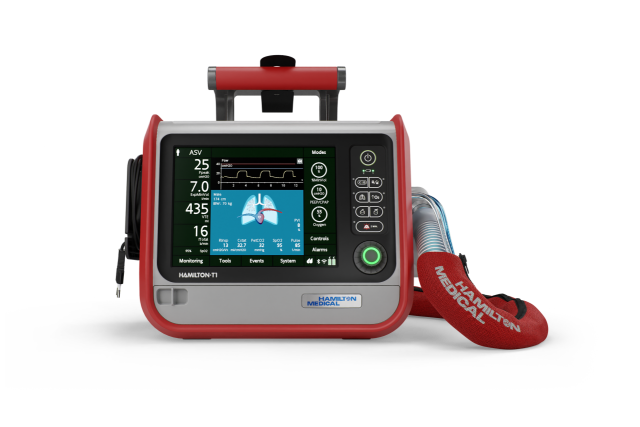
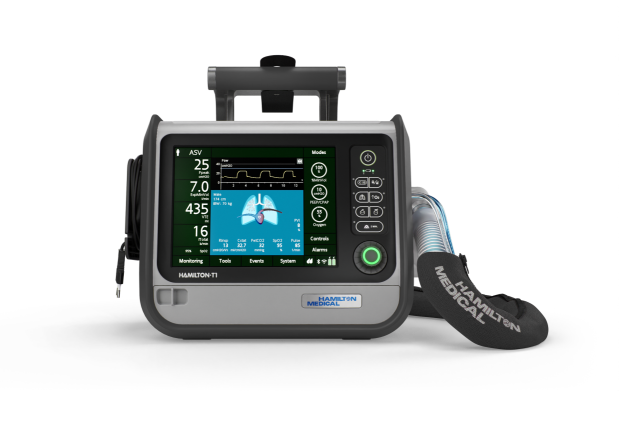
O2 assist is available as an option on all HAMILTON-T1 devices.

Footnotes

  • A. Except CPR and INTELLiVENT®-ASV®

References

  1. 1. Roca O, Caritg O, Santafé M, et al. Closed-loop oxygen control improves oxygen therapy in acute hypoxemic respiratory failure patients under high flow nasal oxygen: a randomized cross-over study (the HILOOP study). Crit Care. 2022;26(1):108. Published 2022 Apr 14. doi:10.1186/s13054-022-03970-w
  2. 2. Atakul G, Ceylan G, Sandal O, et al. Closed-loop oxygen usage during invasive mechanical ventilation of pediatric patients (CLOUDIMPP): a randomized controlled cross-over study. Front Med (Lausanne). 2024;11:1426969. Published 2024 Sep 10. doi:10.3389/fmed.2024.1426969
  3. 3. Sandal O, Ceylan G, Topal S, et al. Closed-loop oxygen control improves oxygenation in pediatric patients under high-flow nasal oxygen-A randomized crossover study. Front Med (Lausanne). 2022;9:1046902. Published 2022 Nov 16. doi:10.3389/fmed.2022.1046902
  4. 4. Erickson EN, Bhakta RT, Tristram D, Mendez MD. Pediatric Bronchiolitis. In: StatPearls. Treasure Island (FL): StatPearls Publishing; January 12, 2025.
  5. 5. Soydan E, Ceylan G, Topal S, et al. Automated closed-loop FiO2 titration increases the percentage of time spent in optimal zones of oxygen saturation in pediatric patients-A randomized crossover clinical trial. Front Med (Lausanne). 2022;9:969218. Published 2022 Aug 25. doi:10.3389/fmed.2022.969218
  6. 6. Mól CG, Vieira AGDS, Garcia BMSP, et al. Closed-loop oxygen control for critically ill patients--A systematic review and meta-analysis. PLoS One. 2024;19(6):e0304745. Published 2024 Jun 12. doi:10.1371/journal.pone.0304745

Closed-loop oxygen control improves oxygen therapy in acute hypoxemic respiratory failure patients under high flow nasal oxygen: a randomized cross-over study (the HILOOP study).

Roca O, Caritg O, Santafé M, et al. Closed-loop oxygen control improves oxygen therapy in acute hypoxemic respiratory failure patients under high flow nasal oxygen: a randomized cross-over study (the HILOOP study). Crit Care. 2022;26(1):108. Published 2022 Apr 14. doi:10.1186/s13054-022-03970-w

BACKGROUND We aimed to assess the efficacy of a closed-loop oxygen control in critically ill patients with moderate to severe acute hypoxemic respiratory failure (AHRF) treated with high flow nasal oxygen (HFNO). METHODS In this single-centre, single-blinded, randomized crossover study, adult patients with moderate to severe AHRF who were treated with HFNO (flow rate ≥ 40 L/min with FiO2 ≥ 0.30) were randomly assigned to start with a 4-h period of closed-loop oxygen control or 4-h period of manual oxygen titration, after which each patient was switched to the alternate therapy. The primary outcome was the percentage of time spent in the individualized optimal SpO2 range. RESULTS Forty-five patients were included. Patients spent more time in the optimal SpO2 range with closed-loop oxygen control compared with manual titrations of oxygen (96.5 [93.5 to 98.9] % vs. 89 [77.4 to 95.9] %; p < 0.0001) (difference estimate, 10.4 (95% confidence interval 5.2 to 17.2). Patients spent less time in the suboptimal range during closed-loop oxygen control, both above and below the cut-offs of the optimal SpO2 range, and less time above the suboptimal range. Fewer number of manual adjustments per hour were needed with closed-loop oxygen control. The number of events of SpO2 < 88% and < 85% were not significantly different between groups. CONCLUSIONS Closed-loop oxygen control improves oxygen administration in patients with moderate-to-severe AHRF treated with HFNO, increasing the percentage of time in the optimal oxygenation range and decreasing the workload of healthcare personnel. These results are especially relevant in a context of limited oxygen supply and high medical demand, such as the COVID-19 pandemic. Trial registration The HILOOP study was registered at www. CLINICALTRIALS gov under the identifier NCT04965844 .

Closed-loop oxygen usage during invasive mechanical ventilation of pediatric patients (CLOUDIMPP): a randomized controlled cross-over study.

Atakul G, Ceylan G, Sandal O, et al. Closed-loop oxygen usage during invasive mechanical ventilation of pediatric patients (CLOUDIMPP): a randomized controlled cross-over study. Front Med (Lausanne). 2024;11:1426969. Published 2024 Sep 10. doi:10.3389/fmed.2024.1426969

BACKGROUND The aim of this study is the evaluation of a closed-loop oxygen control system in pediatric patients undergoing invasive mechanical ventilation (IMV). METHODS Cross-over, multicenter, randomized, single-blind clinical trial. Patients between the ages of 1 month and 18 years who were undergoing IMV therapy for acute hypoxemic respiratory failure (AHRF) were assigned at random to either begin with a 2-hour period of closed-loop oxygen control or manual oxygen titrations. By using closed-loop oxygen control, the patients' SpO2 levels were maintained within a predetermined target range by the automated adjustment of the FiO2. During the manual oxygen titration phase of the trial, healthcare professionals at the bedside made manual changes to the FiO2, while maintaining the same target range for SpO2. Following either period, the patient transitioned to the alternative therapy. The outcomes were the percentage of time spent in predefined SpO2 ranges ±2% (primary), FiO2, total oxygen use, and the number of manual adjustments. FINDINGS The median age of included 33 patients was 17 (13-55.5) months. In contrast to manual oxygen titrations, patients spent a greater proportion of time within a predefined optimal SpO2 range when the closed-loop oxygen controller was enabled (95.7% [IQR 92.1-100%] vs. 65.6% [IQR 41.6-82.5%]), mean difference 33.4% [95%-CI 24.5-42%]; P < 0.001). Median FiO2 was lower (32.1% [IQR 23.9-54.1%] vs. 40.6% [IQR 31.1-62.8%]; P < 0.001) similar to total oxygen use (19.8 L/h [IQR 4.6-64.8] vs. 39.4 L/h [IQR 16.8-79]; P < 0.001); however, median SpO2/FiO2 was higher (329.4 [IQR 180-411.1] vs. 246.7 [IQR 151.1-320.5]; P < 0.001) with closed-loop oxygen control. With closed-loop oxygen control, the median number of manual adjustments reduced (0.0 [IQR 0.0-0.0] vs. 1 [IQR 0.0-2.2]; P < 0.001). CONCLUSION Closed-loop oxygen control enhances oxygen therapy in pediatric patients undergoing IMV for AHRF, potentially leading to more efficient utilization of oxygen. This technology also decreases the necessity for manual adjustments, which could reduce the workloads of healthcare providers. CLINICAL TRIAL REGISTRATION This research has been submitted to ClinicalTrials.gov (NCT05714527).

Closed-loop oxygen control improves oxygenation in pediatric patients under high-flow nasal oxygen-A randomized crossover study.

Sandal O, Ceylan G, Topal S, et al. Closed-loop oxygen control improves oxygenation in pediatric patients under high-flow nasal oxygen-A randomized crossover study. Front Med (Lausanne). 2022;9:1046902. Published 2022 Nov 16. doi:10.3389/fmed.2022.1046902

BACKGROUND We assessed the effect of a closed-loop oxygen control system in pediatric patients receiving high-flow nasal oxygen therapy (HFNO). METHODS A multicentre, single-blinded, randomized, and cross-over study. Patients aged between 1 month and 18 years of age receiving HFNO for acute hypoxemic respiratory failure (AHRF) were randomly assigned to start with a 2-h period of closed-loop oxygen control or a 2-h period of manual oxygen titrations, after which the patient switched to the alternative therapy. The endpoints were the percentage of time spent in predefined SpO2 ranges (primary), FiO2, SpO2/FiO2, and the number of manual adjustments. FINDINGS We included 23 patients, aged a median of 18 (3-26) months. Patients spent more time in a predefined optimal SpO2 range when the closed-loop oxygen controller was activated compared to manual oxygen titrations [91⋅3% (IQR 78⋅4-95⋅1%) vs. 63⋅0% (IQR 44⋅4-70⋅7%)], mean difference [28⋅2% (95%-CI 20⋅6-37⋅8%); P < 0.001]. Median FiO2 was lower [33⋅3% (IQR 26⋅6-44⋅6%) vs. 42⋅6% (IQR 33⋅6-49⋅9%); P = 0.07], but median SpO2/FiO2 was higher [289 (IQR 207-348) vs. 194 (IQR 98-317); P = 0.023] with closed-loop oxygen control. The median number of manual adjustments was lower with closed-loop oxygen control [0⋅0 (IQR 0⋅0-0⋅0) vs. 0⋅5 (IQR 0⋅0-1⋅0); P < 0.001]. CONCLUSION Closed-loop oxygen control improves oxygenation therapy in pediatric patients receiving HFNO for AHRF and potentially leads to more efficient oxygen use. It reduces the number of manual adjustments, which may translate into decreased workloads of healthcare providers. CLINICAL TRIAL REGISTRATION [www.ClinicalTrials.gov], identifier [NCT05032365].

Pediatric Bronchiolitis

Erickson EN, Bhakta RT, Tristram D, Mendez MD. Pediatric Bronchiolitis. In: StatPearls. Treasure Island (FL): StatPearls Publishing; January 12, 2025.

Pediatric bronchiolitis is a lower respiratory tract infection primarily caused by viral pathogens. This condition is among the most common illnesses in children aged 2 or younger and the leading cause of hospitalization in this age group. Bronchiolitis is primarily a clinical diagnosis, but viral testing may be necessary in severe cases requiring hospitalization. Identifying the specific viral cause can support infection control measures and prevent nosocomial spread. While most hospitalized infants have identifiable risk factors that increase their susceptibility, otherwise healthy infants and older children can also develop severe infections that necessitate hospitalization. In severe cases, infants with significant respiratory compromise may require mechanical ventilation. Respiratory syncytial virus (RSV) is the primary cause of bronchiolitis, although nearly all respiratory viruses can cause the condition in infants and young children. RSV bronchiolitis significantly contributes to the global disease burden, with approximately 33 million cases annually, 95% of which occur in low-income countries. Recent estimates indicate that around 3.6 million infants are hospitalized for bronchiolitis each year, with up to 118,000 deaths attributed to the condition or related complications. Unfortunately, half of these deaths occur within the first 6 months of life, and 97% of all infant deaths from bronchiolitis are reported in low- and middle-income countries.

Automated closed-loop FiO2 titration increases the percentage of time spent in optimal zones of oxygen saturation in pediatric patients-A randomized crossover clinical trial.

Soydan E, Ceylan G, Topal S, et al. Automated closed-loop FiO2 titration increases the percentage of time spent in optimal zones of oxygen saturation in pediatric patients-A randomized crossover clinical trial. Front Med (Lausanne). 2022;9:969218. Published 2022 Aug 25. doi:10.3389/fmed.2022.969218

Introduction We aimed to compare automated ventilation with closed-loop control of the fraction of inspired oxygen (FiO2) to automated ventilation with manual titrations of the FiO2 with respect to time spent in predefined pulse oximetry (SpO2) zones in pediatric critically ill patients. Methods This was a randomized crossover clinical trial comparing Adaptive Support Ventilation (ASV) 1.1 with use of a closed-loop FiO2 system vs. ASV 1.1 with manual FiO2 titrations. The primary endpoint was the percentage of time spent in optimal SpO2 zones. Secondary endpoints included the percentage of time spent in acceptable, suboptimal and unacceptable SpO2 zones, and the total number of FiO2 changes per patient. Results We included 30 children with a median age of 21 (11-48) months; 12 (40%) children had pediatric ARDS. The percentage of time spent in optimal SpO2 zones increased with use of the closed-loop FiO2 controller vs. manual oxygen control [96.1 (93.7-98.6) vs. 78.4 (51.3-94.8); P < 0.001]. The percentage of time spent in acceptable, suboptimal and unacceptable zones decreased. Findings were similar with the use of closed-loop FiO2 controller compared to manual titration in patients with ARDS [95.9 (81.6-98.8) vs. 78 (49.5-94.8) %; P = 0.027]. The total number of closed-loop FiO2 changes per patient was 52 (11.8-67), vs. the number of manual changes 1 (0-2), (P < 0.001). Conclusion In this randomized crossover trial in pediatric critically ill patients under invasive ventilation with ASV, use of a closed-loop control of FiO2 titration increased the percentage of time spent within in optimal SpO2 zones, and increased the total number of FiO2 changes per patient. Clinical trial registration ClinicalTrials.gov, identifier: NCT04568642.

Closed-loop oxygen control for critically ill patients--A systematic review and meta-analysis.

Mól CG, Vieira AGDS, Garcia BMSP, et al. Closed-loop oxygen control for critically ill patients--A systematic review and meta-analysis. PLoS One. 2024;19(6):e0304745. Published 2024 Jun 12. doi:10.1371/journal.pone.0304745

BACKGROUNDThe impact of closed-loop control systems to titrate oxygen flow in critically ill patients, including their effectiveness, efficacy, workload and safety, remains unclear. This systematic review investigated the utilization of closed-loop oxygen systems for critically ill patients in comparison to manual oxygen titration systems focusing on these topics.METHODS AND FINDINGSA search was conducted across several databases including MEDLINE, CENTRAL, EMBASE, LILACS, CINAHL, LOVE, ClinicalTrials.gov, and the World Health Organization on March 3, 2022, with subsequent updates made on June 27, 2023. Evidence databases were searched for randomized clinical parallel or crossover studies investigating closed-loop oxygen control systems for critically ill patients. This systematic review and meta-analysis was performed following the Preferred Reporting Items for Systematic Review and Meta-analysis guidelines. The analysis was conducted using Review Manager software, adopting the mean difference or standardized mean difference with a 95% confidence interval (95% CI) for continuous variables or risk ratio with 95% CI for dichotomous outcomes. The main outcome of interest was the percentage of time spent in the peripheral arterial oxygen saturation target. Secondary outcomes included time for supplemental oxygen weaning, length of stay, mortality, costs, adverse events, and workload of healthcare professional. A total of 37 records from 21 studies were included in this review with a total of 1,577 participants. Compared with manual oxygen titration, closed-loop oxygen control systems increased the percentage of time in the prescribed SpO2 target, mean difference (MD) 25.47; 95% CI 19.7, 30.0], with moderate certainty of evidence. Current evidence also shows that closed-loop oxygen control systems have the potential to reduce the percentage of time with hypoxemia (MD -0.98; 95% CI -1.68, -0.27) and healthcare workload (MD -4.94; 95% CI -7.28, -2.61) with low certainty of evidence.CONCLUSIONClosed-loop oxygen control systems increase the percentage of time in the preferred SpO2 targets and may reduce healthcare workload.TRIAL REGISTRATIONPROSPERO: CRD42022306033.