

Atrás

Últimos hallazgos sobre la presión de trabajo

Artículo

Autor: Jean-Michel Arnal, Hôpital Sainte Musse, Toulon, Francia

Fecha: 18.09.2025

La presión de trabajo, (ΔP), tun marcador que se utiliza en sustitución de la distensión pulmonar, se está consolidando como el parámetro ventilatorio que mejor permite predecir los resultados de los pacientes con ventilación mecánica.

¿Qué sabemos hasta ahora?

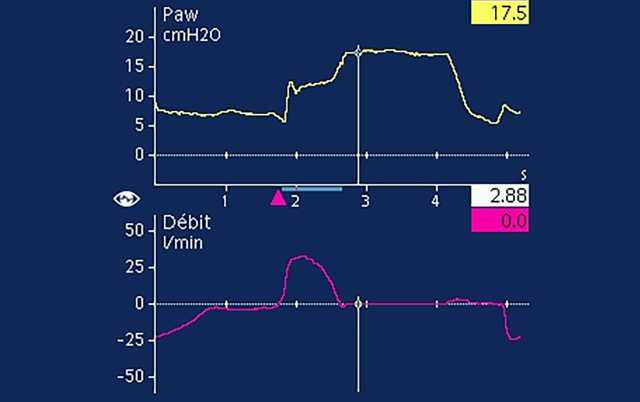
El parámetro ΔP refleja el cambio en la presión elástica aplicado al sistema respiratorio durante cada respiración mecánica y se calcula como la diferencia entre la presión meseta (Pmeseta) y la PEEP total, para lo que se emplea la oclusión al final de la inspiración y de la espiración, respectivamente (Chen L, Jonkman A, Pereira SM, Lu C, Brochard L. Driving pressure monitoring during acute respiratory failure in 2020. Curr Opin Crit Care. 2021;27(3):303-310. doi:10.1097/MCC.00000000000008271). Numerosos estudios retrospectivos realizados en pacientes con pulmones normales (Neto AS, Hemmes SN, Barbas CS, et al. Association between driving pressure and development of postoperative pulmonary complications in patients undergoing mechanical ventilation for general anaesthesia: a meta-analysis of individual patient data [published correction appears in Lancet Respir Med. 2016 Jun;4(6):e34]. Lancet Respir Med. 2016;4(4):272-280. doi:10.1016/S2213-2600(16)00057-62, Roca O, Peñuelas O, Muriel A, et al. Driving Pressure Is a Risk Factor for ARDS in Mechanically Ventilated Subjects Without ARDS. Respir Care. 2021;66(10):1505-1513. doi:10.4187/respcare.085873), ARDS (Amato MB, Meade MO, Slutsky AS, et al. Driving pressure and survival in the acute respiratory distress syndrome. N Engl J Med. 2015;372(8):747-755. doi:10.1056/NEJMsa14106394, Andrianopoulos I, Kremmydas P, Papoutsi E, et al. Association Between Driving Pressure and Subsequent Development of Acute Kidney Injury in Acute Respiratory Distress Syndrome. Crit Care Med. Published online July 2, 2025. doi:10.1097/CCM.00000000000067725) y lesión cerebral (Wahlster S, Sharma M, Taran S, et al. Associations between Driving Pressure and Clinical Outcomes in Acute Brain Injury: A Subanalysis of ENIO. Am J Respir Crit Care Med. 2024;209(11):1400-1404. doi:10.1164/rccm.202402-0402LE6) han demostrado una asociación significativa entre una presión de trabajo (ΔP) elevada y la mortalidad en la UCI, con un umbral frecuentemente referido de 14 cmH2O (Bellani G, Laffey JG, Pham T, et al. Epidemiology, Patterns of Care, and Mortality for Patients With Acute Respiratory Distress Syndrome in Intensive Care Units in 50 Countries [published correction appears in JAMA. 2016 Jul 19;316(3):350] [published correction appears in JAMA. 2016 Jul 19;316(3):350]. JAMA. 2016;315(8):788-800. doi:10.1001/jama.2016.02917). Las directrices actuales recomiendan mantener una ΔP por debajo de 15 cmH2O en pacientes con SDRA (Grieco DL, Chen L, Dres M, Brochard L. Should we use driving pressure to set tidal volume?. Curr Opin Crit Care. 2017;23(1):38-44. doi:10.1097/MCC.00000000000003778). Hasta la fecha, la mayoría de las pruebas obtenidas proceden de pacientes con ventilación pasiva. Dos estudios recientes diseñados para investigar el valor pronóstico de ΔP en diferentes grupos de edad y en pacientes con ventilación asistida están contribuyendo a mejorar nuestra comprensión de este parámetro.

Efectos de la presión de trabajo asociados a la edad

La Dra. Papoutsi y sus colegas (Papoutsi E, Gkirgkiris K, Tsolaki V, et al. Association Between Baseline Driving Pressure and Mortality in Very Old Patients with Acute Respiratory Distress Syndrome. Am J Respir Crit Care Med. 2024;210(11):1329-1337. doi:10.1164/rccm.202401-0049OC9) llevaron a cabo un análisis retrospectivo de datos de pacientes individuales obtenidos de siete ensayos controlados aleatorizados realizados en Norteamérica y de una cohorte nacional de pacientes griegos con SDRA asociada a COVID-19. Mediante el uso de modelos de regresión logística y de Cox, los investigadores analizaron cómo influye la edad en la asociación entre la presión de trabajo (ΔP) y la mortalidad: En 4567 pacientes con SDRA, se observó una interacción significativa entre la edad (como una variable continua) y ΔP (P = 0,01). La diferencia en el valor de ΔP entre los supervivientes y los no supervivientes fue superior en los pacientes mayores de 80 años (P = 0,03) y en aquellos entre 65 y 79 años (P = 0,01), en comparación con los pacientes menores de 65 años. Cabe destacar que un umbral de ΔP de 11 cmH2O se asoció con un aumento de la mortalidad en los grupos de mayor edad (>65 años), pero no en los pacientes más jóvenes. Estos hallazgos se confirmaron en la cohorte independiente de pacientes griegos con SDRA asociada a COVID-19. Los investigadores plantean la hipótesis de que los cambios relacionados con la edad, como el aumento de la heterogeneidad pulmonar (p. ej., enfisema senil, cierre de las vías aéreas), una respuesta inmunitaria deficiente y una capacidad de curación reducida, pueden acentuar la predisposición a desarrollar una lesión pulmonar inducida por el respirador (VILI). El estudio respalda un enfoque específico basado en la edad para la ventilación mecánica y recomienda un umbral de ΔP más bajo (≤11 cmH2O) en pacientes de edad muy avanzada. Estos hallazgos han de validarse en ensayos controlados aleatorizados y controlados (Pettenuzzo T, Navalesi P. Acute Respiratory Distress Syndrome: No Disease for Old Men. Am J Respir Crit Care Med. 2024;210(11):1289-1291. doi:10.1164/rccm.202410-1974ED10).

Presión de trabajo en la ventilación asistida

En contextos distintos de la ventilación pasiva, la distensión pulmonar en modos de ventilación asistida puede resultar de la combinación de la presión inspiratoria generada por el paciente y la presión positiva administrada por el respirador. Por ello, es vital monitorizar la presión total aplicada al sistema respiratorio. La Dra. Grassi y sus colegas (Grassi A, Bianchi I, Teggia Droghi M, et al. Increased Driving Pressure During Assisted Ventilation for Hypoxemic Respiratory Failure Is Associated with Lower ICU Survival: The ICEBERG Study. Am J Respir Crit Care Med. Published online June 20, 2025. doi:10.1164/rccm.202411-2146OC11) llevaron a cabo un estudio de observación prospectivo multicéntrico en 16 UCI de nueve países, en el que participaron 298 pacientes con insuficiencia respiratoria hipoxémica aguda. La ΔPstat (Pmeseta – PEEP) y la presión de trabajo transpulmonar dinámica (ΔPL,dyn), calculada como [(Ppico – PEEP) – ⅔ × ΔPocc], se midieron durante el último día de ventilación controlada y durante las primeras 48 horas de ventilación asistida.
La ΔPstat medida durante la ventilación asistida fue significativamente mayor en los pacientes no supervivientes (P <0,001), a pesar de presentar volúmenes tidales similares, lo que es indicativo de una peor compliance pulmonar. De manera similar, la ΔPL,dyn fue mayor en los pacientes no supervivientes (P <0,001) y la mortalidad aumentó progresivamente en los cuartiles de ΔPstat y ΔPL,dyn (P = 0,011 y P <0,001, respectivamente).

¿Y qué sucede con los volúmenes tidales?

Cabe destacar que los volúmenes tidales se mantuvieron dentro de los límites de protección (<8 ml/kg) y no estuvieron asociados a los resultados, lo que pone de manifiesto que es la deformación pulmonar inducida por el volumen tidal, más que el propio volumen tidal, lo que contribuye al desarrollo de una lesión. Las mediciones del esfuerzo respiratorio (Pmus y PMI derivados de ΔPocc) no se asociaron a los resultados, lo que sugiere que un esfuerzo respiratorio elevado solo puede ser perjudicial si este da lugar a presiones de distensión excesivas.

Conclusión

Este estudio confirma la viabilidad y la relevancia clínica de la medición de ΔPstat y ΔPL,dyn durante la ventilación asistida, y subraya su posible función como objetivos terapéuticos en futuros ensayos diseñados para optimizar las estrategias de protección fuera de la fase pasiva.

Notas al pie

Referencias

  1. 1. Chen L, Jonkman A, Pereira SM, Lu C, Brochard L. Driving pressure monitoring during acute respiratory failure in 2020. Curr Opin Crit Care. 2021;27(3):303-310. doi:10.1097/MCC.0000000000000827
  2. 2. Neto AS, Hemmes SN, Barbas CS, et al. Association between driving pressure and development of postoperative pulmonary complications in patients undergoing mechanical ventilation for general anaesthesia: a meta-analysis of individual patient data [published correction appears in Lancet Respir Med. 2016 Jun;4(6):e34]. Lancet Respir Med. 2016;4(4):272-280. doi:10.1016/S2213-2600(16)00057-6
  3. 3. Roca O, Peñuelas O, Muriel A, et al. Driving Pressure Is a Risk Factor for ARDS in Mechanically Ventilated Subjects Without ARDS. Respir Care. 2021;66(10):1505-1513. doi:10.4187/respcare.08587
  4. 4. Amato MB, Meade MO, Slutsky AS, et al. Driving pressure and survival in the acute respiratory distress syndrome. N Engl J Med. 2015;372(8):747-755. doi:10.1056/NEJMsa1410639
  5. 5. Andrianopoulos I, Kremmydas P, Papoutsi E, et al. Association Between Driving Pressure and Subsequent Development of Acute Kidney Injury in Acute Respiratory Distress Syndrome. Crit Care Med. Published online July 2, 2025. doi:10.1097/CCM.0000000000006772
  6. 6. Wahlster S, Sharma M, Taran S, et al. Associations between Driving Pressure and Clinical Outcomes in Acute Brain Injury: A Subanalysis of ENIO. Am J Respir Crit Care Med. 2024;209(11):1400-1404. doi:10.1164/rccm.202402-0402LE
  7. 7. Bellani G, Laffey JG, Pham T, et al. Epidemiology, Patterns of Care, and Mortality for Patients With Acute Respiratory Distress Syndrome in Intensive Care Units in 50 Countries [published correction appears in JAMA. 2016 Jul 19;316(3):350] [published correction appears in JAMA. 2016 Jul 19;316(3):350]. JAMA. 2016;315(8):788-800. doi:10.1001/jama.2016.0291
  8. 8. Grieco DL, Chen L, Dres M, Brochard L. Should we use driving pressure to set tidal volume?. Curr Opin Crit Care. 2017;23(1):38-44. doi:10.1097/MCC.0000000000000377
  9. 9. Papoutsi E, Gkirgkiris K, Tsolaki V, et al. Association Between Baseline Driving Pressure and Mortality in Very Old Patients with Acute Respiratory Distress Syndrome. Am J Respir Crit Care Med. 2024;210(11):1329-1337. doi:10.1164/rccm.202401-0049OC
  10. 10. Pettenuzzo T, Navalesi P. Acute Respiratory Distress Syndrome: No Disease for Old Men. Am J Respir Crit Care Med. 2024;210(11):1289-1291. doi:10.1164/rccm.202410-1974ED
  11. 11. Grassi A, Bianchi I, Teggia Droghi M, et al. Increased Driving Pressure During Assisted Ventilation for Hypoxemic Respiratory Failure Is Associated with Lower ICU Survival: The ICEBERG Study. Am J Respir Crit Care Med. Published online June 20, 2025. doi:10.1164/rccm.202411-2146OC
Driving pressure monitoring during acute respiratory failure in 2020.

Chen L, Jonkman A, Pereira SM, Lu C, Brochard L. Driving pressure monitoring during acute respiratory failure in 2020. Curr Opin Crit Care. 2021;27(3):303-310. doi:10.1097/MCC.0000000000000827

PURPOSE OF REVIEW Assess the most recent studies using driving pressure (DP) as a monitoring technique under mechanical ventilation and describe the technical challenges associated with its measurement. RECENT FINDINGS DP is consistently associated with survival in acute respiratory failure and acute respiratory distress syndrome (ARDS) and can detect patients at higher risk of ventilator-induced lung injury. Its measurement can be challenged by leaks and ventilator dyssynchrony, but is also feasible under pressure support ventilation. Interestingly, an aggregated summary of published results suggests that its level is on average slightly lower in patients with coronavirus disease-19 induced ARDS than in classical ARDS. SUMMARY The DP is easy to obtain and should be incorporated as a minimal monitoring technique under mechanical ventilation.

Association between driving pressure and development of postoperative pulmonary complications in patients undergoing mechanical ventilation for general anaesthesia: a meta-analysis of individual patient data.

Neto AS, Hemmes SN, Barbas CS, et al. Association between driving pressure and development of postoperative pulmonary complications in patients undergoing mechanical ventilation for general anaesthesia: a meta-analysis of individual patient data [published correction appears in Lancet Respir Med. 2016 Jun;4(6):e34]. Lancet Respir Med. 2016;4(4):272-280. doi:10.1016/S2213-2600(16)00057-6

BACKGROUND Protective mechanical ventilation strategies using low tidal volume or high levels of positive end-expiratory pressure (PEEP) improve outcomes for patients who have had surgery. The role of the driving pressure, which is the difference between the plateau pressure and the level of positive end-expiratory pressure is not known. We investigated the association of tidal volume, the level of PEEP, and driving pressure during intraoperative ventilation with the development of postoperative pulmonary complications. METHODS We did a meta-analysis of individual patient data from randomised controlled trials of protective ventilation during general anesthaesia for surgery published up to July 30, 2015. The main outcome was development of postoperative pulmonary complications (postoperative lung injury, pulmonary infection, or barotrauma). FINDINGS We included data from 17 randomised controlled trials, including 2250 patients. Multivariate analysis suggested that driving pressure was associated with the development of postoperative pulmonary complications (odds ratio [OR] for one unit increase of driving pressure 1·16, 95% CI 1·13-1·19; p<0·0001), whereas we detected no association for tidal volume (1·05, 0·98-1·13; p=0·179). PEEP did not have a large enough effect in univariate analysis to warrant inclusion in the multivariate analysis. In a mediator analysis, driving pressure was the only significant mediator of the effects of protective ventilation on development of pulmonary complications (p=0·027). In two studies that compared low with high PEEP during low tidal volume ventilation, an increase in the level of PEEP that resulted in an increase in driving pressure was associated with more postoperative pulmonary complications (OR 3·11, 95% CI 1·39-6·96; p=0·006). INTERPRETATION In patients having surgery, intraoperative high driving pressure and changes in the level of PEEP that result in an increase of driving pressure are associated with more postoperative pulmonary complications. However, a randomised controlled trial comparing ventilation based on driving pressure with usual care is needed to confirm these findings. FUNDING None.

Driving Pressure Is a Risk Factor for ARDS in Mechanically Ventilated Subjects Without ARDS.

Roca O, Peñuelas O, Muriel A, et al. Driving Pressure Is a Risk Factor for ARDS in Mechanically Ventilated Subjects Without ARDS. Respir Care. 2021;66(10):1505-1513. doi:10.4187/respcare.08587

BACKGROUND Driving pressure (ΔP) has been described as a risk factor for mortality in patients with ARDS. However, the role of ΔP in the outcome of patients without ARDS and on mechanical ventilation has received less attention. Our objective was to evaluate the association between ΔP on the first day of mechanical ventilation with the development of ARDS. METHODS This was a post hoc analysis of a multicenter, prospective, observational, international study that included subjects who were on mechanical ventilation for > 12 h. Our objective was to evaluate the association between ΔP on the first day of mechanical ventilation with the development of ARDS. To assess the effect of ΔP, a logistic regression analysis was performed when adjusting for other potential risk factors. Validation of the results obtained was performed by using a bootstrap method and by repeating the same analyses at day 2. RESULTS A total of 1,575 subjects were included, of whom 65 (4.1%) developed ARDS. The ΔP was independently associated with ARDS (odds ratio [OR] 1.12, 95% CI 1.07-1.18 for each cm H2O of ΔP increase, P < .001). The same results were observed at day 2 (OR 1.14, 95% CI 1.07-1.21; P < .001) and after bootstrap validation (OR 1.13, 95% CI 1.04-1.22; P < .001). When taking the prevalence of ARDS in the lowest quartile of ΔP (≤9 cm H2O) as a reference, the subjects with ΔP > 12-15 cm H2O and those with ΔP > 15 cm H2O presented a higher probability of ARDS (OR 3.65, 95% CI 1.32-10.04 [P = .01] and OR 7.31, 95% CI, 2.89-18.50 [P < .001], respectively). CONCLUSIONS In the subjects without ARDS, a higher level of ΔP on the first day of mechanical ventilation was associated with later development of ARDS. (ClinicalTrials.gov registration NCT02731898.).

Driving pressure and survival in the acute respiratory distress syndrome.

Amato MB, Meade MO, Slutsky AS, et al. Driving pressure and survival in the acute respiratory distress syndrome. N Engl J Med. 2015;372(8):747-755. doi:10.1056/NEJMsa1410639

BACKGROUND Mechanical-ventilation strategies that use lower end-inspiratory (plateau) airway pressures, lower tidal volumes (VT), and higher positive end-expiratory pressures (PEEPs) can improve survival in patients with the acute respiratory distress syndrome (ARDS), but the relative importance of each of these components is uncertain. Because respiratory-system compliance (CRS) is strongly related to the volume of aerated remaining functional lung during disease (termed functional lung size), we hypothesized that driving pressure (ΔP=VT/CRS), in which VT is intrinsically normalized to functional lung size (instead of predicted lung size in healthy persons), would be an index more strongly associated with survival than VT or PEEP in patients who are not actively breathing. METHODS Using a statistical tool known as multilevel mediation analysis to analyze individual data from 3562 patients with ARDS enrolled in nine previously reported randomized trials, we examined ΔP as an independent variable associated with survival. In the mediation analysis, we estimated the isolated effects of changes in ΔP resulting from randomized ventilator settings while minimizing confounding due to the baseline severity of lung disease. RESULTS Among ventilation variables, ΔP was most strongly associated with survival. A 1-SD increment in ΔP (approximately 7 cm of water) was associated with increased mortality (relative risk, 1.41; 95% confidence interval [CI], 1.31 to 1.51; P<0.001), even in patients receiving "protective" plateau pressures and VT (relative risk, 1.36; 95% CI, 1.17 to 1.58; P<0.001). Individual changes in VT or PEEP after randomization were not independently associated with survival; they were associated only if they were among the changes that led to reductions in ΔP (mediation effects of ΔP, P=0.004 and P=0.001, respectively). CONCLUSIONS We found that ΔP was the ventilation variable that best stratified risk. Decreases in ΔP owing to changes in ventilator settings were strongly associated with increased survival. (Funded by Fundação de Amparo e Pesquisa do Estado de São Paulo and others.).

Association Between Driving Pressure and Subsequent Development of Acute Kidney Injury in Acute Respiratory Distress Syndrome.

Andrianopoulos I, Kremmydas P, Papoutsi E, et al. Association Between Driving Pressure and Subsequent Development of Acute Kidney Injury in Acute Respiratory Distress Syndrome. Crit Care Med. Published online July 2, 2025. doi:10.1097/CCM.0000000000006772

OBJECTIVES Although preclinical evidence indicates that injurious mechanical ventilation may lead to acute kidney injury (AKI), relevant clinical evidence is limited. We aimed to investigate the association of driving pressure (a marker of injurious mechanical ventilation) with subsequent development of AKI in patients with acute respiratory distress syndrome (ARDS). DESIGN Secondary analysis of individual patient-level data from seven ARDS Network and Prevention and Early Treatment of Acute Lung Injury (PETAL) Network randomized controlled clinical trials. SETTING Adult ICUs participating in the ARDS Network and PETAL Network trials. PATIENTS After exclusion of patients with early AKI (i.e., those who met AKI criteria within the first 2 d following ARDS onset), we classified the study population into two groups: "late AKI" and "no AKI." The "late AKI" group included patients who developed AKI more than 2 days but no longer than 7 days following ARDS onset. INTERVENTIONS None. MEASUREMENTS AND MAIN RESULTS Of 5367 patients with ARDS initially enrolled in trials, 2960 patients were included in the main analysis. Late AKI developed in 1000 patients (33.8%). After controlling for confounders, baseline driving pressure was independently associated with development of late AKI (each 1 sd increase in driving pressure was associated with a 35% increase in the odds of late AKI [odds ratio, 1.35; 95% CI, 1.15-1.58]). This result persisted in the sensitivity analysis, which did not exclude patients with early AKI, and in the sensitivity analysis, which included patients who developed AKI later than 7 days following ARDS onset. There was a threshold of driving pressure equal to 15 cm H 2 O for its association with development of late AKI. CONCLUSIONS Driving pressure was associated with subsequent development of AKI in patients with ARDS suggesting that injurious mechanical ventilation may lead to AKI.

Associations between Driving Pressure and Clinical Outcomes in Acute Brain Injury: A Subanalysis of ENIO.

Wahlster S, Sharma M, Taran S, et al. Associations between Driving Pressure and Clinical Outcomes in Acute Brain Injury: A Subanalysis of ENIO. Am J Respir Crit Care Med. 2024;209(11):1400-1404. doi:10.1164/rccm.202402-0402LE

Epidemiology, Patterns of Care, and Mortality for Patients With Acute Respiratory Distress Syndrome in Intensive Care Units in 50 Countries.

Bellani G, Laffey JG, Pham T, et al. Epidemiology, Patterns of Care, and Mortality for Patients With Acute Respiratory Distress Syndrome in Intensive Care Units in 50 Countries [published correction appears in JAMA. 2016 Jul 19;316(3):350] [published correction appears in JAMA. 2016 Jul 19;316(3):350]. JAMA. 2016;315(8):788-800. doi:10.1001/jama.2016.0291

IMPORTANCE Limited information exists about the epidemiology, recognition, management, and outcomes of patients with the acute respiratory distress syndrome (ARDS). OBJECTIVES To evaluate intensive care unit (ICU) incidence and outcome of ARDS and to assess clinician recognition, ventilation management, and use of adjuncts-for example prone positioning-in routine clinical practice for patients fulfilling the ARDS Berlin Definition. DESIGN, SETTING, AND PARTICIPANTS The Large Observational Study to Understand the Global Impact of Severe Acute Respiratory Failure (LUNG SAFE) was an international, multicenter, prospective cohort study of patients undergoing invasive or noninvasive ventilation, conducted during 4 consecutive weeks in the winter of 2014 in a convenience sample of 459 ICUs from 50 countries across 5 continents. EXPOSURES Acute respiratory distress syndrome. MAIN OUTCOMES AND MEASURES The primary outcome was ICU incidence of ARDS. Secondary outcomes included assessment of clinician recognition of ARDS, the application of ventilatory management, the use of adjunctive interventions in routine clinical practice, and clinical outcomes from ARDS. RESULTS Of 29,144 patients admitted to participating ICUs, 3022 (10.4%) fulfilled ARDS criteria. Of these, 2377 patients developed ARDS in the first 48 hours and whose respiratory failure was managed with invasive mechanical ventilation. The period prevalence of mild ARDS was 30.0% (95% CI, 28.2%-31.9%); of moderate ARDS, 46.6% (95% CI, 44.5%-48.6%); and of severe ARDS, 23.4% (95% CI, 21.7%-25.2%). ARDS represented 0.42 cases per ICU bed over 4 weeks and represented 10.4% (95% CI, 10.0%-10.7%) of ICU admissions and 23.4% of patients requiring mechanical ventilation. Clinical recognition of ARDS ranged from 51.3% (95% CI, 47.5%-55.0%) in mild to 78.5% (95% CI, 74.8%-81.8%) in severe ARDS. Less than two-thirds of patients with ARDS received a tidal volume 8 of mL/kg or less of predicted body weight. Plateau pressure was measured in 40.1% (95% CI, 38.2-42.1), whereas 82.6% (95% CI, 81.0%-84.1%) received a positive end-expository pressure (PEEP) of less than 12 cm H2O. Prone positioning was used in 16.3% (95% CI, 13.7%-19.2%) of patients with severe ARDS. Clinician recognition of ARDS was associated with higher PEEP, greater use of neuromuscular blockade, and prone positioning. Hospital mortality was 34.9% (95% CI, 31.4%-38.5%) for those with mild, 40.3% (95% CI, 37.4%-43.3%) for those with moderate, and 46.1% (95% CI, 41.9%-50.4%) for those with severe ARDS. CONCLUSIONS AND RELEVANCE Among ICUs in 50 countries, the period prevalence of ARDS was 10.4% of ICU admissions. This syndrome appeared to be underrecognized and undertreated and associated with a high mortality rate. These findings indicate the potential for improvement in the management of patients with ARDS. TRIAL REGISTRATION clinicaltrials.gov Identifier: NCT02010073.

Should we use driving pressure to set tidal volume?

Grieco DL, Chen L, Dres M, Brochard L. Should we use driving pressure to set tidal volume?. Curr Opin Crit Care. 2017;23(1):38-44. doi:10.1097/MCC.0000000000000377

PURPOSE OF REVIEW Ventilator-induced lung injury (VILI) can occur despite use of tidal volume (VT) limited to 6 ml/kg of predicted body weight, especially in patients with a smaller aerated compartment (i.e. the baby lung) in which, indeed, tidal ventilation takes place. Because respiratory system static compliance (CRS) is mostly affected by the volume of the baby lung, the ratio VT/CRS (i.e. the driving pressure, ΔP) may potentially help tailoring interventions on VT setting. RECENT FINDINGS Driving pressure is the ventilatory variable most strongly associated with changes in survival and has been shown to be the key mediator of the effects of mechanical ventilation on outcome in the acute respiratory distress syndrome. Observational data suggest an increased risk of death for patients with ΔP more than 14 cmH2O, but a well tolerated threshold for this parameter has yet to be identified. Prone position along with simple ventilatory adjustments to facilitate CO2 clearance may help reduce ΔP in isocapnic conditions. The safety and feasibility of low-flow extracorporeal CO2 removal in enhancing further reduction in VT and ΔP are currently being investigated. SUMMARY Driving pressure is a bedside available parameter that may help identify patients prone to develop VILI and at increased risk of death. No study had prospectively evaluated whether interventions on ΔP may provide a relevant clinical benefit, but it appears physiologically sound to try titrating VT to minimize ΔP, especially when it is higher than 14 cmH2O and when it has minimal costs in terms of CO2 clearance.

Association Between Baseline Driving Pressure and Mortality in Very Old Patients with Acute Respiratory Distress Syndrome.

Papoutsi E, Gkirgkiris K, Tsolaki V, et al. Association Between Baseline Driving Pressure and Mortality in Very Old Patients with Acute Respiratory Distress Syndrome. Am J Respir Crit Care Med. 2024;210(11):1329-1337. doi:10.1164/rccm.202401-0049OC

Rationale: Because of the effects of aging on the respiratory system, it is conceivable that the association between driving pressure and mortality depends on age. Objectives: We endeavored to evaluate whether the association between driving pressure and mortality of patients with acute respiratory distress syndrome (ARDS) varies across the adult lifespan, hypothesizing that it is stronger in older, including very old (⩾80 yr), patients. Methods: We performed a secondary analysis of individual patient-level data from seven ARDS Network and PETAL Network randomized controlled trials ("ARDSNet cohort"). We tested our hypothesis in a second, independent, national cohort ("Hellenic cohort"). We performed both binary logistic and Cox regression analyses including the interaction term between age (as a continuous variable) and driving pressure at baseline (i.e., the day of trial enrollment) as the predictor and 90-day mortality as the dependent variable. Measurements and Main Results: On the basis of data from 4,567 patients with ARDS included in the ARDSNet cohort, we found that the effect of driving pressure on mortality depended on age (P = 0.01 for the interaction between age as a continuous variable and driving pressure). The difference in driving pressure between survivors and nonsurvivors significantly changed across the adult lifespan (P < 0.01). In both cohorts, a driving pressure threshold of 11 cm H2O was associated with mortality in very old patients. Conclusions: Data from randomized controlled trials with strict inclusion criteria suggest that the effect of driving pressure on the mortality of patients with ARDS may depend on age. These results may advocate for a personalized age-dependent mechanical ventilation approach.

Acute Respiratory Distress Syndrome: No Disease for Old Men.

Pettenuzzo T, Navalesi P. Acute Respiratory Distress Syndrome: No Disease for Old Men. Am J Respir Crit Care Med. 2024;210(11):1289-1291. doi:10.1164/rccm.202410-1974ED

Increased Driving Pressure During Assisted Ventilation for Hypoxemic Respiratory Failure Is Associated with Lower ICU Survival: The ICEBERG Study.

Grassi A, Bianchi I, Teggia Droghi M, et al. Increased Driving Pressure During Assisted Ventilation for Hypoxemic Respiratory Failure Is Associated with Lower ICU Survival: The ICEBERG Study. Am J Respir Crit Care Med. Published online June 20, 2025. doi:10.1164/rccm.202411-2146OC

RATIONALE Driving pressure is marker of severity and a possible target for lung protection during controlled ventilation, but its value during assisted ventilation is unknown. Inspiratory holds provide an estimate of driving pressure (quasi-static). Expiratory holds provide an estimate of the inspiratory effort, useful to estimate the transpulmonary dynamic driving pressure. OBJECTIVES To assess the correlation between driving pressures measured during assisted ventilation and ICU outcomes. METHODS Multicenter prospective observational study. Patients with acute hypoxemic respiratory failure were enrolled within 48 hours of triggering the ventilator. Respiratory mechanics were measured daily and the variables of interest averaged over the first three days of partial assistance. ICU outcomes were collected until day 90. MEASUREMENTS AND MAIN RESULTS Two-hundred ninety-eight patients from 16 centers were enrolled. Tidal volume, peak airway pressure, positive-end-expiratory-pressure and inspiratory effort during the first three days of assisted ventilation did not differ between survivors and non-survivors. Quasi-static driving pressure and transpulmonary dynamic driving pressure were higher in non-survivors than in survivors (13 [11,14] vs 11 [9,13] cmH2O, p<0.001 and 19 [16,23] vs 16 [13,18] cmH2O, p<0.001, respectively), while compliance normalized to predicted body weight was lower (0.65 [0.54,0.84] vs 0.79 [0.64,0.97] ml/cmH2O/kg, p<0.001). Multivariable analysis confirmed the association with outcome. Over study days, static driving pressure significantly diverged between survivors and non-survivors. CONCLUSIONS During assisted ventilation driving pressure and normalized compliance are associated with ICU outcome, despite some overlap. Albeit our study does not allow to estimate if driving pressure is a marker of severity, or a cause of lung injury, it highlights the potential value of monitoring and targeting it during spontaneous assisted breathing.

Related articles. Get a deeper look