

Voltar

On Mechanical Power - again....

Artigo

Autor: Giorgio A. Iotti, Jean-Pierre Revelly

Data da primeira publicação: 30.08.2023

A recent paper on the practical assessment of the risk of ventilator-induced lung injury (VILI) from mechanical power (MP) brings several important and interesting observations. 

On Mechanical Power - again....

The paper by John Marini and co-authors (Marini JJ, Thornton LT, Rocco PRM, Gattinoni L, Crooke PS. Practical assessment of risk of VILI from ventilating power: a conceptual model. Crit Care. 2023;27(1):157. Published 2023 Apr 20. doi:10.1186/s13054-023-04406-91​), which deals with a conceptual model of the relationship between MP and VILI,, also shows how the relatively novel concept of MP is progressively taking a more distinct and established shape. The observations it contains carry particular significance: Here, the fathers of the MP concept (Luciano Gattinoni is among the co-authors) make important refinements, including some self-criticism, to their initial concept. They discuss the elastic vs. the resistive energy, the concept of threshold pressures for damage, the role of the respiratory rate, and the role of positive end-expiratory pressure (PEEP). They also provide some new nomenclature.

Elastic energy vs. total energy

As already discussed in a previous newsletter, MP corresponds to the energy associated with each inflation multiplied by the respiratory rate per minute. In turn, the total energy corresponding to each breath is divided up into resistive energy and elastic energy. Here, the authors leave out the resistive energy and focus on the elastic one, bearing in mind that only the elastic energy correlates strongly with the stretch and strain that have the potential to damage the lungs under dynamic conditions. Focusing only on the elastic energy greatly simplifies the use of MP for assessing the risk of VILI, because (in contrast to Total MP) Elastic MP is largely independent from the ventilation mode (volume- or pressure-controlled) and can be calculated from simple measurements during passive ventilation. Neglecting the resistive energy might also mark the end of the scientific debate about the method for evaluating Total MP (Buiteman-Kruizinga LA, Schultz MJ. The (Mechanical) Power of (Automated) Ventilation. Respir Care. 2023;68(4):556. doi:10.4187/respcare.105312​, Baedorf-Kassis EN, Brenes Bastos A, Schaefer MS, et al. Response to: The (Mechanical) Power of (Automated) Ventilation. Respir Care. 2023;68(4):557-558. doi:10.4187/respcare.109463​): quite simply, only the Elastic MP (for which the calculation method is unambiguous) is considered as physiologically significant for lung damage.

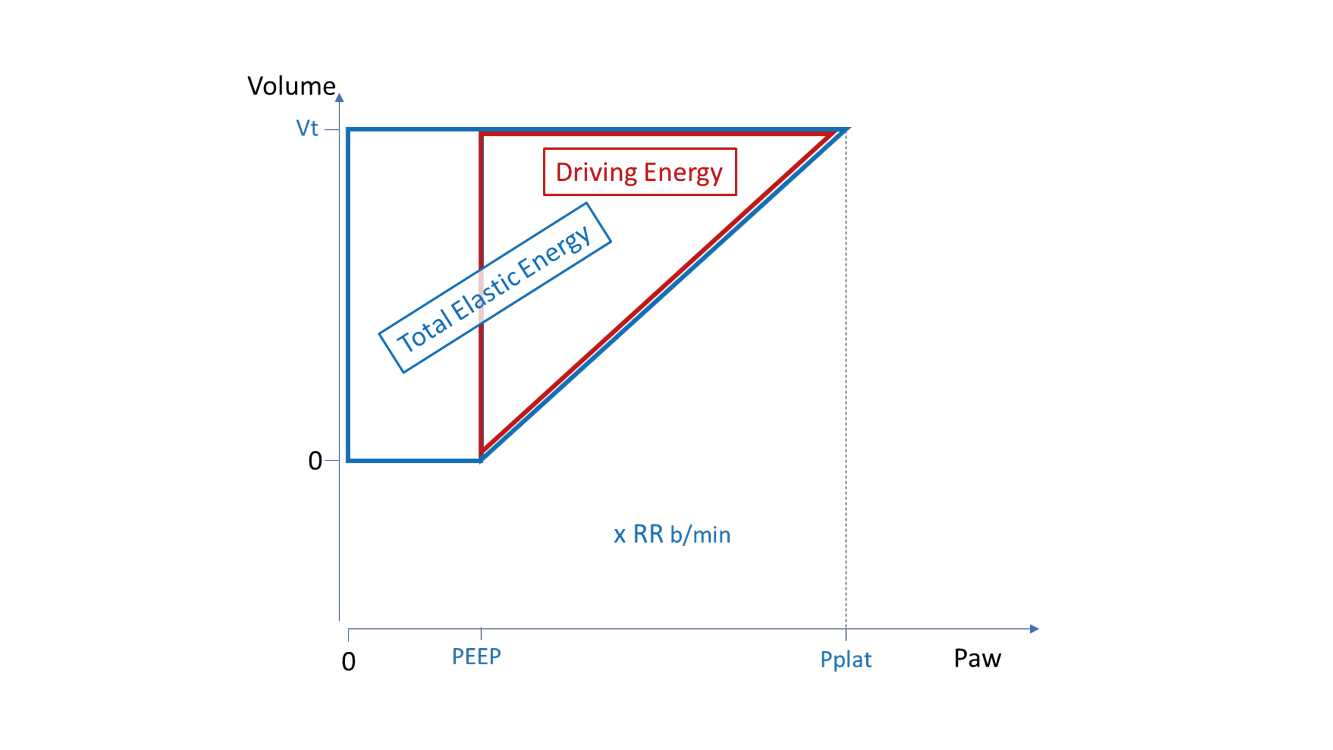
Subsequently, two different kinds of elastic energy are considered (see Figure 1): the “driving energy” associated with the driving pressure (DP) applied above PEEP to develop the tidal volume (VT), and the “total elastic energy” associated with the gauge pressure above atmospheric pressure (i.e., the plateau pressure: Pplat = DP + PEEP) applied to develop the VT. Taking both these types of elastic energy into account should put to rest the scientific debate about whether PEEP should be considered for the calculation of MP (Camporota L, Busana M, Marini JJ, Gattinoni L. The 4DPRR Index and Mechanical Power: A Step Ahead or Four Steps Backward?. Am J Respir Crit Care Med. 2021;204(4):491-492. doi:10.1164/rccm.202104-0923LE4​, Costa ELV, Slutsky AS, Amato MBP. Reply to Camporota et al.: The 4DPRR Index and Mechanical Power: A Step Ahead or 4 Steps Backward?. Am J Respir Crit Care Med. 2021;204(4):492-493. doi:10.1164/rccm.202105-1113LE5​).

A threshold pressure for damage?

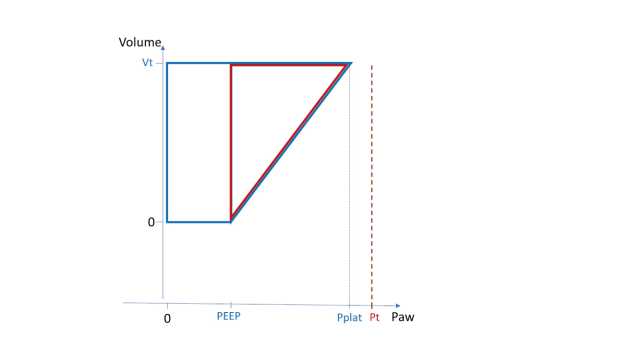
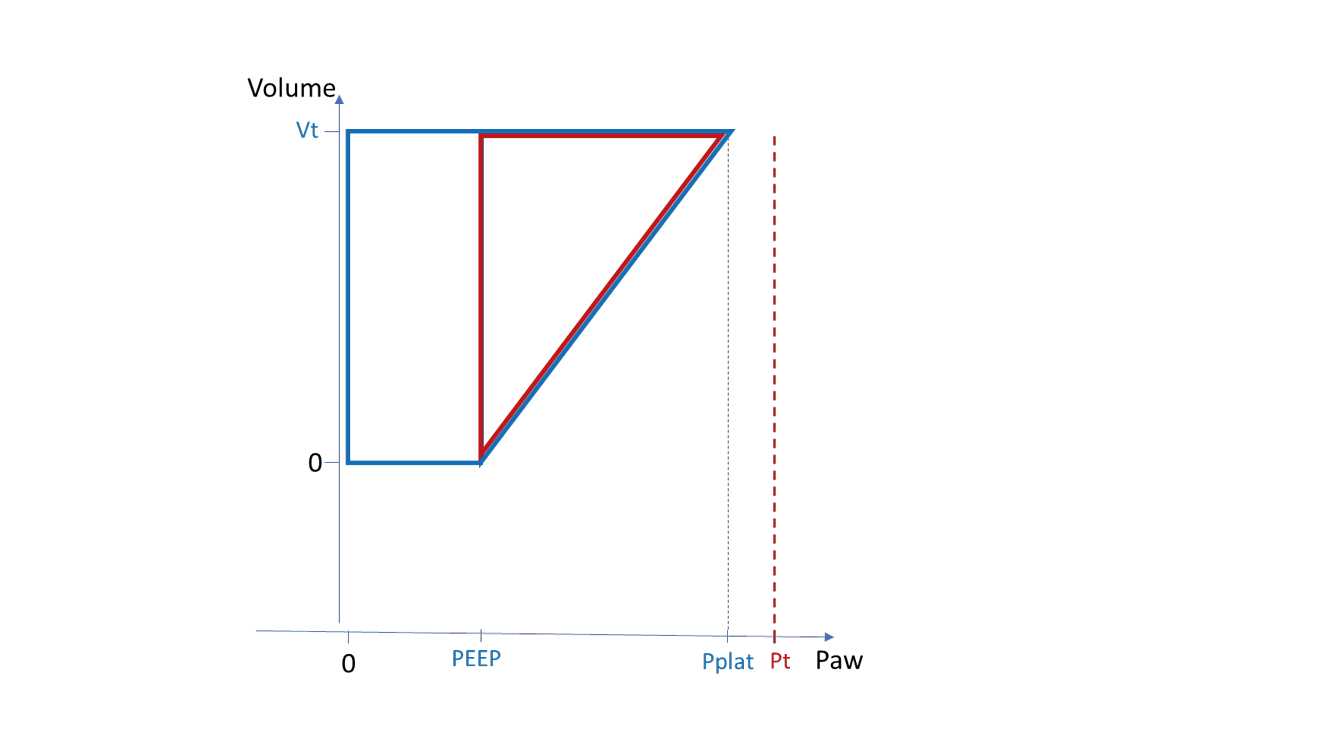
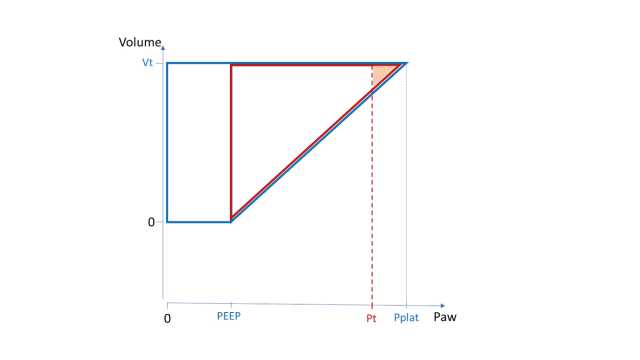
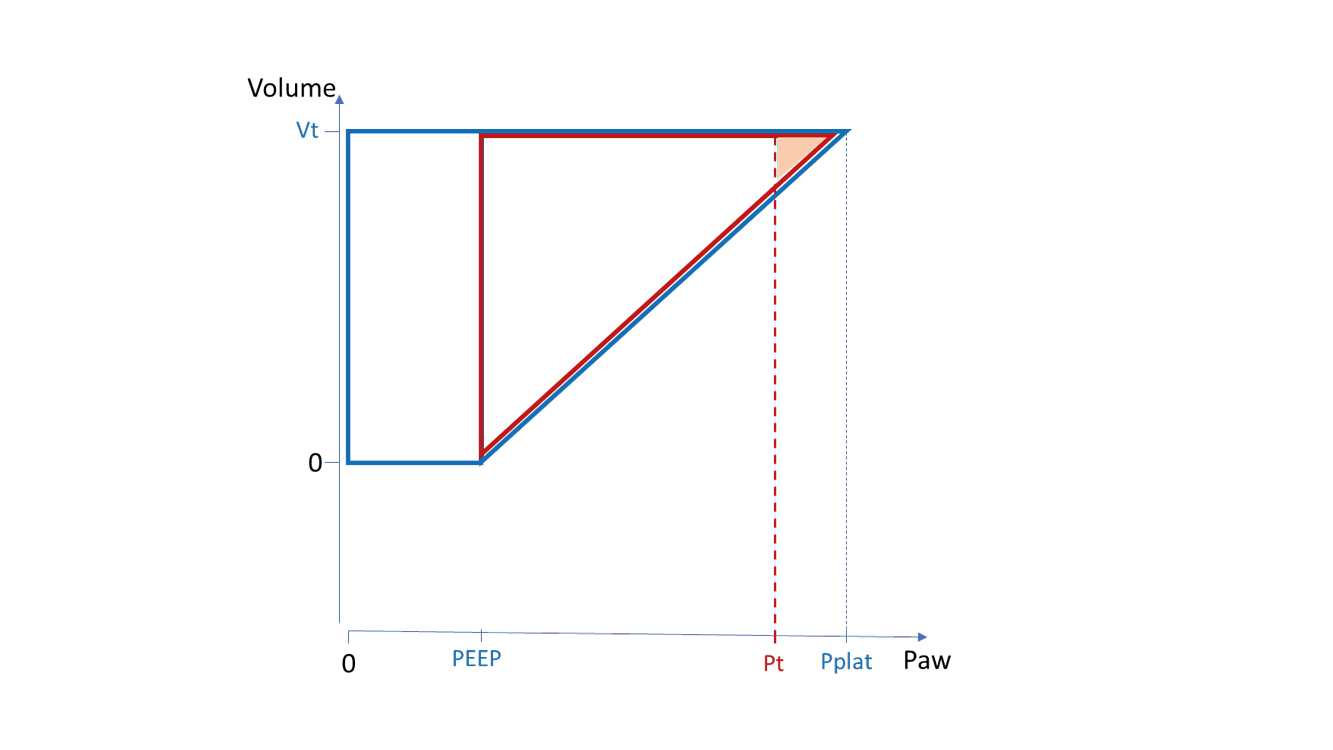
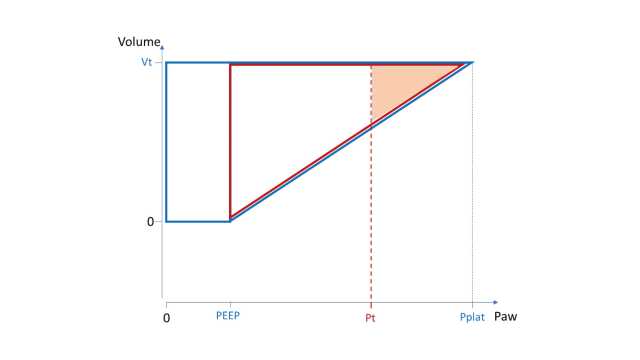
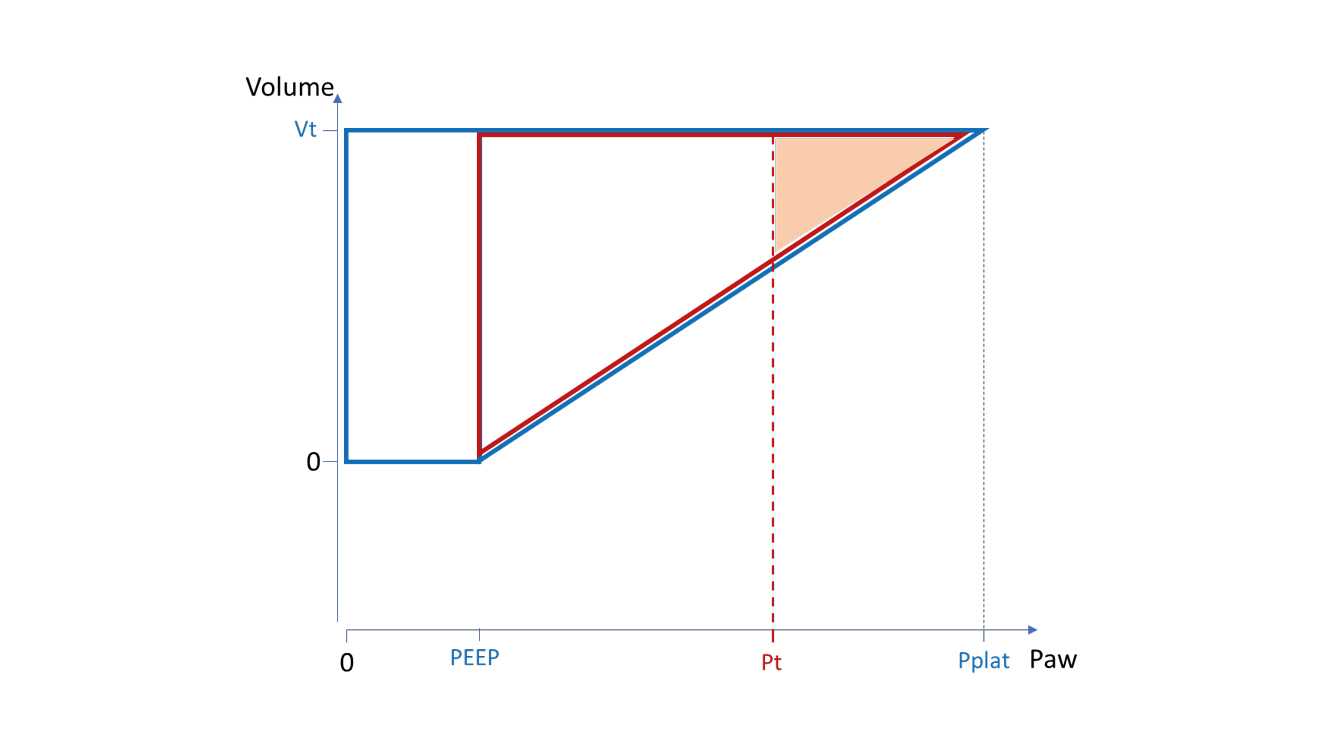
Finally, Marini recommends considering - for both DP and Pplat - a threshold pressure (Pt) for mechanical damage to the lungs. In the diagrams below, Figure 2 represents a case in which ventilation is managed with elastic pressures below the Pt and the theoretical risk of VILI is therefore zero. In this case a high respiratory rate, although associated with a substantial Driving MP and Total Elastic MP, should not increase the risk of VILI. In Figure 3, the elastic pressures at the top of inspiration marginally exceed the Pt; therefore, the associated mild risk of VILI is amplified by an increase in respiratory rate. The results are much worse in the example represented in Figure 4 where a high respiratory rate will considerably contribute to the risk of VILI. 
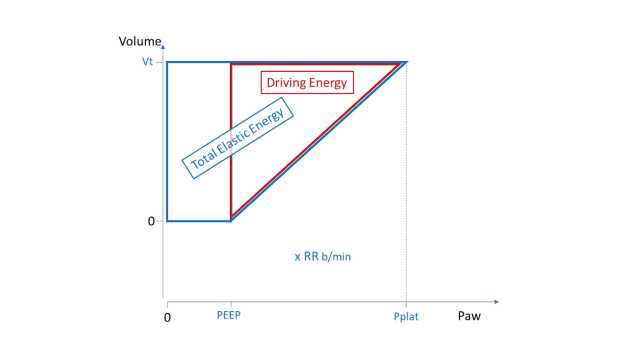
Graph of pressure plotted against tidal volume showing areas representing total elastic and driving energy
Figure 1
Graph of pressure plotted against tidal volume showing areas representing total elastic and driving energy
Figure 1
Graph of pressure plotted against tidal volume showing threshold pressure and area representing elastic pressures
Figure 2
Graph of pressure plotted against tidal volume showing threshold pressure and area representing elastic pressures
Figure 2
Graph of pressure plotted against tidal volume showing threshold pressure and area representing elastic pressures
Figure 3
Graph of pressure plotted against tidal volume showing threshold pressure and area representing elastic pressures
Figure 3
Graph of pressure plotted against tidal volume showing threshold pressure and area representing elastic pressures
Figure 4
Graph of pressure plotted against tidal volume showing threshold pressure and area representing elastic pressures
Figure 4

The role of PEEP

Although the PEEP level has a direct effect on total elastic energy per breath, and hence on Total Elastic MP, the choice of PEEP is normally based on other criteria than the resulting MP (such as gas exchange, hemodynamics, etc.). In contrast, the breaths developed on top of PEEP should be set to avoid them exceeding Pt. For Pt, a rough choice can be made by combining the two numbers that are currently recommended for lung protection: maximum DP = 15 cmH2O and maximum Pplat = 30 cmH2O.

To satisfy both criteria, this means that for a PEEP of 12 cmH2O, for example, Pplat should not exceed 12 + 15 = 27 cmH2O. If PEEP is 15, the maximum Pplat should be 15 + 15 = 30 cmH2O; while if PEEP is 18 and the maximum Pplat should still not exceed 30 cmH2O, then DP should not be higher than 30 – 18 = 12 cmH2O. Under these conditions, the respiratory rate can theoretically be increased as much as needed to control arterial PCO2 and pH, without any additional risk of lung damage.

However, if we are forced for any reason to ventilate with elastic pressures that exceed the Pt, it may not be so easy to find the ventilatory pattern that is of minimal detriment to the lungs and of maximal efficiency for CO2 elimination at the same time. In principle, the automatic selection of respiratory rate and VT made by ASV and INTELLiVENT-ASV might be very helpful for that purpose, while the calculation of Total Elastic MP and Driving MP should enable an assessment of the risk associated with the ventilation in progress.

Practical limitations

The authors do not ignore the practical limits of their model. The use of Pt based on maximum DP = 15 cmH2O and maximum Pplat = 30 cmH2O is just a general approach; for individual patients or for different lung zones of their respiratory system, a different Pt may be more appropriate. In particular, a high pleural pressure (as in the case of a stiff chest or heavy chest) should have a protective effect on the lungs and thus allow a higher Pt than normal. In addition, the gravitational pleural pressure gradients should be taken into account. This means that in supine position, the Pt should be lower in the non-dependent lung regions, but higher in the dependent regions protected by a higher pleural pressure. The effects of gravity on Pt should be much less pronounced in prone position.

We sincerely thank John Marini for his ongoing contribution to a better understanding of mechanical ventilation and respiratory mechanics, and for sharing his brilliant insights with the intensive care community.  

Practical assessment of risk of VILI from ventilating power: a conceptual model.

Marini JJ, Thornton LT, Rocco PRM, Gattinoni L, Crooke PS. Practical assessment of risk of VILI from ventilating power: a conceptual model. Crit Care. 2023;27(1):157. Published 2023 Apr 20. doi:10.1186/s13054-023-04406-9

At the bedside, assessing the risk of ventilator-induced lung injury (VILI) requires parameters readily measured by the clinician. For this purpose, driving pressure (DP) and end-inspiratory static 'plateau' pressure ([Formula: see text]) of the tidal cycle are unquestionably useful but lack key information relating to associated volume changes and cumulative strain. 'Mechanical power', a clinical term which incorporates all dissipated ('non-elastic') and conserved ('elastic') energy components of inflation, has drawn considerable interest as a comprehensive 'umbrella' variable that accounts for the influence of ventilating frequency per minute as well as the energy cost per tidal cycle. Yet, like the raw values of DP and [Formula: see text], the absolute levels of energy and power by themselves may not carry sufficiently precise information to guide safe ventilatory practice. In previous work we introduced the concept of 'damaging energy per cycle'. Here we describe how-if only in concept-the bedside clinician might gauge the theoretical hazard of delivered energy using easily observed static circuit pressures ([Formula: see text] and positive end expiratory pressure) and an estimate of the maximally tolerated (threshold) non-dissipated ('elastic') airway pressure that reflects the pressure component applied to the alveolar tissues. Because its core inputs are already in use and familiar in daily practice, the simplified mathematical model we propose here for damaging energy and power may promote deeper comprehension of the key factors in play to improve lung protective ventilation.

The (Mechanical) Power of (Automated) Ventilation.

Buiteman-Kruizinga LA, Schultz MJ. The (Mechanical) Power of (Automated) Ventilation. Respir Care. 2023;68(4):556. doi:10.4187/respcare.10531

Response to: The (Mechanical) Power of (Automated) Ventilation.

Baedorf-Kassis EN, Brenes Bastos A, Schaefer MS, et al. Response to: The (Mechanical) Power of (Automated) Ventilation. Respir Care. 2023;68(4):557-558. doi:10.4187/respcare.10946

The 4DPRR Index and Mechanical Power: A Step Ahead or Four Steps Backward?

Camporota L, Busana M, Marini JJ, Gattinoni L. The 4DPRR Index and Mechanical Power: A Step Ahead or Four Steps Backward?. Am J Respir Crit Care Med. 2021;204(4):491-492. doi:10.1164/rccm.202104-0923LE

Reply to Camporota et al.: The 4DPRR Index and Mechanical Power: A Step Ahead or 4 Steps Backward?

Costa ELV, Slutsky AS, Amato MBP. Reply to Camporota et al.: The 4DPRR Index and Mechanical Power: A Step Ahead or 4 Steps Backward?. Am J Respir Crit Care Med. 2021;204(4):492-493. doi:10.1164/rccm.202105-1113LE