Voltar

Bedside tools for assessing (de)recruitability

Artigo

Autor: Giorgio A. Iotti, Caroline Brown

Data da primeira publicação: 29.04.2025

What is recruitability and how can we measure it?

Takeway messages

  • Ensuring sufficient oxygenation and CO2 removal while avoiding further damage to the lung is one of the major challenges in treating ARDS patients.
  • As the appropriate level of PEEP to be applied depends on the lung’s potential for recruitment, assessing the degree of recruitability can help guide the PEEP setting.
  • One of two bedside methods for measuring recruitability based on measurements of respiratory mechanics is the recruitment-to-inflation ratio, which can be calculated from the monitoring parameters on the ventilator.
  • The lower the R/I ratio, the lower the potential for recruitment.

Lung types and the effect of PEEP

Juggling these two balls is one of the major challenges in treating ARDS patients. In acute lung disease, the alveoli can be schematically divided into three groups: alveoli that are open and stable even at low pressure (as in a normal lung), collapsed alveoli that can be reopened and kept open by reasonably safe positive pressures (recruitable lung), and collapsed or consolidated alveoli that cannot be reopened (non-recruitable lung). Depending on the relative proportions of these groups at any given time, the lungs can be classified as close to mechanically normal, recruitable, or non-recruitable. In the case of a recruitable lung, delivering ventilation intended to recruit with the appropriate level of positive end-expiratory pressure (PEEP) is assumed to be protective. On the one hand, PEEP pushes the inspiratory pressures upwards, thus promoting the recruitment of collapsed alveoli and making the lung more likely to accept the tidal volume safely. On the other hand, an appropriate level of PEEP works as a mechanical stabilizer, opposing the cyclic alveolar de-recruitment during expiration and the resulting atelectrauma. The matter is different in the case of non-recruitable lungs or mechanically near-normal lungs: A high PEEP level would be both excessive and ineffective at the same time.

The simplest way to set PEEP in ARDS is to increase the setting while looking for a satisfactory improvement in oxygenation, but this approach is only sound in “responders” and may lead to overdistension - especially in those who don’t respond well to PEEP. Measuring recruitability could provide important additional information for finding the right PEEP.


What is recruitability and how can we measure it?

But what is recruitability? Alveolar instability and the capability to respond to positive pressure are prerequisites for recruitability. It is clear that any lung with the potential for recruitment also has the potential for derecruitment, meaning that the unstable alveoli may also collapse again if the airway pressure decreases below a certain closing pressure. 

Bedside methods for assessing recruitability range from imaging by lung ultrasound or electric impedance tomography, through to approaches based on measurements of respiratory mechanics performed during specific maneuvers: the analysis of a static pressure-volume (PV) loop of the respiratory system and the recruitment-to-inflation ratio (R/I). Both methods require invasive ventilation and full patient relaxation.

The static PV loop

The first method - the static PV loop – involves the use of a special tool on the ventilator to record volume against airway pressure during a slow, controlled inflation and deflation maneuver. A typical maneuver is set to explore the respiratory system during a slow constant pressure ramp of 2 cmH2O/s from 5 to 40 cmH2O, and back. A common alternative is to start and end at zero. In practice, these slow maneuvers explore two things in one go: the possible recruiting effects of slowly increasing pressure levels, then the possible de-recruitment associated with slowly decreasing ones. On a maneuver plot with Paw on the X-axis and Volume on the Y-axis, there is normally some hysteresis between the inflation and deflation limbs, which means that the deflation limb runs higher than the inflation limb. The further the two limbs move away from one another, the higher the degree of hysteresis. Interestingly, a larger hysteresis (i.e., a fatter loop) has been found to be associated with greater recruitment potential, while a smaller hysteresis (i.e., a thinner loop) indicates lower recruitment potential (Demory D, Arnal JM, Wysocki M, et al. Recruitability of the lung estimated by the pressure volume curve hysteresis in ARDS patients. Intensive Care Med. 2008;34(11):2019-2025. doi:10.1007/s00134-008-1167-81​, Chiumello D, Arnal JM, Umbrello M, et al. Hysteresis and Lung Recruitment in Acute Respiratory Distress Syndrome Patients: A CT Scan Study [published correction appears in Crit Care Med. 2022 Mar 1;50(3):e339]. Crit Care Med. 2020;48(10):1494-1502. doi:10.1097/CCM.00000000000045182​). The degree of hysteresis can be expressed as the normalized maximum distance (NMD), that is the ratio between the maximum distance between the two limbs and the maximum volume of the maneuver. A value for NMD of 0.41 corresponds to an intermediate level of recruitability and serves to distinguish between conditions with lower or higher recruitment potential (Chiumello D, Arnal JM, Umbrello M, et al. Hysteresis and Lung Recruitment in Acute Respiratory Distress Syndrome Patients: A CT Scan Study [published correction appears in Crit Care Med. 2022 Mar 1;50(3):e339]. Crit Care Med. 2020;48(10):1494-1502. doi:10.1097/CCM.00000000000045182​).

The recruitment-to-inflation ratio

The second method – the recruitment-to-inflation ratio (R/I), otherwise known as “the simplified derecruitment technique” – was suggested by Chen et al. (Chen L, Del Sorbo L, Grieco DL, et al. Potential for Lung Recruitment Estimated by the Recruitment-to-Inflation Ratio in Acute Respiratory Distress Syndrome. A Clinical Trial. Am J Respir Crit Care Med. 2020;201(2):178-187. doi:10.1164/rccm.201902-0334OC3​, Chen L, Chen GQ, Shore K, et al. Implementing a bedside assessment of respiratory mechanics in patients with acute respiratory distress syndrome. Crit Care. 2017;21(1):84. Published 2017 Apr 4. doi:10.1186/s13054-017-1671-84​). It explores the possible derecruitment that takes place during conventional volume control ventilation (CMV) when PEEP is abruptly decreased by 10 cmH20 from a high level (between 15 and 18 cmH2O, maintained for at least 30 minutes) to a low level (between 5 and 8 cmH2O). The transition breath with inspiration starting from high PEEP and expiration ending at low PEEP results in a larger expiratory volume compared to the previous breaths. The additional expiratory volume consists of two completely different components. The former (denoted as deflated volume) depends on the deflation response of the alveoli that remain stable at the low PEEP level. The deflated volume explores the effect of pressure changes on inflation (I) and deflation of the baby lung, and is related to the baby lung’s size. The second component (denoted as de-recruited volume) depends on the de-recruitment of the unstable alveoli that immediately collapse and fully release their gas content when PEEP switches to the low level. The de-recruited volume explores the effect of pressure changes on recruitment (R) and de-recruitment. The R/I index corresponds to de-recruited volume divided by deflated volume. In practice, the index normalizes the observed de-recruitment by  the size of the baby lung and therefore expresses the degree of recruitability. 

How do we calculate it?

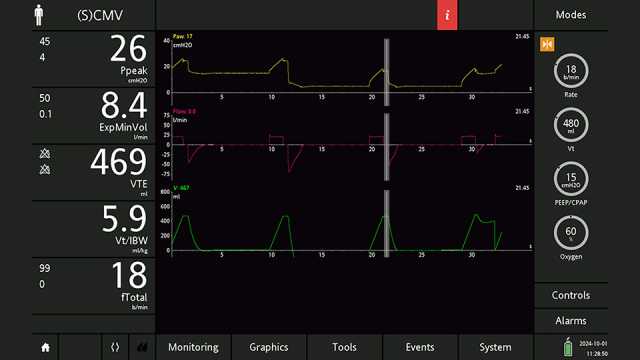
Calculation of the R/I ratio is relatively easy, being based on data that can be read on the monitoring system of the ventilator: the expiratory volume at high PEEP, the expiratory volume during the PEEP-transition breath, and the respiratory system compliance at low PEEP. The lower the R/I ratio, the lower the potential for recruitment, with zero representing no recruitability. Intermediate values are around 0.5 (the median value of the population studied by Chen et al.), with values of more than 0.6 considered to represent high recruitability (Chen L, Del Sorbo L, Grieco DL, et al. Potential for Lung Recruitment Estimated by the Recruitment-to-Inflation Ratio in Acute Respiratory Distress Syndrome. A Clinical Trial. Am J Respir Crit Care Med. 2020;201(2):178-187. doi:10.1164/rccm.201902-0334OC3​). These results using the R/I ratio were compared with the hysteresis on static PV loops and a good agreement was found (Nakayama R, Bunya N, Katayama S, et al. Correlation between the hysteresis of the pressure-volume curve and the recruitment-to-inflation ratio in patients with coronavirus disease 2019. Ann Intensive Care. 2022;12(1):106. Published 2022 Nov 12. doi:10.1186/s13613-022-01081-x5​). 

What do they tell us about setting PEEP?

Once either the hysteresis on a single static PV loop or the R/I ratio on a 10-cmH2O de-recruitment maneuver has identified a condition of high, intermediate, or low recruitability, what should be done with the PEEP setting in clinical practice? Low PEEP is usually the right choice for low recruitability. Even if high recruitability is commonly considered a good indication for high PEEP, it is important to note the recent word of caution about this concept (Gattinoni L, Collino F, Camporota L. Assessing lung recruitability: does it help with PEEP settings?. Intensive Care Med. 2024;50(5):749-751. doi:10.1007/s00134-024-07351-56​). And what about intermediate recruitability? Interestingly, the hysteresis evaluation on multiple static PV loops during a decremental PEEP trial has been suggested for a precise assessment of the most appropriate PEEP level for recruiting and mechanically stabilizing the unstable alveoli (Mojoli F, Pozzi M, Arisi E. Setting positive end-expiratory pressure: using the pressure-volume curve. Curr Opin Crit Care. 2024;30(1):35-42. doi:10.1097/MCC.00000000000011277​). Similarly, the R/I ratio approach has also been used for a granular assessment of de-recruitment during a decremental PEEP trial, but in this case the necessary technology is very demanding, because the measurement of the end-expiratory lung volume by nitrogen dilution is required (Grieco DL, Pintaudi G, Bongiovanni F, et al. Recruitment-to-inflation Ratio Assessed through Sequential End-expiratory Lung Volume Measurement in Acute Respiratory Distress Syndrome. Anesthesiology. 2023;139(6):801-814. doi:10.1097/ALN.00000000000047168​) 

On your ventilator

The R/I ratio offers a means of assessing the degree of recruitability at the bedside using the standard monitoring parameters on Hamilton Medical ventilators. The other method involving the static PV loop can be applied using the P/V Tool, which is available on HAMILTON‑C3/C6 and HAMILTON‑G5/S1 ventilators (Available as an option on HAMILTON-G5 and HAMILTON-C3/C6 ventilatorsA​, Standard on the HAMILTON-S1B​). In this case, recruitability can be assessed directly from the pressure-volume curve in a single diagnostic maneuver. The P/V Tool can also be used to perform recruitment maneuvers or to find the optimal PEEP setting based on a granular assessment of the hysteresis made from multiple diagnostic maneuvers.
 

Footnotes

  • A. Disponível como opção nos respiradores HAMILTON-G5 e HAMILTON-C3/C6
  • B. Recurso padrão no HAMILTON-S1

References

  1. 1. Demory D, Arnal JM, Wysocki M, et al. Recruitability of the lung estimated by the pressure volume curve hysteresis in ARDS patients. Intensive Care Med. 2008;34(11):2019-2025. doi:10.1007/s00134-008-1167-8
  2. 2. Chiumello D, Arnal JM, Umbrello M, et al. Hysteresis and Lung Recruitment in Acute Respiratory Distress Syndrome Patients: A CT Scan Study [published correction appears in Crit Care Med. 2022 Mar 1;50(3):e339]. Crit Care Med. 2020;48(10):1494-1502. doi:10.1097/CCM.0000000000004518
  3. 3. Chen L, Del Sorbo L, Grieco DL, et al. Potential for Lung Recruitment Estimated by the Recruitment-to-Inflation Ratio in Acute Respiratory Distress Syndrome. A Clinical Trial. Am J Respir Crit Care Med. 2020;201(2):178-187. doi:10.1164/rccm.201902-0334OC
  4. 4. Chen L, Chen GQ, Shore K, et al. Implementing a bedside assessment of respiratory mechanics in patients with acute respiratory distress syndrome. Crit Care. 2017;21(1):84. Published 2017 Apr 4. doi:10.1186/s13054-017-1671-8
  5. 5. Nakayama R, Bunya N, Katayama S, et al. Correlation between the hysteresis of the pressure-volume curve and the recruitment-to-inflation ratio in patients with coronavirus disease 2019. Ann Intensive Care. 2022;12(1):106. Published 2022 Nov 12. doi:10.1186/s13613-022-01081-x
  6. 6. Gattinoni L, Collino F, Camporota L. Assessing lung recruitability: does it help with PEEP settings?. Intensive Care Med. 2024;50(5):749-751. doi:10.1007/s00134-024-07351-5
  7. 7. Mojoli F, Pozzi M, Arisi E. Setting positive end-expiratory pressure: using the pressure-volume curve. Curr Opin Crit Care. 2024;30(1):35-42. doi:10.1097/MCC.0000000000001127
  8. 8. Grieco DL, Pintaudi G, Bongiovanni F, et al. Recruitment-to-inflation Ratio Assessed through Sequential End-expiratory Lung Volume Measurement in Acute Respiratory Distress Syndrome. Anesthesiology. 2023;139(6):801-814. doi:10.1097/ALN.0000000000004716

Recruitability of the lung estimated by the pressure volume curve hysteresis in ARDS patients.

Demory D, Arnal JM, Wysocki M, et al. Recruitability of the lung estimated by the pressure volume curve hysteresis in ARDS patients. Intensive Care Med. 2008;34(11):2019-2025. doi:10.1007/s00134-008-1167-8

OBJECTIVE To assess the hysteresis of the pressure-volume curve (PV curve) as to estimate, easily and at the bedside, the recruitability of the lung in ARDS patients. DESIGN Prospective study. SETTING Twelve medico-surgical ICU beds of a general hospital. PATIENTS Twenty-six patients within the first 24 h from meeting ARDS criteria. INTERVENTION A Quasi-static inflation and deflation PV curve from 0 to 40 cmH(2)O and a 40 cmH(2)O recruitment maneuver (RM) maintained for 10 s were successively done with an interval of 30 min in between. RECORDINGS AND CALCULATION: Hysteresis of the PV curve (H(PV)) was calculated as the ratio of the area enclosed by the pressure volume loop divided by the predicted body weight (PBW). The volume increase during the RM (V(RM)) was measured by integration of the flow required to maintain the pressure at 40 cmH(2)O and divided by PBW, as an estimation of the volume recruited during the RM. RESULTS A positive linear correlation was found between H(PV) and V(RM) (r = 0.81, P < 0.0001). CONCLUSIONS The results suggest using the hysteresis of the PV curve to assess the recruitability of the lung.

Hysteresis and Lung Recruitment in Acute Respiratory Distress Syndrome Patients: A CT Scan Study.

Chiumello D, Arnal JM, Umbrello M, et al. Hysteresis and Lung Recruitment in Acute Respiratory Distress Syndrome Patients: A CT Scan Study [published correction appears in Crit Care Med. 2022 Mar 1;50(3):e339]. Crit Care Med. 2020;48(10):1494-1502. doi:10.1097/CCM.0000000000004518

OBJECTIVES Hysteresis of the respiratory system pressure-volume curve is related to alveolar surface forces, lung stress relaxation, and tidal reexpansion/collapse. Hysteresis has been suggested as a means of assessing lung recruitment. The objective of this study was to determine the relationship between hysteresis, mechanical characteristics of the respiratory system, and lung recruitment assessed by a CT scan in mechanically ventilated acute respiratory distress syndrome patients. DESIGN Prospective observational study. SETTING General ICU of a university hospital. PATIENTS Twenty-five consecutive sedated and paralyzed patients with acute respiratory distress syndrome (age 64 ± 15 yr, body mass index 26 ± 6 kg/m, PaO2/FIO2 147 ± 42, and positive end-expiratory pressure 9.3 ± 1.4 cm H2O) were enrolled. INTERVENTIONS A low-flow inflation and deflation pressure-volume curve (5-45 cm H2O) and a sustained inflation recruitment maneuver (45 cm H2O for 30 s) were performed. A lung CT scan was performed during breath-holding pressure at 5 cm H2O and during the recruitment maneuver at 45 cm H2O. MEASUREMENTS AND MAIN RESULTS Lung recruitment was computed as the difference in noninflated tissue and in gas volume measured at 5 and at 45 cm H2O. Hysteresis was calculated as the ratio of the area enclosed by the pressure-volume curve and expressed as the hysteresis ratio. Hysteresis was correlated with respiratory system compliance computed at 5 cm H2O and the lung gas volume entering the lung during inflation of the pressure-volume curve (R = 0.749, p < 0.001 and R = 0.851, p < 0.001). The hysteresis ratio was related to both lung tissue and gas recruitment (R = 0.266, p = 0.008, R = 0.357, p = 0.002, respectively). Receiver operating characteristic analysis showed that the optimal cutoff value to predict lung tissue recruitment for the hysteresis ratio was 28% (area under the receiver operating characteristic curve, 0.80; 95% CI, 0.62-0.98), with sensitivity and specificity of 0.75 and 0.77, respectively. CONCLUSIONS Hysteresis of the respiratory system computed by low-flow pressure-volume curve is related to the anatomical lung characteristics and has an acceptable accuracy to predict lung recruitment.

Potential for Lung Recruitment Estimated by the Recruitment-to-Inflation Ratio in Acute Respiratory Distress Syndrome. A Clinical Trial.

Chen L, Del Sorbo L, Grieco DL, et al. Potential for Lung Recruitment Estimated by the Recruitment-to-Inflation Ratio in Acute Respiratory Distress Syndrome. A Clinical Trial. Am J Respir Crit Care Med. 2020;201(2):178-187. doi:10.1164/rccm.201902-0334OC

Rationale: Response to positive end-expiratory pressure (PEEP) in acute respiratory distress syndrome depends on recruitability. We propose a bedside approach to estimate recruitability accounting for the presence of complete airway closure.Objectives: To validate a single-breath method for measuring recruited volume and test whether it differentiates patients with different responses to PEEP.Methods: Patients with acute respiratory distress syndrome were ventilated at 15 and 5 cm H2O of PEEP. Multiple pressure-volume curves were compared with a single-breath technique. Abruptly releasing PEEP (from 15 to 5 cm H2O) increases expired volume: the difference between this volume and the volume predicted by compliance at low PEEP (or above airway opening pressure) estimated the recruited volume by PEEP. This recruited volume divided by the effective pressure change gave the compliance of the recruited lung; the ratio of this compliance to the compliance at low PEEP gave the recruitment-to-inflation ratio. Response to PEEP was compared between high and low recruiters based on this ratio.Measurements and Main Results: Forty-five patients were enrolled. Four patients had airway closure higher than high PEEP, and thus recruitment could not be assessed. In others, recruited volume measured by the experimental and the reference methods were strongly correlated (R2 = 0.798; P < 0.0001) with small bias (-21 ml). The recruitment-to-inflation ratio (median, 0.5; range, 0-2.0) correlated with both oxygenation at low PEEP and the oxygenation response; at PEEP 15, high recruiters had better oxygenation (P = 0.004), whereas low recruiters experienced lower systolic arterial pressure (P = 0.008).Conclusions: A single-breath method quantifies recruited volume. The recruitment-to-inflation ratio might help to characterize lung recruitability at the bedside.Clinical trial registered with www.clinicaltrials.gov (NCT02457741).

Implementing a bedside assessment of respiratory mechanics in patients with acute respiratory distress syndrome.

Chen L, Chen GQ, Shore K, et al. Implementing a bedside assessment of respiratory mechanics in patients with acute respiratory distress syndrome. Crit Care. 2017;21(1):84. Published 2017 Apr 4. doi:10.1186/s13054-017-1671-8

BACKGROUND Despite their potential interest for clinical management, measurements of respiratory mechanics in patients with acute respiratory distress syndrome (ARDS) are seldom performed in routine practice. We introduced a systematic assessment of respiratory mechanics in our clinical practice. After the first year of clinical use, we retrospectively assessed whether these measurements had any influence on clinical management and physiological parameters associated with clinical outcomes by comparing their value before and after performing the test. METHODS The respiratory mechanics assessment constituted a set of bedside measurements to determine passive lung and chest wall mechanics, response to positive end-expiratory pressure, and alveolar derecruitment. It was obtained early after ARDS diagnosis. The results were provided to the clinical team to be used at their own discretion. We compared ventilator settings and physiological variables before and after the test. The physiological endpoints were oxygenation index, dead space, and plateau and driving pressures. RESULTS Sixty-one consecutive patients with ARDS were enrolled. Esophageal pressure was measured in 53 patients (86.9%). In 41 patients (67.2%), ventilator settings were changed after the measurements, often by reducing positive end-expiratory pressure or by switching pressure-targeted mode to volume-targeted mode. Following changes, the oxygenation index, airway plateau, and driving pressures were significantly improved, whereas the dead-space fraction remained unchanged. The oxygenation index continued to improve in the next 48 h. CONCLUSIONS Implementing a systematic respiratory mechanics test leads to frequent individual adaptations of ventilator settings and allows improvement in oxygenation indexes and reduction of the risk of overdistention at the same time. TRIAL REGISTRATION The present study involves data from our ongoing registry for respiratory mechanics (ClinicalTrials.gov identifier: NCT02623192 . Registered 30 July 2015).

Correlation between the hysteresis of the pressure-volume curve and the recruitment-to-inflation ratio in patients with coronavirus disease 2019.

Nakayama R, Bunya N, Katayama S, et al. Correlation between the hysteresis of the pressure-volume curve and the recruitment-to-inflation ratio in patients with coronavirus disease 2019. Ann Intensive Care. 2022;12(1):106. Published 2022 Nov 12. doi:10.1186/s13613-022-01081-x

BACKGROUND Since the response to lung recruitment varies greatly among patients receiving mechanical ventilation, lung recruitability should be assessed before recruitment maneuvers. The pressure-volume curve (PV curve) and recruitment-to-inflation ratio (R/I ratio) can be used bedside for evaluating lung recruitability and individualing positive end-expiratory pressure (PEEP). Lung tissue recruitment on computed tomography has been correlated with normalized maximal distance (NMD) of the quasi-static PV curve. NMD is the maximal distance between the inspiratory and expiratory limb of the PV curve normalized to the maximal volume. However, the relationship between the different parameters of hysteresis of the quasi-static PV curve and R/I ratio for recruitability is unknown. METHODS We analyzed the data of 33 patients with severe coronavirus disease 2019 (COVID-19) who received invasive mechanical ventilation. Respiratory waveform data were collected from the ventilator using proprietary acquisition software. We examined the relationship of the R/I ratio, quasi-static PV curve items such as NMD, and respiratory system compliance (Crs). RESULTS The median R/I ratio was 0.90 [interquartile range (IQR), 0.70-1.15] and median NMD was 41.0 [IQR, 37.1-44.1]. The NMD correlated significantly with the R/I ratio (rho = 0.74, P < 0.001). Sub-analysis showed that the NMD and R/I ratio did not correlate with Crs at lower PEEP (- 0.057, P = 0.75; and rho = 0.15, P = 0.41, respectively). On the contrary, the ratio of Crs at higher PEEP to Crs at lower PEEP (Crs ratio (higher/lower)) moderately correlated with NMD and R/I ratio (rho = 0.64, P < 0.001; and rho = 0.67, P < 0.001, respectively). CONCLUSIONS NMD of the quasi-static PV curve and R/I ratio for recruitability assessment are highly correlated. In addition, NMD and R/I ratio correlated with the Crs ratio (higher/lower). Therefore, NMD and R/I ratio could be potential indicators of recruitability that can be performed at the bedside.

Assessing lung recruitability: does it help with PEEP settings?

Gattinoni L, Collino F, Camporota L. Assessing lung recruitability: does it help with PEEP settings?. Intensive Care Med. 2024;50(5):749-751. doi:10.1007/s00134-024-07351-5

Setting positive end-expiratory pressure: using the pressure-volume curve.

Mojoli F, Pozzi M, Arisi E. Setting positive end-expiratory pressure: using the pressure-volume curve. Curr Opin Crit Care. 2024;30(1):35-42. doi:10.1097/MCC.0000000000001127

PURPOSE OF REVIEW To discuss the role of pressure-volume curve (PV curve) in exploring elastic properties of the respiratory system and setting mechanical ventilator to reduce ventilator-induced lung injury. RECENT FINDINGS Nowadays, quasi-static PV curves and loops can be easily obtained and analyzed at the bedside without disconnection of the patient from the ventilator. It is shown that this tool can provide useful information to optimize ventilator setting. For example, PV curves can assess for patient's individual potential for lung recruitability and also evaluate the risk for lung injury of the ongoing mechanical ventilation setting. SUMMARY In conclusion, PV curve is an easily available bedside tool: its correct interpretation can be extremely valuable to enlighten potential for lung recruitability and select a high or low positive end-expiratory pressure (PEEP) strategy. Furthermore, recent studies have shown that PV curve can play a significant role in PEEP and driving pressure fine tuning: clinical studies are needed to prove whether this technique will improve outcome.

Recruitment-to-inflation Ratio Assessed through Sequential End-expiratory Lung Volume Measurement in Acute Respiratory Distress Syndrome.

Grieco DL, Pintaudi G, Bongiovanni F, et al. Recruitment-to-inflation Ratio Assessed through Sequential End-expiratory Lung Volume Measurement in Acute Respiratory Distress Syndrome. Anesthesiology. 2023;139(6):801-814. doi:10.1097/ALN.0000000000004716

BACKGROUND Positive end-expiratory pressure (PEEP) benefits in acute respiratory distress syndrome are driven by lung dynamic strain reduction. This depends on the variable extent of alveolar recruitment. The recruitment-to-inflation ratio estimates recruitability across a 10-cm H2O PEEP range through a simplified maneuver. Whether recruitability is uniform or not across this range is unknown. The hypotheses of this study are that the recruitment-to-inflation ratio represents an accurate estimate of PEEP-induced changes in dynamic strain, but may show nonuniform behavior across the conventionally tested PEEP range (15 to 5 cm H2O). METHODS Twenty patients with moderate-to-severe COVID-19 acute respiratory distress syndrome underwent a decremental PEEP trial (PEEP 15 to 13 to 10 to 8 to 5 cm H2O). Respiratory mechanics and end-expiratory lung volume by nitrogen dilution were measured the end of each step. Gas exchange, recruited volume, recruitment-to-inflation ratio, and changes in dynamic, static, and total strain were computed between 15 and 5 cm H2O (global recruitment-to-inflation ratio) and within narrower PEEP ranges (granular recruitment-to-inflation ratio). RESULTS Between 15 and 5 cm H2O, median [interquartile range] global recruitment-to-inflation ratio was 1.27 [0.40 to 1.69] and displayed a linear correlation with PEEP-induced dynamic strain reduction (r = -0.94; P < 0.001). Intraindividual recruitment-to-inflation ratio variability within the narrower ranges was high (85% [70 to 109]). The relationship between granular recruitment-to-inflation ratio and PEEP was mathematically described by a nonlinear, quadratic equation (R2 = 0.96). Granular recruitment-to-inflation ratio across the narrower PEEP ranges itself had a linear correlation with PEEP-induced reduction in dynamic strain (r = -0.89; P < 0.001). CONCLUSIONS Both global and granular recruitment-to-inflation ratio accurately estimate PEEP-induced changes in lung dynamic strain. However, the effect of 10 cm H2O of PEEP on lung strain may be nonuniform. Granular recruitment-to-inflation ratio assessment within narrower PEEP ranges guided by end-expiratory lung volume measurement may aid more precise PEEP selection, especially when the recruitment-to-inflation ratio obtained with the simplified maneuver between PEEP 15 and 5 cm H2O yields intermediate values that are difficult to interpret for a proper choice between a high and low PEEP strategy.

Artigos relacionados. Conheça com mais detalhes