
Session expired

Due to inactivity your session has expired. Please login again.

Detectamos que você está visitando nosso site a partir de Estados Unidos.
Dispomos de uma versão separada do site para (Estados Unidos).

Mudar para ${país}
 Consumíveis

Sensores fluxo.

Medição de pressão e fluxo proximal

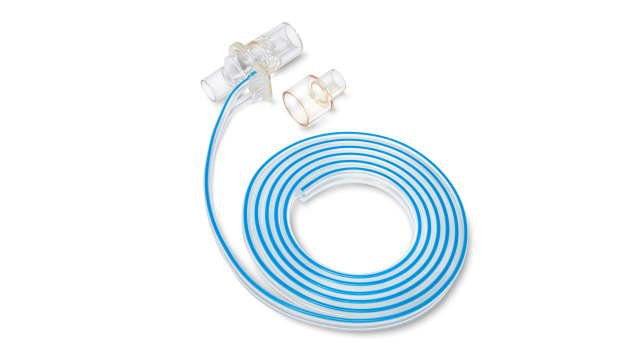
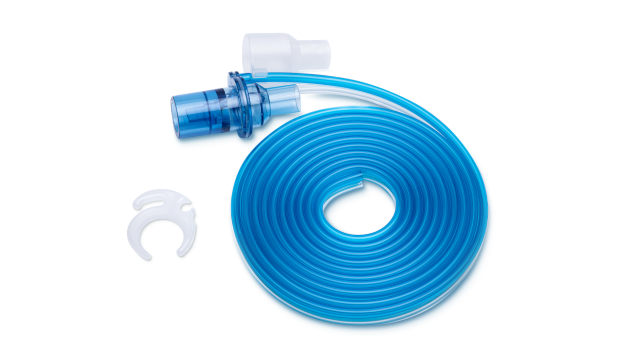
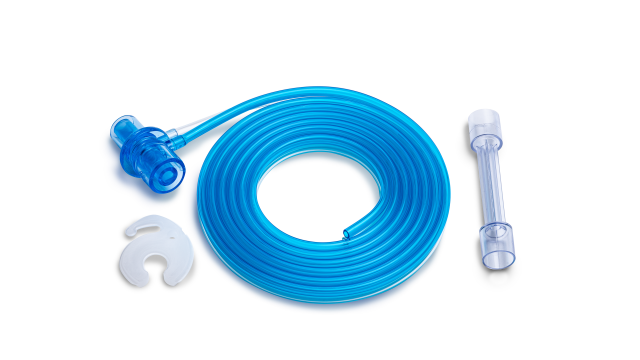
Sensor fluxo

Aproxime-se! Medição de fluxo proximal

O sensor de fluxo proximal tem sido a peça central dos nossos respiradores desde 1983. Todo o processo de ventilação depende da medição e da precisão do sensor de fluxo, que fornece dados da abertura das vias respiratórias.

Dados precisos de volume, fluxo e pressão são cruciais para um diagnóstico correto e para evitar efeitos colaterais comuns de configurações inadequadas de ventilação. É também o que possibilita algumas de nossas tecnologias avançadas, como os modos ASV e INTELLiVENT-ASV, IntelliSync+ e a P/V Tool.

Sensor fluxo

A precisão é imprescindível. Seus pacientes dependem disso

Nossos respiradores medem o fluxo e a pressão junto às vias aéreas do paciente. Estudos demonstraram que o volume corrente para pacientes ventilados deve ser determinado com um sensor de fluxo colocado no tubo endotraqueal (Cannon ML, Cornell J, Tripp-Hamel DS, et al. Tidal volumes for ventilated infants should be determined with a pneumotachometer placed at the endotracheal tube. Am J Respir Crit Care Med. 2000;162(6):2109-2112. doi:10.1164/ajrccm.162.6.99061121​, Gammage, Gary W.; Banner, Michael J.; Blanch, Paul B.; Kirby, Robert R. VENTILATOR DISPLAYED TIDAL VOLUME—WHAT YOU SEE MAY NOT BE WHAT YOU GET, Critical Care Medicine: April 1988 - Volume 16 - Issue 4 - p 454 2​)

Ilustração gráfica: mulher pensando em uma pergunta

Existem evidências? Evidência clínica

É fundamental determinar com precisão o volume corrente exalado (VcorrExp) (Cannon ML, Cornell J, Tripp-Hamel DS, et al. Tidal volumes for ventilated infants should be determined with a pneumotachometer placed at the endotracheal tube. Am J Respir Crit Care Med. 2000;162(6):2109-2112. doi:10.1164/ajrccm.162.6.99061121), especialmente em situações em que apenas pequenos volumes corrente são administrados (pacientes pediátricos, recém-nascidos e pacientes com SARA). Com os sensores de fluxo da Hamilton Medical, pode medir o VcorrExp junto às vias aéreas do paciente para obter um valor mais preciso.

Benefícios para você:

  • A colocação junto ao paciente elimina os efeitos da complacência do circuito de respiração nas medições de fluxo e volume (Cannon ML, Cornell J, Tripp-Hamel DS, et al. Tidal volumes for ventilated infants should be determined with a pneumotachometer placed at the endotracheal tube. Am J Respir Crit Care Med. 2000;162(6):2109-2112. doi:10.1164/ajrccm.162.6.99061121)
  • A medição de VcorrExp está sujeita a menos resistência do sistema respiratório (Nève V, Leclerc F, Noizet O, et al. Influence of respiratory system impedance on volume and pressure delivered at the Y piece in ventilated infants. Pediatr Crit Care Med. 2003;4(4):418-425. doi:10.1097/01.PCC.0000090289.98377.153)
  • Ocorrem menos fugas que poderiam alterar o resultado (Al-Majed SI, Thompson JE, Watson KF, Randolph AG. Effect of lung compliance and endotracheal tube leakage on measurement of tidal volume. Crit Care. 2004;8(6):R398-R402. doi:10.1186/cc29544​)

Nosso portfólio de sensores de fluxo

Oferecemos consumíveis da Hamilton Medical para pacientes adultos, pediátricos e neonatais. Pode escolher entre produtos reutilizáveis e de uso único, dependendo das políticas da sua instituição.
Dr. Robert Lopez

Customer voices

Os sensores de fluxo de uso único da Hamilton Medical nos ajudam a evitar a contaminação cruzada, pois não precisamos nos preocupar em reutilizar os sensores de fluxo em outro paciente.

Dr. Robert Lopez

Director of Respiratory Care até 2018
University Medical Center, Lubbock (TX), EUA

Tidal volumes for ventilated infants should be determined with a pneumotachometer placed at the endotracheal tube.

Cannon ML, Cornell J, Tripp-Hamel DS, et al. Tidal volumes for ventilated infants should be determined with a pneumotachometer placed at the endotracheal tube. Am J Respir Crit Care Med. 2000;162(6):2109-2112. doi:10.1164/ajrccm.162.6.9906112

Many ventilators measure expired tidal volume (VT) without compensation either for the compliance of the ventilator circuit or for variations in the circuit setup. We hypothesized that the exhaled VT measured with a conventional ventilator at the expiratory valve would differ significantly from the exhaled VT measured with a pneumotachometer placed at the endotracheal tube. To investigate this we studied 98 infants and children requiring conventional ventilation. We used linear regression analysis to compare the VT obtained with the pneumotachometer with the ventilator-measured volume. An additional comparison was made between the pneumotachometer volume and a calculated effective VT. For infant circuits (n = 70), our analysis revealed a poor correlation between the expiratory VT measured with the pneumotachometer and the ventilator-measured volume (r(2) = 0.54). Similarly, the expiratory VT measured with the pneumotachometer did not correlate with the calculated effective volume (r(2) = 0.58). For pediatric circuits (n = 28), there was improved correlation between the expiratory VT measured with the pneumotachometer and both the ventilator-measured volume and the calculated effective VT (r(2) = 0.84 and r(2) = 0.85, respectively). The data demonstrate a significant discrepancy between expiratory VT measured at a ventilator and that measured with a pneumotachometer placed at the endotracheal tube in infants. Correcting for the compliance of the ventilator circuit by calculating the effective VT did not alter this discrepancy. In conventionally ventilated infants, exhaled VT should be determined with a pneumotachometer placed at the airway.

Ventilator displayed tidal volume: What you see may not be what you get.

Gammage, Gary W.; Banner, Michael J.; Blanch, Paul B.; Kirby, Robert R. VENTILATOR DISPLAYED TIDAL VOLUME—WHAT YOU SEE MAY NOT BE WHAT YOU GET, Critical Care Medicine: April 1988 - Volume 16 - Issue 4 - p 454

Influence of respiratory system impedance on volume and pressure delivered at the Y piece in ventilated infants.

Nève V, Leclerc F, Noizet O, et al. Influence of respiratory system impedance on volume and pressure delivered at the Y piece in ventilated infants. Pediatr Crit Care Med. 2003;4(4):418-425. doi:10.1097/01.PCC.0000090289.98377.15

OBJECTIVES Tidal volume (VT) delivered to infants' airways are overestimated and pressure underestimated when measured in the ventilator and not at the Y piece. This study aimed at evaluating the influence of respiratory system impedance on expiratory VT (VTE) and pressure measurement difference. DESIGN Prospective observational study. SETTING Pediatric intensive care unit at a university hospital. PATIENTS Data were collected between February 2000 and October 2001 for 30 infants (range, 1-23 months) ventilated in the pressure-controlled or volume-controlled mode. INTERVENTIONS Measurements of VTE, pressure obtained at the same time at the Y piece and on the ventilator Servo 300, were collected in ventilated infants. Respiratory system impedance was calculated from data obtained at the Y piece. Circuit compliance was measured in vitro. VTEs were corrected for compressible volume. MEASUREMENTS AND RESULTS VTEs were overestimated by the Servo 300 in the pressure-controlled and volume-controlled modes (from 5% to 62% of the value displayed on Servo 300). Maximal inspiratory pressures were underestimated by the Servo 300 in the pressure-controlled mode (difference from -2 to +19 cm H(2)O). Measurement difference increased with increasing respiratory system impedance. Ventilator VTE corrected for circuit compliance did not offer a sufficiently accurate estimation of VTE at the Y piece. CONCLUSIONS VT and pressure measurements must be performed at the Y piece, especially in infants with increased respiratory system impedance (i.e., decreased respiratory system compliance or increased resistance). Correcting VTE for circuit compliance cannot replace measurement of VT at the Y piece.

Effect of lung compliance and endotracheal tube leakage on measurement of tidal volume.

Al-Majed SI, Thompson JE, Watson KF, Randolph AG. Effect of lung compliance and endotracheal tube leakage on measurement of tidal volume. Crit Care. 2004;8(6):R398-R402. doi:10.1186/cc2954

INTRODUCTION The objective of this laboratory study was to measure the effect of decreased lung compliance and endotracheal tube (ETT) leakage on measured exhaled tidal volume at the airway and at the ventilator, in a research study with a test lung. METHODS The subjects were infant, adult and pediatric test lungs. In the test lung model, lung compliances were set to normal and to levels seen in acute respiratory distress syndrome. Set tidal volume was 6 ml/kg across a range of simulated weights and ETT sizes. Data were recorded from both the ventilator light-emitting diode display and the CO2SMO Plus monitor display by a single observer. Effective tidal volume was calculated from a standard equation. RESULTS In all test lung models, exhaled tidal volume measured at the airway decreased markedly with decreasing lung compliance, but measurement at the ventilator showed minimal change. In the absence of a simulated ETT leak, calculation of the effective tidal volume led to measurements very similar to exhaled tidal volume measured at the ETT. With a simulated ETT tube leak, the effective tidal volume markedly overestimated tidal volume measured at the airway. CONCLUSION Previous investigators have emphasized the need to measure tidal volume at the ETT for all children. When ETT leakage is minimal, it seems from our simulated lung models that calculation of effective tidal volume would give similar readings to tidal volume measured at the airway, even in small patients. Future studies of tidal volume measurement accuracy in mechanically ventilated children should control for the degree of ETT leakage.