Session expired

Due to inactivity your session has expired. Please login again.

Detectamos que você está visitando nosso site a partir de Estados Unidos.
Dispomos de uma versão separada do site para (Estados Unidos).

Mudar para ${país}
 Consumíveis

Nebulização.

Fornecimento de medicamentos via aerossol de alto desempenho

Nebulizador Aerogen com HAMILTON-H900 Nebulizador Aerogen com HAMILTON-H900

O nebulizador Aerogen. Medicação inalada onde for necessário

Oferecemos soluções de nebulização da Aerogen, fabricante e distribuidora líder mundial de tecnologia de alto desempenho para o tratamento com medicamentos em aerossol.

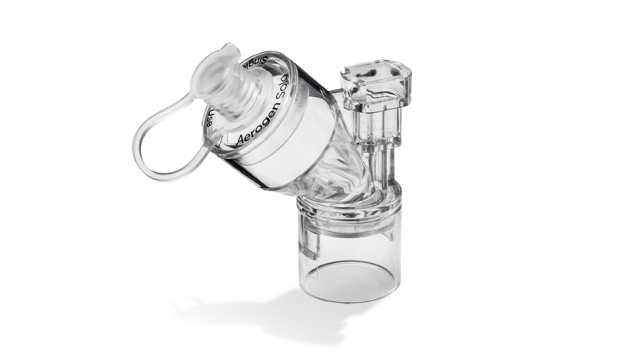
Aerogen Solo

Aerogen Solo. Nebulizador para uso único

A tecnologia de malha vibratória produz partículas consistentes do tamanho de gotículas:

  • Administração de medicamentos melhorada em comparação com um nebulizador a jato observada em um modelo pulmonar simulado (Ari A, Atalay OT, Harwood R, Sheard MM, Aljamhan EA, Fink JB. Influence of nebulizer type, position, and bias flow on aerosol drug delivery in simulated pediatric and adult lung models during mechanical ventilation. Respir Care. 2010;55(7):845-851. 1)
  • Sem necessidade de fluxo adicional
  • Adequado para medicamentos prescritos por médicos para inalação
  • Pode ser alimentado pelo controlador integrado opcional nos respiradores HAMILTON-C6 e HAMILTON-G5/S1, ou pelo controlador Aerogen Pro-X ou pelo controlador de USB Aerogen
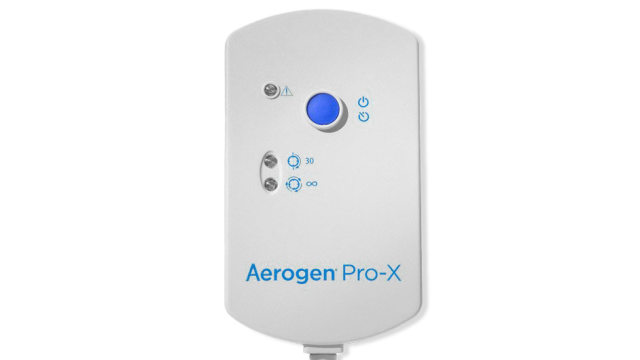
Controlador Aerogen Pro-X

Controlador Aerogen Pro-X. Sua fonte de energia portátil

Em todo o hospital, o controlador Pro-X fornece energia para as tecnologias Aerogen em um dispositivo portátil. 

  • Alimenta o Aerogen Solo
  • Opções de modo contínuo e de 30 minutos
  • Bateria interna com 45 minutos de autonomia
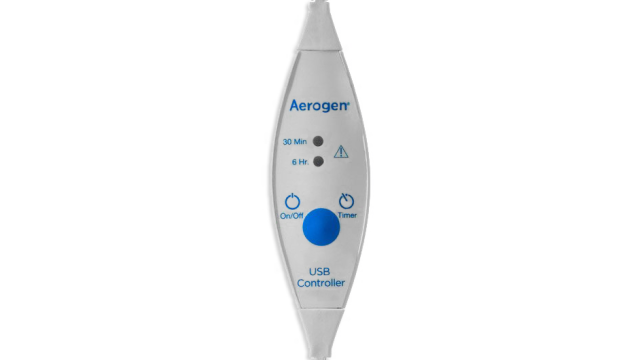
Controlador de USB Aerogen

Controlador de USB Aerogen. Energia a partir de qualquer porta USB

O controlador de USB Aerogen de estrutura fina pode ser usado para alimentar o Aerogen Solo a partir da porta USB do seu respirador (Para usuários nos EUA, o controlador USB Aerogen só deve ser operado com alimentação da rede elétrica usando o adaptador AC/DC do controlador USB Aerogen.A).

  • Alimenta o Aerogen Solo
  • Rápido e fácil de configurar
  • Opções de modo de 30 minutos e 6 horas

Footnotes

  • A. Para usuários nos EUA, o controlador USB Aerogen só deve ser operado com alimentação da rede elétrica usando o adaptador AC/DC do controlador USB Aerogen.


References

  1. 1. Ari A, Atalay OT, Harwood R, Sheard MM, Aljamhan EA, Fink JB. Influence of nebulizer type, position, and bias flow on aerosol drug delivery in simulated pediatric and adult lung models during mechanical ventilation. Respir Care. 2010;55(7):845-851.

Influence of nebulizer type, position, and bias flow on aerosol drug delivery in simulated pediatric and adult lung models during mechanical ventilation.

Ari A, Atalay OT, Harwood R, Sheard MM, Aljamhan EA, Fink JB. Influence of nebulizer type, position, and bias flow on aerosol drug delivery in simulated pediatric and adult lung models during mechanical ventilation. Respir Care. 2010;55(7):845-851.

BACKGROUND The effectiveness of aerosol drug delivery during mechanical ventilation is influenced by the patient, ventilator, and nebulizer variables. The impact of nebulizer type, position on the ventilator circuit, and bias flow on aerosol drug delivery has not been established for different age populations. OBJECTIVE To determine the influence of nebulizer position and bias flow with a jet nebulizer and a vibrating-mesh nebulizer on aerosol drug delivery in simulated and mechanically ventilated pediatric and adult patients. METHOD Albuterol sulfate (2.5 mg) was nebulized with a jet nebulizer and a vibrating-mesh nebulizer, using simulated pediatric and adult lung models. The 2 nebulizer positions were: (1) jet nebulizer placed 15 cm from the Y-piece adapter, and vibrating-mesh nebulizer attached directly to the Y-piece; and (2) jet nebulizer placed prior to the heated humidifier with 15 cm of large-bore tubing, and vibrating-mesh nebulizer positioned at an inlet to the humidifier. A ventilator with a heated humidifier and ventilator circuit was utilized in both lung models. The adult ventilator settings were V(T) 500 mL, PEEP 5 cm H2O, respiratory rate 20 breaths/min, peak inspiratory flow 60 L/min, and descending ramp flow waveform. The pediatric ventilator settings were V(T) 100 mL, PEEP 5 cm H2O, respiratory rate 20 breaths/min, inspiratory time 1 s. We tested bias flows of 2 and 5 L/min. The adult and pediatric lung models used 8-mm and 5-mm inner-diameter endotracheal tubes, respectively. Each experiment was run 3 times (n = 3). The albuterol sulfate was eluted from the filter and analyzed via spectrophotometry (276 nm). RESULTS Nebulizer placement prior to the humidifier increased drug delivery with both the jet nebulizer and the vibrating-mesh nebulizer, with a greater increase with the vibrating-mesh nebulizer. Higher bias flow reduced drug delivery. Drug delivery with the vibrating-mesh nebulizer was 2-4-fold greater than with the jet nebulizer at all positions (P < .05) in both lung models. CONCLUSION During simulated mechanical ventilation in pediatric and adult models, bias flow and nebulizer type and position impact aerosol drug delivery.