

Назад

Определение соотношения рекрутмента к инфляции (R/I) с помощью метода одиночного дыхательного маневра

Статья

Автор: Giorgio Iotti, Caroline Brown

Дата: 29.04.2025

Как рассчитать соотношение R/I на основании данных аппарата ИВЛ?

Соотношение R/I позволяет объективно оценить рекрутируемость легких и подобрать индивидуальный уровень PEEP. Метод одиночного дыхательного маневра, описанный Chen и соавторами (Chen L, Del Sorbo L, Grieco DL, et al. Potential for Lung Recruitment Estimated by the Recruitment-to-Inflation Ratio in Acute Respiratory Distress Syndrome. A Clinical Trial. Am J Respir Crit Care Med. 2020;201(2):178-187. doi:10.1164/rccm.201902-0334OC1​, Chen L, Chen GQ, Shore K, et al. Implementing a bedside assessment of respiratory mechanics in patients with acute respiratory distress syndrome. Crit Care. 2017;21(1):84. Published 2017 Apr 4. doi:10.1186/s13054-017-1671-82​), соотношение R/I можно рассчитать на основе данных, представленных на экране мониторинга аппарата ИВЛ. 

Ниже мы покажем процесс выполнения этой процедуры на аппарате ИВЛ HAMILTON-C6.

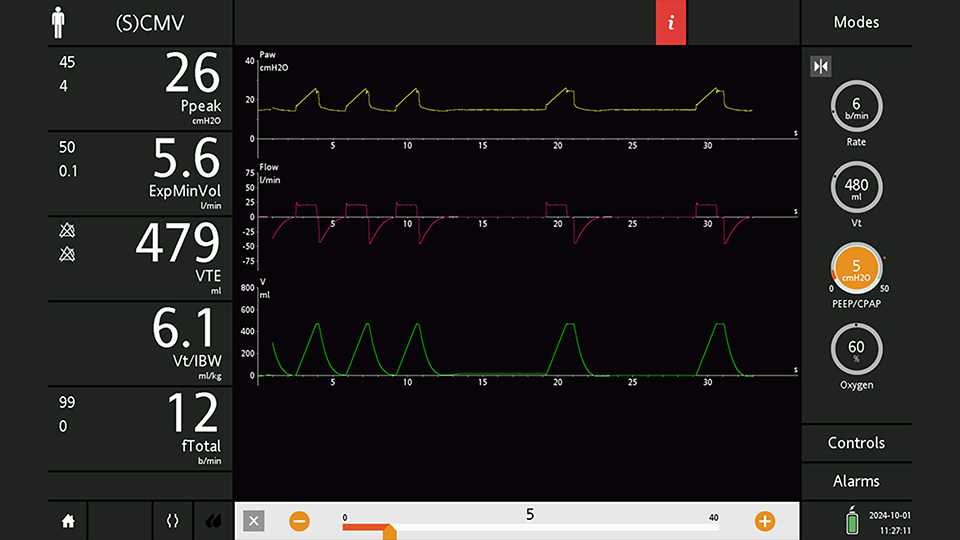
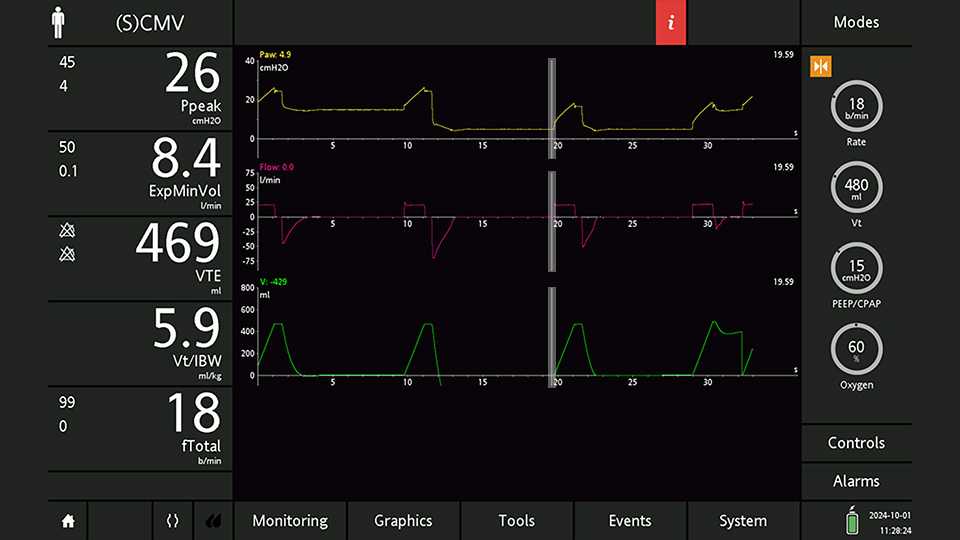
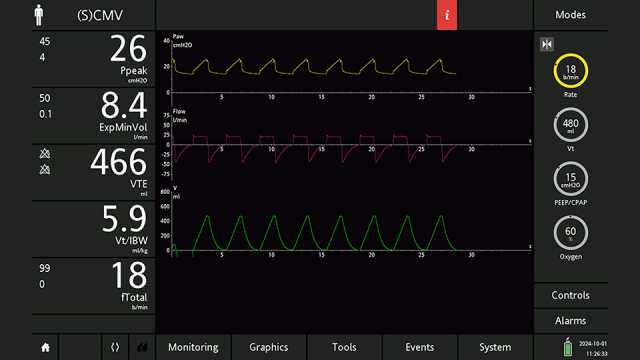
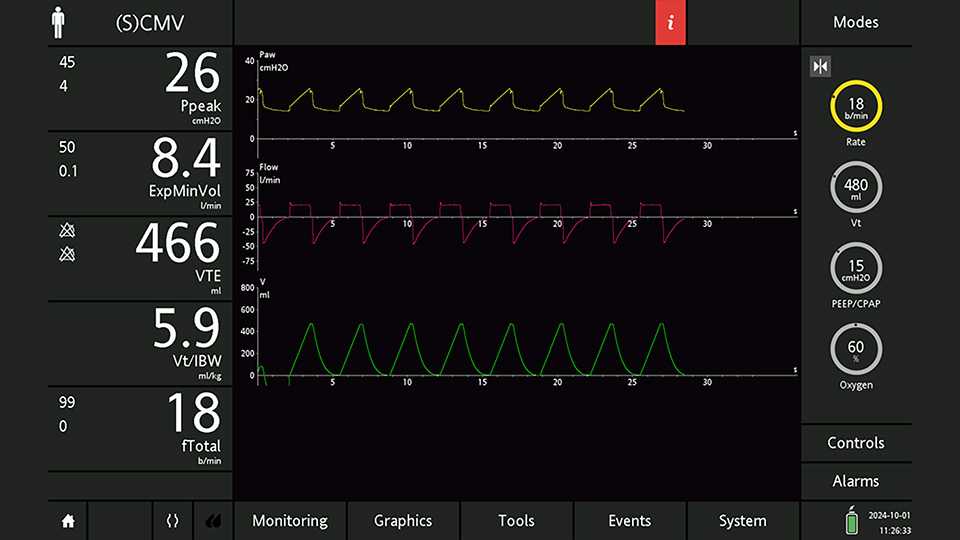
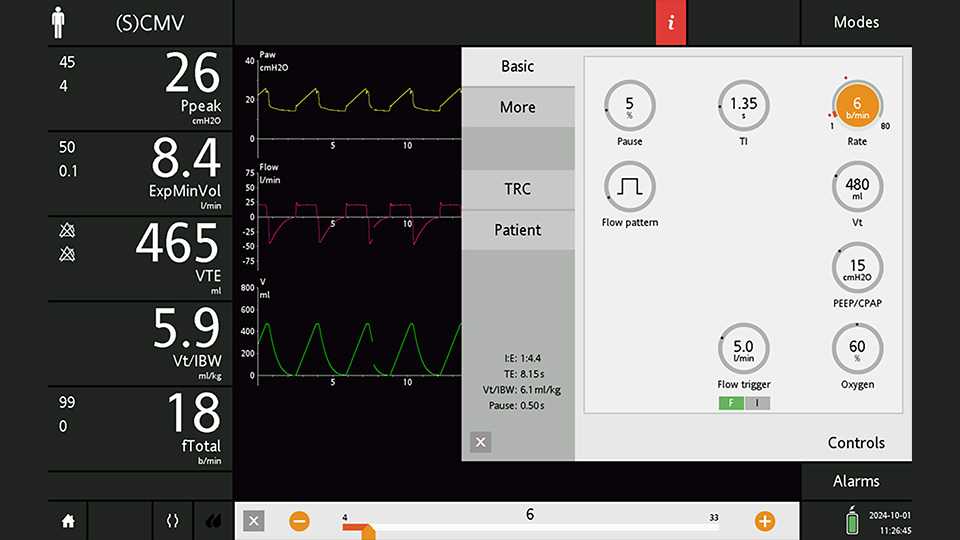
Переведите пациента в режим (S)CMV с PEEP 15 смH2O и поддерживайте его в этом состоянии в течение 30 минут (см. рисунок 1). Установите паузу на вдохе на минимальном уровне в 5 %. Выберите временную шкалу 30 секунд, чтобы к моменту приостановки экрана все важные участки кривых были видимыми.
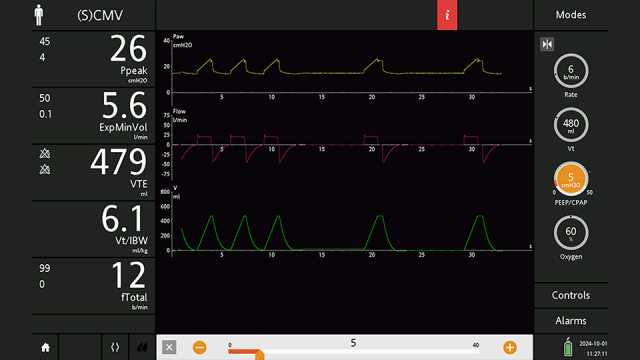
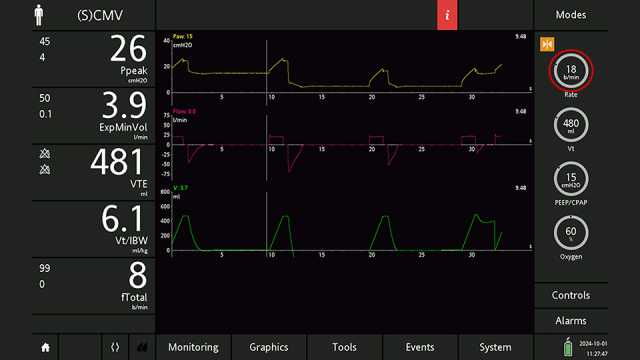
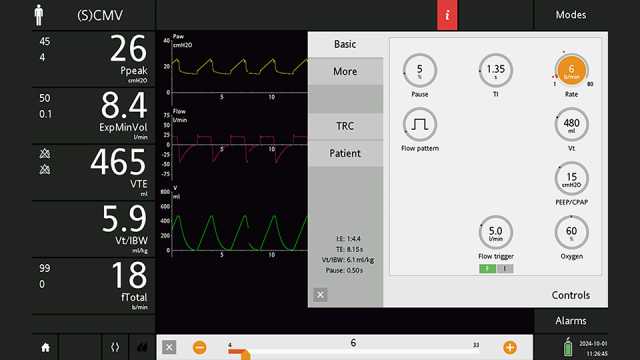
  • Спустя 30 минут установите частоту дыхания 6 д/мин (см. рисунок 2).
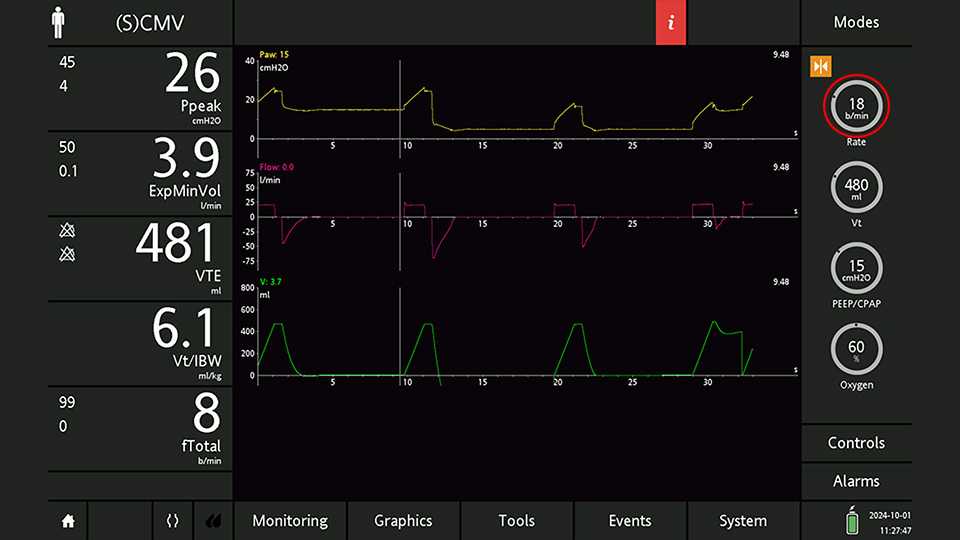
  • Снизьте PEEP до 5 смH2O (см. рисунок 3).
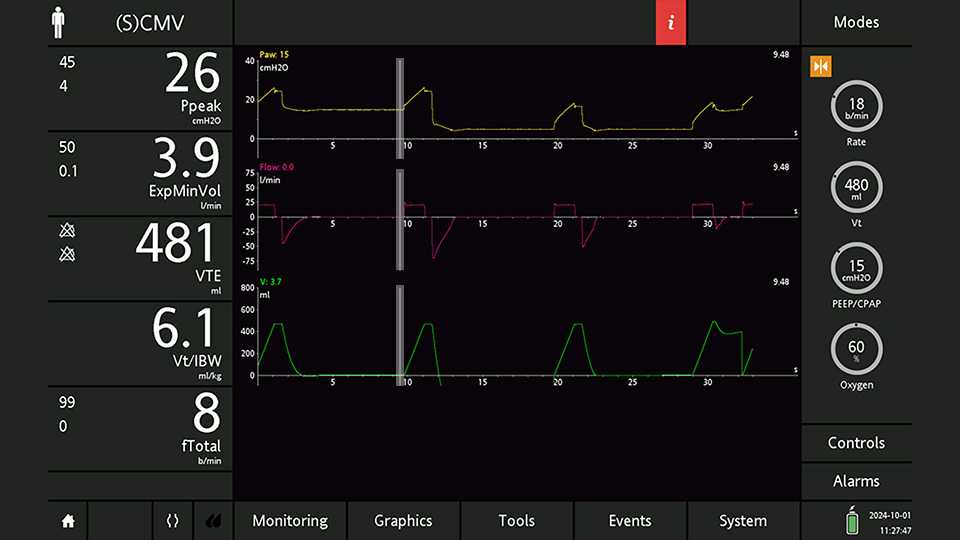
  • Во время снижения PEEP до 5 смH2O быстро верните частоту дыхания к предыдущему значению, установите PEEP на уровне 15 смH2O и приостановите экран (см. рисунок 4).
Снимок экрана кривых в режиме (S)CMV при PEEP 15 смH2O
Рисунок 1
Снимок экрана кривых в режиме (S)CMV при PEEP 15 смH2O
Рисунок 1
Снимок экрана, демонстрирующий снижение частоты дыхания до 6 смH2O
Рисунок 2
Снимок экрана, демонстрирующий снижение частоты дыхания до 6 смH2O
Рисунок 2
Снимок экрана, демонстрирующий снижение PEEP до 5 смH2O
Рисунок 3
Снимок экрана, демонстрирующий снижение PEEP до 5 смH2O
Рисунок 3
Снимок экрана, демонстрирующий приостановку экрана с курсором в начале последнего вдоха перед изменением PEEP
Рисунок 4
Снимок экрана, демонстрирующий приостановку экрана с курсором в начале последнего вдоха перед изменением PEEP
Рисунок 4

Шаг 1. PEPP, высок.

Установите курсор в конец последнего выдоха при высоком уровне PEEP (см. рисунок 5).
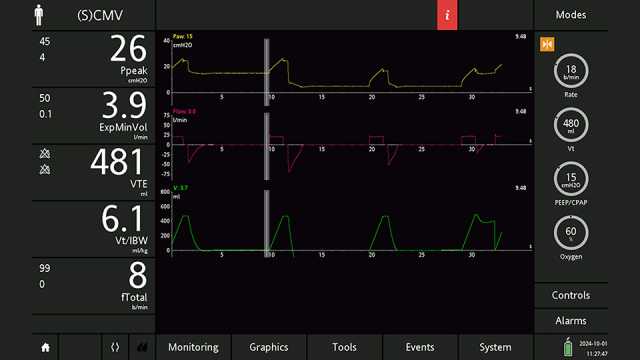
  • Рдп = PEEP, высок. = 15 смH2O


Снимок экрана с правильно расположенным курсором и Рдп 15
Рисунок 5
Снимок экрана с правильно расположенным курсором и Рдп 15
Рисунок 5

Шаг 2. Разница в PEEP

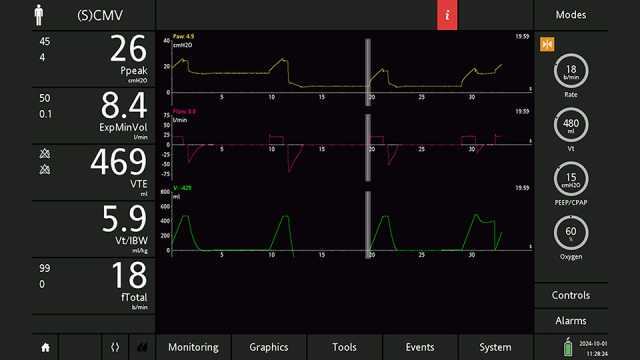
Переместите курсор в конец первого выдоха на более низком уровне PEEP (см. рисунок 6). Здесь измеряется фактическое значение PEEP, низкий и конечно-экспираторный объем относительно исходной линии (значение End-exp Vol, которое не отображается кривой, но считывается курсором). Дополнительный выдыхаемый объем (VTe,plus), вызванный падением альвеол и их дерекрутментом, является противоположным значению End-exp Vol.

  • Рдп = PEEP, низк. = 4,9 смH2O
  • V  = End-exp Vol (конечно-экспираторный объем) = –429 мл 
  • VTe,plus  = 429 мл
     

Теперь можно рассчитать разницу в PEEP:
  • PEEP,высок. = 15 смH2O
  • PEEP,низк.  = 4,9 смH2O
  • ΔPEEP      = 10,1 смH2O


Снимок экрана с правильно расположенным курсором и соответствующими значениями
Рисунок 6
Снимок экрана с правильно расположенным курсором и соответствующими значениями
Рисунок 6

Шаг 3. Нагнетание давления и соблюдение требований на нижнем уровне PEEP

Переместите курсор в конец первого инспираторного плато на более низком уровне PEEP (см. рисунок 7). Здесь измеряется давление плато (Pплато,низк.) и инспираторный дыхательный объем (VTi,низк.).

  • Рдп = Pплато,низк. = 17 смH2O
  • V = VTi,низк. = 467 мл


Теперь можно рассчитать минимальное давление вдоха и податливость на более низком уровне PEEP: 

  • ΔP,низк. = Pплато,низк. – PEEP,низк. = 17 – 4,9 = 12,1 
  • C,низк. = VTi,низк. / ΔP,низк. = 467/12,1 = 38,6

После выполнения измерений, описанных в шагах 1, 2 и 3, не забудьте проверить настройку PEEP. Для измерения соотношения R/I необходим всего одно дыхательное движение при более низком уровне PEEP. Продолжение вентиляции при более низком уровне PEEP может вызвать обширный альвеолярный коллапс и, как следствие, серьезное ухудшение обмена газов.
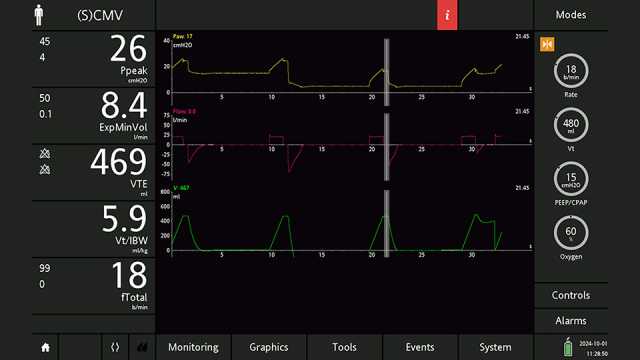
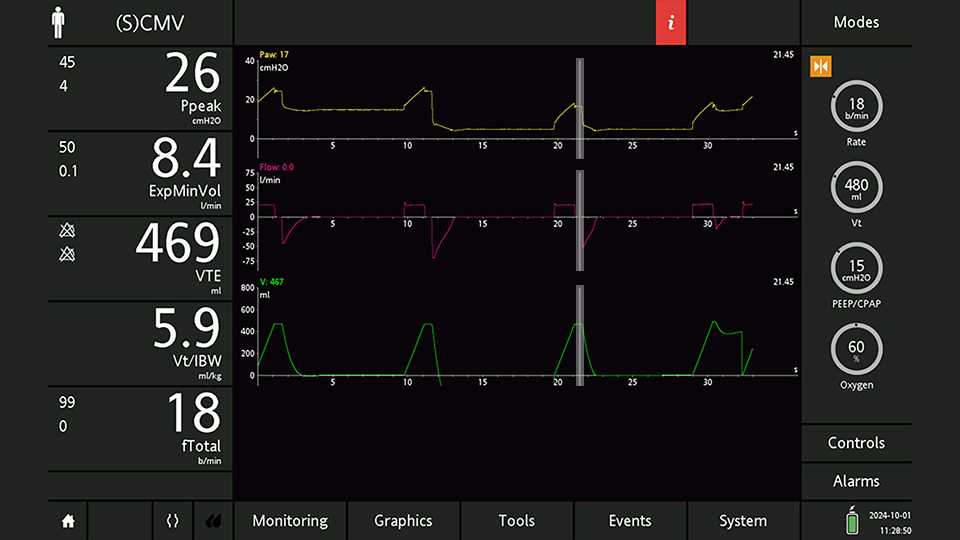
Снимок экрана с правильно расположенным курсором и показанными выше значениями
Рисунок 7
Снимок экрана с правильно расположенным курсором и показанными выше значениями
Рисунок 7

Шаг 4. Инфлированный и рекрутированный объем

Используя записанные значения, вы можете рассчитать изменения объема, вызванные исключительно инфляцией альвеол (Vinflated), и изменения, связанные с рекрутментом альвеол (Vrecruited). 

  • Vinflated = C,низк. x ΔPEEP = 38,6 x 10,1 = 390 мл
  • Vrecruited = VTe,plus – Vinflated = 429 – 390 = 39 мл

Эти два значения позволяют вычислить соотношение рекрутмента к инфляции.

  • R/I = Vrecruited/Vinflated = 39/390 = 0,10 мл  

Что это нам говорит?

Соотношение R/I ниже 0,3 –0,4 свидетельствует о низкой способности к рекрутменту. В этом случае низкий уровень PEEP (от 5 до 8 смH2O) может быть более подходящим выбором. С другой стороны, уровень PEEP не менее 12 смH2O рекомендуется использовать, когда соотношение R/I более 0,6 – 0,7, что указывает на высокую способность к рекрутменту. Промежуточные уровни PEEP рекомендуются, когда соотношение R/I составляет около 0,5 (Rosà T, Bongiovanni F, Michi T, et al. Recruitment-to-inflation ratio for bedside PEEP selection in acute respiratory distress syndrome. Minerva Anestesiol. 2024;90(7-8):694-706. doi:10.23736/S0375-9393.24.17982-53​).

Рдп – давление в дыхательных путях
V – объем
End-exp Vol – конечно-экспираторный объем
VTe,plus – дополнительный выдыхаемый дыхательный объем, связанный с резким снижением PEEP
Pплато,низк. – давление плато на более низком уровне PEEP
VTi,низк. – объем вдыхаемого воздуха на более низком уровне PEEP
C,низк. – податливость на более низком уровне PEEP

Potential for Lung Recruitment Estimated by the Recruitment-to-Inflation Ratio in Acute Respiratory Distress Syndrome. A Clinical Trial.

Chen L, Del Sorbo L, Grieco DL, et al. Potential for Lung Recruitment Estimated by the Recruitment-to-Inflation Ratio in Acute Respiratory Distress Syndrome. A Clinical Trial. Am J Respir Crit Care Med. 2020;201(2):178-187. doi:10.1164/rccm.201902-0334OC

Rationale: Response to positive end-expiratory pressure (PEEP) in acute respiratory distress syndrome depends on recruitability. We propose a bedside approach to estimate recruitability accounting for the presence of complete airway closure.Objectives: To validate a single-breath method for measuring recruited volume and test whether it differentiates patients with different responses to PEEP.Methods: Patients with acute respiratory distress syndrome were ventilated at 15 and 5 cm H2O of PEEP. Multiple pressure-volume curves were compared with a single-breath technique. Abruptly releasing PEEP (from 15 to 5 cm H2O) increases expired volume: the difference between this volume and the volume predicted by compliance at low PEEP (or above airway opening pressure) estimated the recruited volume by PEEP. This recruited volume divided by the effective pressure change gave the compliance of the recruited lung; the ratio of this compliance to the compliance at low PEEP gave the recruitment-to-inflation ratio. Response to PEEP was compared between high and low recruiters based on this ratio.Measurements and Main Results: Forty-five patients were enrolled. Four patients had airway closure higher than high PEEP, and thus recruitment could not be assessed. In others, recruited volume measured by the experimental and the reference methods were strongly correlated (R2 = 0.798; P < 0.0001) with small bias (-21 ml). The recruitment-to-inflation ratio (median, 0.5; range, 0-2.0) correlated with both oxygenation at low PEEP and the oxygenation response; at PEEP 15, high recruiters had better oxygenation (P = 0.004), whereas low recruiters experienced lower systolic arterial pressure (P = 0.008).Conclusions: A single-breath method quantifies recruited volume. The recruitment-to-inflation ratio might help to characterize lung recruitability at the bedside.Clinical trial registered with www.clinicaltrials.gov (NCT02457741).

Implementing a bedside assessment of respiratory mechanics in patients with acute respiratory distress syndrome.

Chen L, Chen GQ, Shore K, et al. Implementing a bedside assessment of respiratory mechanics in patients with acute respiratory distress syndrome. Crit Care. 2017;21(1):84. Published 2017 Apr 4. doi:10.1186/s13054-017-1671-8

BACKGROUND Despite their potential interest for clinical management, measurements of respiratory mechanics in patients with acute respiratory distress syndrome (ARDS) are seldom performed in routine practice. We introduced a systematic assessment of respiratory mechanics in our clinical practice. After the first year of clinical use, we retrospectively assessed whether these measurements had any influence on clinical management and physiological parameters associated with clinical outcomes by comparing their value before and after performing the test. METHODS The respiratory mechanics assessment constituted a set of bedside measurements to determine passive lung and chest wall mechanics, response to positive end-expiratory pressure, and alveolar derecruitment. It was obtained early after ARDS diagnosis. The results were provided to the clinical team to be used at their own discretion. We compared ventilator settings and physiological variables before and after the test. The physiological endpoints were oxygenation index, dead space, and plateau and driving pressures. RESULTS Sixty-one consecutive patients with ARDS were enrolled. Esophageal pressure was measured in 53 patients (86.9%). In 41 patients (67.2%), ventilator settings were changed after the measurements, often by reducing positive end-expiratory pressure or by switching pressure-targeted mode to volume-targeted mode. Following changes, the oxygenation index, airway plateau, and driving pressures were significantly improved, whereas the dead-space fraction remained unchanged. The oxygenation index continued to improve in the next 48 h. CONCLUSIONS Implementing a systematic respiratory mechanics test leads to frequent individual adaptations of ventilator settings and allows improvement in oxygenation indexes and reduction of the risk of overdistention at the same time. TRIAL REGISTRATION The present study involves data from our ongoing registry for respiratory mechanics (ClinicalTrials.gov identifier: NCT02623192 . Registered 30 July 2015).

Recruitment-to-inflation ratio for bedside PEEP selection in acute respiratory distress syndrome.

Rosà T, Bongiovanni F, Michi T, et al. Recruitment-to-inflation ratio for bedside PEEP selection in acute respiratory distress syndrome. Minerva Anestesiol. 2024;90(7-8):694-706. doi:10.23736/S0375-9393.24.17982-5

In acute respiratory distress syndrome, the role of positive end-expiratory pressure (PEEP) to prevent ventilator-induced lung injury is controversial. Randomized trials comparing higher versus lower PEEP strategies failed to demonstrate a clinical benefit. This may depend on the inter-individually variable potential for lung recruitment (i.e. recruitability), which would warrant PEEP individualization to balance alveolar recruitment and the unavoidable baby lung overinflation produced by high pressure. Many techniques have been used to assess recruitability, including lung imaging, multiple pressure-volume curves and lung volume measurement. The Recruitment-to-Inflation ratio (R/I) has been recently proposed to bedside assess recruitability without additional equipment. R/I assessment is a simplified technique based on the multiple pressure-volume curve concept: it is measured by monitoring respiratory mechanics and exhaled tidal volume during a 10-cmH2O one-breath derecruitment maneuver after a short high-PEEP test. R/I scales recruited volume to respiratory system compliance, and normalizes recruitment to a proxy of actual lung size. With modest R/I (<0.3-0.4), setting low PEEP (5-8 cmH2O) may be advisable; with R/I>0.6-0.7, high PEEP (≥15 cmH2O) can be considered, provided that airway and/or transpulmonary plateau pressure do not exceed safety limits. In case of intermediate R/I (≈0.5), a more granular assessment of recruitability may be needed. This could be accomplished with advanced monitoring tools, like sequential lung volume measurement with granular R/I assessment or electrical impedance tomography monitoring during a decremental PEEP trial. In this review, we discuss R/I rationale, applications and limits, providing insights on its clinical use for PEEP selection in moderate-to-severe acute respiratory distress syndrome.

Related articles. Get a deeper look