

An ineffective effort is defined as a patient effort that is unable to trigger the delivery of a mechanical breath.
What are the causes?
The most common causes are:
Trigger threshold set too high
Pressure support too high
Set frequency and/or inspiratory time too high (in controlled/assisted modes)
Tidal volume set too high
Presence of AutoPEEP
Low respiratory drive
Weak inspiratory effort
Sedation
What is visible on the waveform?
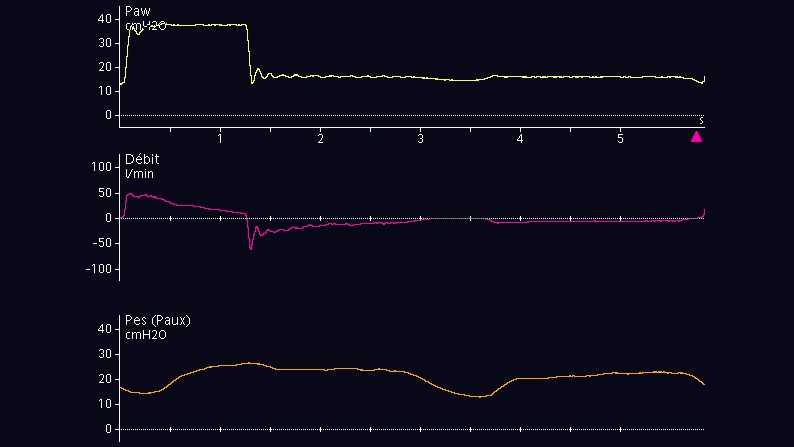
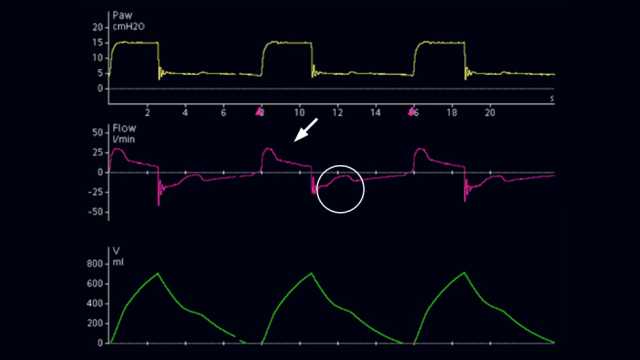
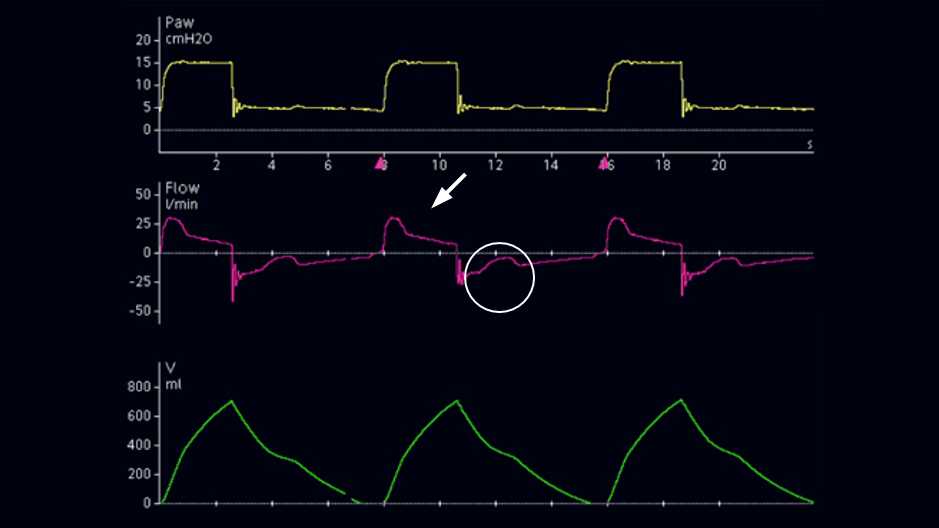
Several waveform characteristics can assist in the diagnosis (see Figure 1):
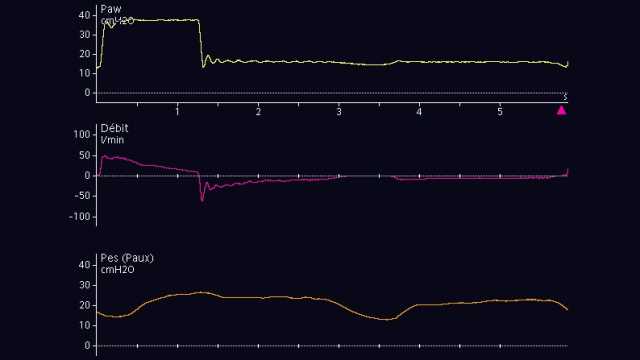
The pressure/time scalar waveform will show a decrease in baseline airway pressure not followed by ventilator support
The flow/time scalar waveform will reveal an abrupt change in the steepness of the waveform (decrease in expiratory flow or increase in inspiratory flow not followed by ventilator support)
The esophageal pressure/time scalar waveform will display a decrease in pleural pressure not followed by ventilator support
Figure 1: Waveform characteristics indicating an ineffective effort
How can I resolve the issue?
The most practical adjustments that can be made on the ventilator to reduce ineffective efforts are as follows:
Minimize AutoPEEP by reducing minute ventilation
Reduce pressure support and/or tidal volume
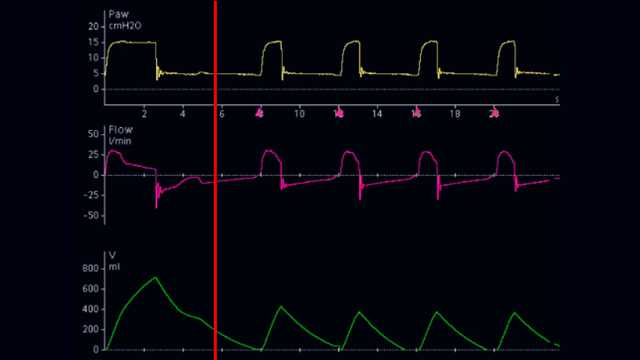
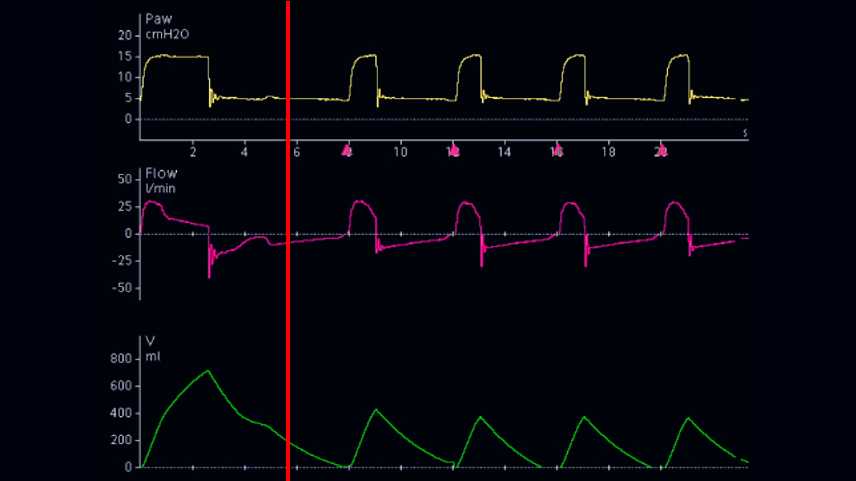
Adjust the expiratory trigger sensitivity (ETS) to make it more sensitive to the patient's activity (see Figures 2 and 3)
Figure 2: Ineffective effort with ETS set at 25%
Figure 3: ETS increased to 50% at the red line, resulting in elimination of ineffective efforts