

Session expired

Due to inactivity your session has expired. Please login again.


Zu Vereinigte Staaten wechseln
 Technologien

Nichtinvasive Beatmung.

Ihre erste Massnahme

"" ""

Schnell, effektiv, patientenorientiert. NIV während des Transports

Eine zügige und wirksame Atemunterstützung ist von entscheidender Bedeutung. Die nichtinvasive Beatmung (NIV) ist ein wertvolles Werkzeug, um akute Atemnot zu behandeln, ohne intubieren zu müssen.

Die Vorteile der nichtinvasiven Beatmung in der präklinischen Versorgung

Schnelle Bereitstellung

NIV lässt sich vor Ort schnell einleiten und lindert durch eine verbesserte Oxygenierung und Beatmung sofort die Atemnot der Patienten (Roessler MS, Schmid DS, Michels P, et al. Early out-of-hospital non-invasive ventilation is superior to standard medical treatment in patients with acute respiratory failure: a pilot study. Emerg Med J. 2012;29(5):409-414. doi:10.1136/emj.2010.1063931​).

Niedrigere Intubationsraten

Es hat sich gezeigt, dass bei einer frühzeitigen NIV seltener eine Intubation notwendig ist. Dies reduziert die damit verbundenen Risiken und verbessert das Behandlungsergebnis (Farmer MJS, Callahan CD, Hughes AM, Riska KL, Hill NS. Applying Noninvasive Ventilation in Treatment of Acute Exacerbation of COPD Using Evidence-Based Interprofessional Clinical Practice. Chest. 2024;165(6):1469-1480. doi:10.1016/j.chest.2024.02.0402​).

Höherer Patientenkomfort

Durch die Abwendung eines invasiven Atemwegsmanagements verbessert NIV Wohlbefinden und Kooperation des Patienten während des Transports (Criner GJ, Gayen S, Zantah M, et al. Clinical review of non-invasive ventilation. Eur Respir J. 2024;64(5):2400396. Published 2024 Nov 7. doi:10.1183/13993003.00396-20243​).

Verbessertes Sicherheitsprofil

Der NIV-Einsatz in geeigneten Fällen kann die Häufigkeit von Komplikationen wie ventilatorassoziierten Pneumonien sowie die Dauer von Krankenhausaufenthalten senken (Criner GJ, Gayen S, Zantah M, et al. Clinical review of non-invasive ventilation. Eur Respir J. 2024;64(5):2400396. Published 2024 Nov 7. doi:10.1183/13993003.00396-20243​).

""

Situationen für den Einsatz. Die klinische Anwendung in der präklinischen Versorgung

  1. Verschlechterung von COPD (Chronische obstruktive LungenerkrankungA​): NIV ist eine wirksame Unterstützung bei der Behandlung einer akuten COPD-Exazerbation: Sie verbessert den Gasaustausch beim Patienten und reduziert die Atemarbeit ​(Osadnik CR, Tee VS, Carson-Chahhoud KV, Picot J, Wedzicha JA, Smith BJ. Non-invasive ventilation for the management of acute hypercapnic respiratory failure due to exacerbation of chronic obstructive pulmonary disease. Cochrane Database Syst Rev. 2017;7(7):CD004104. Published 2017 Jul 13. doi:10.1002/14651858.CD004104.pub44​).
  2. Kardiogenes Lungenödem: Bei Patienten mit einem akuten Lungenödem kann NIV die Vor- und Nachlast verringern und so das Herzzeitvolumen und die Atemfunktion verbessern (Petrosyan H, Ghrmajyan H, Iskandaryan N, Tsaturyan A, Torozyan SH, Hayrapetyan H. Clinical effectiveness of non-invasive ventilation in patients with acute cardiogenic pulmonary edema. Eur Heart J Acute Cardiovasc Care. 2025 Apr;14(Suppl 1):zuaf044.037. doi: 10.1093/ehjacc/zuaf044.0375​).
  3. Akutes hypoxämisches Atemversagen: NIV kann bei der Behandlung verschiedener Ursachen von hypoxämischem Atemversagen eingesetzt werden und stellt eine entscheidende Unterstützung während des Transports ins Krankenhaus dar (Munshi L, Mancebo J, Brochard LJ. Noninvasive Respiratory Support for Adults with Acute Respiratory Failure. N Engl J Med. 2022;387(18):1688-1698. doi:10.1056/NEJMra22045566​).
  4. Akutes schweres Asthma: Eine frühzeitige NIV kann zu mehr Sicherheit in der präklinischen Stabilisierung beitragen, indem sie die Atemarbeit vermindert, die Beatmung verbessert und bei schweren Asthmafällen das Risiko einer Intubation reduziert (Soroksky A, Stav D, Shpirer I. A pilot prospective, randomized, placebo-controlled trial of bilevel positive airway pressure in acute asthmatic attack. Chest. 2003;123(4):1018-1025. doi:10.1378/chest.123.4.10187​).

Gordon Miller

Kundenstimmen

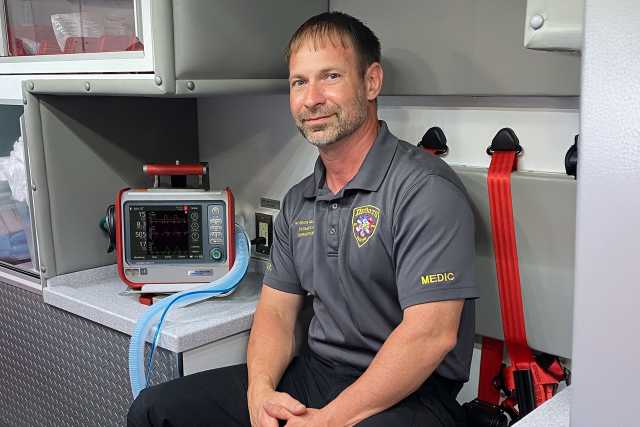
Weil der HAMILTON-T1 auch nichtinvasive Modi bietet, konnte ich bereits viele Intubationen abwenden, Risiken für die Patienten senken und Behandlungsergebnisse verbessern. In den 8 Jahren, die ich den HAMILTON-T1 nun schon verwende, musste ich nur einmal einen Patienten intubieren, der bei Beginn der Versorgung ein NIV-Kandidat war.

Gordon Miller

Aufsicht und Schulung
DeSoto Parish EMS, Mansfield (LA), USA

Verfügbarkeit

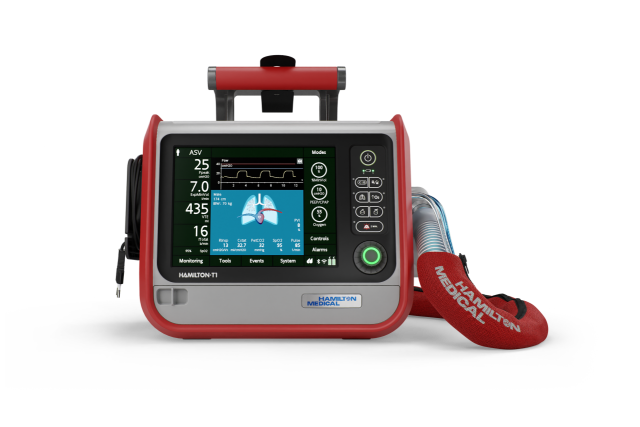
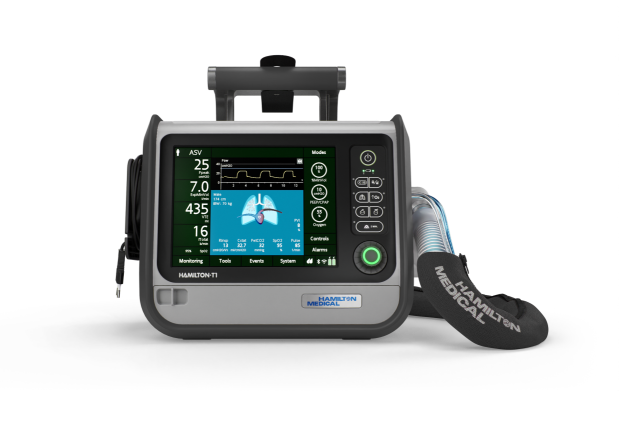
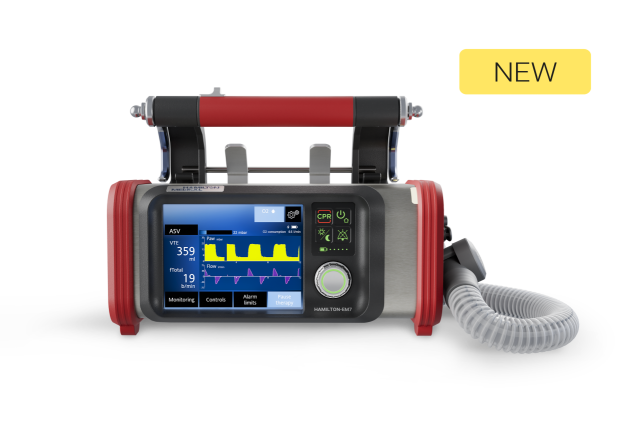
Die nichtinvasive Beatmung ist bei den Modellen HAMILTON-T1 und HAMILTON-EM7 als optionaler Beatmungsmodus verfügbar.

Fußnoten

  • A. Chronische obstruktive Lungenerkrankung.

Referenzen

  1. 1. Roessler MS, Schmid DS, Michels P, et al. Early out-of-hospital non-invasive ventilation is superior to standard medical treatment in patients with acute respiratory failure: a pilot study. Emerg Med J. 2012;29(5):409-414. doi:10.1136/emj.2010.106393
  2. 2. Farmer MJS, Callahan CD, Hughes AM, Riska KL, Hill NS. Applying Noninvasive Ventilation in Treatment of Acute Exacerbation of COPD Using Evidence-Based Interprofessional Clinical Practice. Chest. 2024;165(6):1469-1480. doi:10.1016/j.chest.2024.02.040
  3. 3. Criner GJ, Gayen S, Zantah M, et al. Clinical review of non-invasive ventilation. Eur Respir J. 2024;64(5):2400396. Published 2024 Nov 7. doi:10.1183/13993003.00396-2024
  4. 4. Osadnik CR, Tee VS, Carson-Chahhoud KV, Picot J, Wedzicha JA, Smith BJ. Non-invasive ventilation for the management of acute hypercapnic respiratory failure due to exacerbation of chronic obstructive pulmonary disease. Cochrane Database Syst Rev. 2017;7(7):CD004104. Published 2017 Jul 13. doi:10.1002/14651858.CD004104.pub4
  5. 5. Petrosyan H, Ghrmajyan H, Iskandaryan N, Tsaturyan A, Torozyan SH, Hayrapetyan H. Clinical effectiveness of non-invasive ventilation in patients with acute cardiogenic pulmonary edema. Eur Heart J Acute Cardiovasc Care. 2025 Apr;14(Suppl 1):zuaf044.037. doi: 10.1093/ehjacc/zuaf044.037
  6. 6. Munshi L, Mancebo J, Brochard LJ. Noninvasive Respiratory Support for Adults with Acute Respiratory Failure. N Engl J Med. 2022;387(18):1688-1698. doi:10.1056/NEJMra2204556
  7. 7. Soroksky A, Stav D, Shpirer I. A pilot prospective, randomized, placebo-controlled trial of bilevel positive airway pressure in acute asthmatic attack. Chest. 2003;123(4):1018-1025. doi:10.1378/chest.123.4.1018

Early out-of-hospital non-invasive ventilation is superior to standard medical treatment in patients with acute respiratory failure: a pilot study.

Roessler MS, Schmid DS, Michels P, et al. Early out-of-hospital non-invasive ventilation is superior to standard medical treatment in patients with acute respiratory failure: a pilot study. Emerg Med J. 2012;29(5):409-414. doi:10.1136/emj.2010.106393

OBJECTIVE To assess in patients with acute respiratory failure (ARF) whether out-of-hospital (OOH) non-invasive ventilation (NIV) is feasible, safe and more effective compared with standard medical therapy (SMT). PATIENTS AND INTERVENTIONS Patients with OOH ARF were randomly assigned to receive either SMT or NIV. MEASUREMENTS AND RESULTS Fifty-one patients were enrolled, 26 of whom were randomly assigned to SMT and 25 of whom received NIV. Two patients were excluded because of protocol violations. OOH NIV was safe and effective in all patients. In the SMT group, treatment was not effective in five of 25 patients who required OOH mechanical ventilation (p=0.05). Patients in the SMT group were admitted to an intensive care unit (ICU) more frequently (n=17) (p<0.05) and for longer periods (3.7±6.4 days) (p=0.03) compared with patients in the NIV group (n=9, 1.3±2.6 days). Six patients in the SMT group required subsequent inhospital intubation and invasive ventilation during their hospital stays; only one patient in the NIV group required intubation (p=0.10). In contrast, patients in the NIV group received NIV more frequently (n=14) in hospital compared with patients in the SMT group (n=5) (p<0.01). CONCLUSIONS OOH NIV proved to be feasible, safe and more effective for the treatment of ARF compared with SMT. OOH NIV promotes inhospital treatment with NIV and may reduce the frequency and length of ICU stays. Because the risks of OOH emergency intubation can be avoided, NIV should be the first-line treatment in OOH ARF if no contraindications are present.

Applying Noninvasive Ventilation in Treatment of Acute Exacerbation of COPD Using Evidence-Based Interprofessional Clinical Practice.

Farmer MJS, Callahan CD, Hughes AM, Riska KL, Hill NS. Applying Noninvasive Ventilation in Treatment of Acute Exacerbation of COPD Using Evidence-Based Interprofessional Clinical Practice. Chest. 2024;165(6):1469-1480. doi:10.1016/j.chest.2024.02.040

When administered as first-line intervention to patients admitted with acute hypercapnic respiratory failure secondary to COPD exacerbation in conjunction with guideline-recommended therapies, noninvasive ventilation (NIV) has been shown to reduce mortality and endotracheal intubation. Opportunities to increase uptake of NIV continue to exist despite inclusion of this therapy in clinical guidelines. Identifying patients appropriate for NIV, and subsequently providing close monitoring to determine an improvement in clinical condition involves a team consisting of physician, nurse, and respiratory therapist in institutions that successfully implement NIV. We describe to our knowledge the first known evidence-based algorithm speaking to initiation, titration, monitoring, and weaning of NIV in treatment of acute exacerbation of COPD that incorporates the necessary interprofessional collaboration among physicians, nurses, and respiratory therapists caring for these patients.

Clinical review of non-invasive ventilation.

Criner GJ, Gayen S, Zantah M, et al. Clinical review of non-invasive ventilation. Eur Respir J. 2024;64(5):2400396. Published 2024 Nov 7. doi:10.1183/13993003.00396-2024

Non-invasive ventilation (NIV) is the mainstay to treat patients who need augmentation of ventilation for acute and chronic forms of respiratory failure. The last several decades have witnessed an extension of the indications for NIV to a variety of acute and chronic lung diseases. Evolving advancements in technology and personalised approaches to patient care make it feasible to prioritise patient-centred care models that deliver home-based management using telemonitoring and telemedicine systems support. These trends may improve patient outcomes, reduce healthcare costs and improve the quality of life for patients who suffer from chronic diseases that precipitate respiratory failure.

Non-invasive ventilation for the management of acute hypercapnic respiratory failure due to exacerbation of chronic obstructive pulmonary disease.

Osadnik CR, Tee VS, Carson-Chahhoud KV, Picot J, Wedzicha JA, Smith BJ. Non-invasive ventilation for the management of acute hypercapnic respiratory failure due to exacerbation of chronic obstructive pulmonary disease. Cochrane Database Syst Rev. 2017;7(7):CD004104. Published 2017 Jul 13. doi:10.1002/14651858.CD004104.pub4

BACKGROUND Non-invasive ventilation (NIV) with bi-level positive airway pressure (BiPAP) is commonly used to treat patients admitted to hospital with acute hypercapnic respiratory failure (AHRF) secondary to an acute exacerbation of chronic obstructive pulmonary disease (AECOPD). OBJECTIVES To compare the efficacy of NIV applied in conjunction with usual care versus usual care involving no mechanical ventilation alone in adults with AHRF due to AECOPD. The aim of this review is to update the evidence base with the goals of supporting clinical practice and providing recommendations for future evaluation and research. SEARCH METHODS We identified trials from the Cochrane Airways Group Specialised Register of trials (CAGR), which is derived from systematic searches of bibliographic databases including the Cochrane Central Register of Controlled Trials (CENTRAL), MEDLINE, Embase, the Cumulative Index to Nursing and Allied Health Literature (CINAHL), the Allied and Complementary Medicine Database (AMED), and PsycINFO, and through handsearching of respiratory journals and meeting abstracts. This update to the original review incorporates the results of database searches up to January 2017. SELECTION CRITERIA All randomised controlled trials that compared usual care plus NIV (BiPAP) versus usual care alone in an acute hospital setting for patients with AECOPD due to AHRF were eligible for inclusion. AHRF was defined by a mean admission pH < 7.35 and mean partial pressure of carbon dioxide (PaCO2) > 45 mmHg (6 kPa). Primary review outcomes were mortality during hospital admission and need for endotracheal intubation. Secondary outcomes included hospital length of stay, treatment intolerance, complications, changes in symptoms, and changes in arterial blood gases. DATA COLLECTION AND ANALYSIS Two review authors independently applied the selection criteria to determine study eligibility, performed data extraction, and determined risk of bias in accordance with Cochrane guidelines. Review authors undertook meta-analysis for data that were both clinically and statistically homogenous, and analysed data as both one overall pooled sample and according to two predefined subgroups related to exacerbation severity (admission pH between 7.35 and 7.30 vs below 7.30) and NIV treatment setting (intensive care unit-based vs ward-based). We reported results for mortality, need for endotracheal intubation, and hospital length of stay in a 'Summary of findings' table and rated their quality in accordance with GRADE criteria. MAIN RESULTS We included in the review 17 randomised controlled trials involving 1264 participants. Available data indicate that mean age at recruitment was 66.8 years (range 57.7 to 70.5 years) and that most participants (65%) were male. Most studies (12/17) were at risk of performance bias, and for most (14/17), the risk of detection bias was uncertain. These risks may have affected subjective patient-reported outcome measures (e.g. dyspnoea) and secondary review outcomes, respectively.Use of NIV decreased the risk of mortality by 46% (risk ratio (RR) 0.54, 95% confidence interval (CI) 0.38 to 0.76; N = 12 studies; number needed to treat for an additional beneficial outcome (NNTB) 12, 95% CI 9 to 23) and decreased the risk of needing endotracheal intubation by 65% (RR 0.36, 95% CI 0.28 to 0.46; N = 17 studies; NNTB 5, 95% CI 5 to 6). We graded both outcomes as 'moderate' quality owing to uncertainty regarding risk of bias for several studies. Inspection of the funnel plot related to need for endotracheal intubation raised the possibility of some publication bias pertaining to this outcome. NIV use was also associated with reduced length of hospital stay (mean difference (MD) -3.39 days, 95% CI -5.93 to -0.85; N = 10 studies), reduced incidence of complications (unrelated to NIV) (RR 0.26, 95% CI 0.13 to 0.53; N = 2 studies), and improvement in pH (MD 0.05, 95% CI 0.02 to 0.07; N = 8 studies) and in partial pressure of oxygen (PaO2) (MD 7.47 mmHg, 95% CI 0.78 to 14.16 mmHg; N = 8 studies) at one hour. A trend towards improvement in PaCO2 was observed, but this finding was not statistically significant (MD -4.62 mmHg, 95% CI -11.05 to 1.80 mmHg; N = 8 studies). Post hoc analysis revealed that this lack of benefit was due to the fact that data from two studies at high risk of bias showed baseline imbalance for this outcome (worse in the NIV group than in the usual care group). Sensitivity analysis revealed that exclusion of these two studies resulted in a statistically significant positive effect of NIV on PaCO2. Treatment intolerance was significantly greater in the NIV group than in the usual care group (risk difference (RD) 0.11, 95% CI 0.04 to 0.17; N = 6 studies). Results of analysis showed a non-significant trend towards reduction in dyspnoea with NIV compared with usual care (standardised mean difference (SMD) -0.16, 95% CI -0.34 to 0.02; N = 4 studies). Subgroup analyses revealed no significant between-group differences. AUTHORS' CONCLUSIONS Data from good quality randomised controlled trials show that NIV is beneficial as a first-line intervention in conjunction with usual care for reducing the likelihood of mortality and endotracheal intubation in patients admitted with acute hypercapnic respiratory failure secondary to an acute exacerbation of chronic obstructive pulmonary disease (COPD). The magnitude of benefit for these outcomes appears similar for patients with acidosis of a mild (pH 7.30 to 7.35) versus a more severe nature (pH < 7.30), and when NIV is applied within the intensive care unit (ICU) or ward setting.

Clinical effectiveness of non-invasive ventilation in patients with acute cardiogenic pulmonary edema

Petrosyan H, Ghrmajyan H, Iskandaryan N, Tsaturyan A, Torozyan SH, Hayrapetyan H. Clinical effectiveness of non-invasive ventilation in patients with acute cardiogenic pulmonary edema. Eur Heart J Acute Cardiovasc Care. 2025 Apr;14(Suppl 1):zuaf044.037. doi: 10.1093/ehjacc/zuaf044.037

Noninvasive Respiratory Support for Adults with Acute Respiratory Failure.

Munshi L, Mancebo J, Brochard LJ. Noninvasive Respiratory Support for Adults with Acute Respiratory Failure. N Engl J Med. 2022;387(18):1688-1698. doi:10.1056/NEJMra2204556

A pilot prospective, randomized, placebo-controlled trial of bilevel positive airway pressure in acute asthmatic attack.

Soroksky A, Stav D, Shpirer I. A pilot prospective, randomized, placebo-controlled trial of bilevel positive airway pressure in acute asthmatic attack. Chest. 2003;123(4):1018-1025. doi:10.1378/chest.123.4.1018

STUDY OBJECTIVE Noninvasive ventilation has been shown to be effective in patients with acute respiratory failure due to pulmonary edema and exacerbations of COPD. Its role in an acute asthmatic attack, however, is uncertain. The purpose of this pilot study was to compare conventional asthma treatment with nasal bilevel pressure ventilation (BPV) [BiPAP; Respironics; Murrysville, PA] plus conventional treatment in patients with a severe asthmatic attack admitted to the emergency department. DESIGN A prospective, randomized, placebo-controlled study. SETTING An emergency department at a university hospital. PATIENTS Thirty patients with a severe asthma attack were recruited from a larger group of 124 asthmatic patients seen in the emergency department. Fifteen patients were randomly assigned to BPV plus conventional therapy and 15 patients to conventional therapy alone. The two groups had similar clinical characteristics on hospital admission. Mean (+/- SD) FEV(1) on recruitment was 37.3 +/- 10.7% in the BPV group and 33.8 +/- 10.2% in the control group (p = not significant). INTERVENTIONS AND MEASUREMENTS BPV with predetermined inspiratory and expiratory pressures was applied for 3 h in the BPV group; in the control group, a similar sham device with subtherapeutic pressures was applied for 3 h. Bedside lung function test results and vital signs were obtained at baseline, and during and at the completion of the study protocol. RESULTS The use of BPV significantly improved lung function test results. Eighty percents of the patients in the BPV group reached the predetermined primary end points (an increase of at least 50% in FEV(1) as compared to baseline), vs 20% of control patients (p < 0.004). Mean rise in FEV(1) was 53.5 +/- 23.4% in the BPV group and 28.5 +/- 22.6% in the conventional treatment group (p = 0.006). The intention-to-treat analysis of the secondary end point rate of hospitalization included 33 patients. Hospitalization was required for 3 of 17 patients (17.6%) in the BPV group, as compared with 10 of 16 patients (62.5%) in the control group (p = 0.0134). CONCLUSION In selected patients with a severe asthma attack, the addition of BPV to conventional treatment can improve lung function, alleviate the attack faster, and significantly reduce the need for hospitalization.