







Session expired

Due to inactivity your session has expired. Please login again.

Nous avons remarqué que vous aviez consulté notre site internet depuis le pays États-Unis.
Nous proposons une version du site internet propre à votre pays (États-Unis).

Passer à États-Unis

Nouvelles fonctions et améliorations.

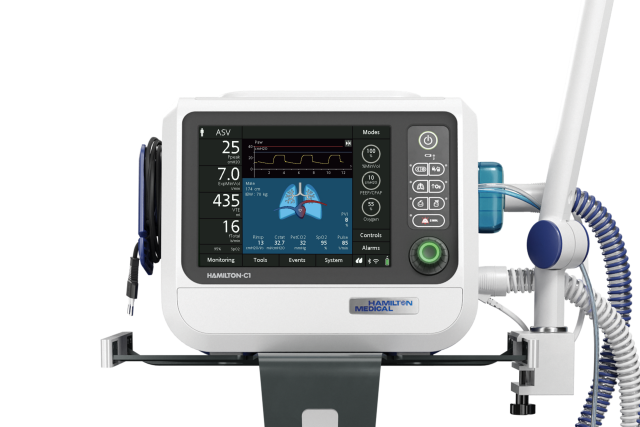
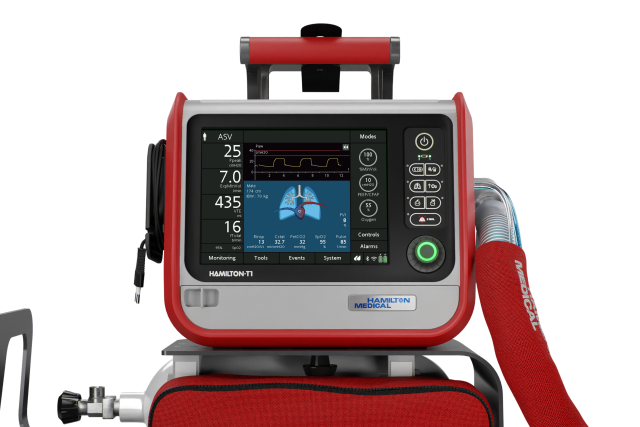
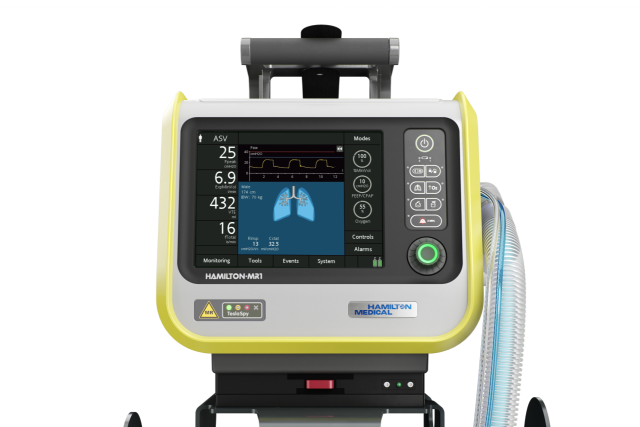
Version logicielle 3.1.1 pour le HAMILTON-C1/T1/MR1

Photo du HAMILTON-C1, HAMILTON-T1 et HAMILTON-MR1 côte à côte Photo du HAMILTON-C1, HAMILTON-T1 et HAMILTON-MR1 côte à côte

Une seule mise à jour pour trois avantages. La puissance du logiciel 3.1.1

La mise à jour logicielle 3.1.1 apporte trois nouvelles fonctions très intéressantes (Non commercialisé dans certains paysA​) aux ventilateurs HAMILTON-C1/T1/MR1.

Pour obtenir de plus amples informations sur la mise à jour, reportez-vous à la brochure correspondante, aux notes de mise à jour logicielle v3.1.1 et au Manuel de l’utilisateur de votre dispositif.
 

Les nouvelles options logicielles

NIV_Adult

Options NIV-only. La solution complète pour la ventilation non invasive

Moins peut également signifier plus ! Le HAMILTON-C1/T1 doté de l'option NIV-only offre exactement les modes dont vous avez besoin pour une ventilation non invasive de haute performance.


Cela vous permet de passer en toute facilité entre les modes non invasifs et la thérapie d'oxygène à haut débit (Également appelée thérapie par canule nasale à haut débit. Cette terminologie peut être utilisée indifféremment avec la thérapie d'oxygène à haut débit.B​) (en option) pour les enfants et les adultes, sans changer de dispositif ni même de circuit respiratoire.

O2 assist

O2 assist. Votre assistant dans les soins de précision

La fonction O2 assist sert d'assistant de soins de précision au chevet du patient. Elle permet de maintenir les niveaux de SpO2 de votre patient dans les plages cibles définies individuellement en réglant en continu l'alimentation en oxygène.


Cela garantit une gestion d'oxygène réactive et continue pour votre patient et vous évite d’avoir à tourner sans cesse les boutons (Roca O, Caritg O, Santafé M, et al. Closed-loop oxygen control improves oxygen therapy in acute hypoxemic respiratory failure patients under high flow nasal oxygen: a randomized cross-over study (the HILOOP study). Crit Care. 2022;26(1):108. Published 2022 Apr 14. doi:10.1186/s13054-022-03970-w1​, Atakul G, Ceylan G, Sandal O, et al. Closed-loop oxygen usage during invasive mechanical ventilation of pediatric patients (CLOUDIMPP): a randomized controlled cross-over study. Front Med (Lausanne). 2024;11:1426969. Published 2024 Sep 10. doi:10.3389/fmed.2024.14269692​).

Intellisync

IntelliSync®+. Garder un œil sur la synchronie patient-ventilateur

L'œil exercé d'un expert de la ventilation est capable de détecter des asynchronies en analysant les profils des formes d'ondes de débit et de pression. L'IntelliSync+ fournit une prise en charge précieuse du processus grâce à la gestion automatique du déclenchement et du cyclage.


Grâce à cette fonction, les professionnels de santé passent moins de temps à ajuster les réglages et peuvent se consacrer davantage à d’autres tâches importantes au chevet du patient.

Standard En option Non disponible
HAMILTON-C1 HAMILTON-T1 HAMILTON-MR1

O2 assist

Option NIV-only

IntelliSync+

Disponibilité

Découvrez-le de vos propres yeux. Réservez une démonstration personnelle gratuite ou programmez un rappel

Réservez une démonstration personnelle gratuite ou un appel avec l'un de nos spécialistes, ou demandez simplement plus d'informations. Remplissez le formulaire ci-dessous ; nous vous répondrons au plus vite.

Closed-loop oxygen control improves oxygen therapy in acute hypoxemic respiratory failure patients under high flow nasal oxygen: a randomized cross-over study (the HILOOP study).

Roca O, Caritg O, Santafé M, et al. Closed-loop oxygen control improves oxygen therapy in acute hypoxemic respiratory failure patients under high flow nasal oxygen: a randomized cross-over study (the HILOOP study). Crit Care. 2022;26(1):108. Published 2022 Apr 14. doi:10.1186/s13054-022-03970-w

BACKGROUND We aimed to assess the efficacy of a closed-loop oxygen control in critically ill patients with moderate to severe acute hypoxemic respiratory failure (AHRF) treated with high flow nasal oxygen (HFNO). METHODS In this single-centre, single-blinded, randomized crossover study, adult patients with moderate to severe AHRF who were treated with HFNO (flow rate ≥ 40 L/min with FiO2 ≥ 0.30) were randomly assigned to start with a 4-h period of closed-loop oxygen control or 4-h period of manual oxygen titration, after which each patient was switched to the alternate therapy. The primary outcome was the percentage of time spent in the individualized optimal SpO2 range. RESULTS Forty-five patients were included. Patients spent more time in the optimal SpO2 range with closed-loop oxygen control compared with manual titrations of oxygen (96.5 [93.5 to 98.9] % vs. 89 [77.4 to 95.9] %; p < 0.0001) (difference estimate, 10.4 (95% confidence interval 5.2 to 17.2). Patients spent less time in the suboptimal range during closed-loop oxygen control, both above and below the cut-offs of the optimal SpO2 range, and less time above the suboptimal range. Fewer number of manual adjustments per hour were needed with closed-loop oxygen control. The number of events of SpO2 < 88% and < 85% were not significantly different between groups. CONCLUSIONS Closed-loop oxygen control improves oxygen administration in patients with moderate-to-severe AHRF treated with HFNO, increasing the percentage of time in the optimal oxygenation range and decreasing the workload of healthcare personnel. These results are especially relevant in a context of limited oxygen supply and high medical demand, such as the COVID-19 pandemic. Trial registration The HILOOP study was registered at www. CLINICALTRIALS gov under the identifier NCT04965844 .

Closed-loop oxygen usage during invasive mechanical ventilation of pediatric patients (CLOUDIMPP): a randomized controlled cross-over study.

Atakul G, Ceylan G, Sandal O, et al. Closed-loop oxygen usage during invasive mechanical ventilation of pediatric patients (CLOUDIMPP): a randomized controlled cross-over study. Front Med (Lausanne). 2024;11:1426969. Published 2024 Sep 10. doi:10.3389/fmed.2024.1426969

BACKGROUND The aim of this study is the evaluation of a closed-loop oxygen control system in pediatric patients undergoing invasive mechanical ventilation (IMV). METHODS Cross-over, multicenter, randomized, single-blind clinical trial. Patients between the ages of 1 month and 18 years who were undergoing IMV therapy for acute hypoxemic respiratory failure (AHRF) were assigned at random to either begin with a 2-hour period of closed-loop oxygen control or manual oxygen titrations. By using closed-loop oxygen control, the patients' SpO2 levels were maintained within a predetermined target range by the automated adjustment of the FiO2. During the manual oxygen titration phase of the trial, healthcare professionals at the bedside made manual changes to the FiO2, while maintaining the same target range for SpO2. Following either period, the patient transitioned to the alternative therapy. The outcomes were the percentage of time spent in predefined SpO2 ranges ±2% (primary), FiO2, total oxygen use, and the number of manual adjustments. FINDINGS The median age of included 33 patients was 17 (13-55.5) months. In contrast to manual oxygen titrations, patients spent a greater proportion of time within a predefined optimal SpO2 range when the closed-loop oxygen controller was enabled (95.7% [IQR 92.1-100%] vs. 65.6% [IQR 41.6-82.5%]), mean difference 33.4% [95%-CI 24.5-42%]; P < 0.001). Median FiO2 was lower (32.1% [IQR 23.9-54.1%] vs. 40.6% [IQR 31.1-62.8%]; P < 0.001) similar to total oxygen use (19.8 L/h [IQR 4.6-64.8] vs. 39.4 L/h [IQR 16.8-79]; P < 0.001); however, median SpO2/FiO2 was higher (329.4 [IQR 180-411.1] vs. 246.7 [IQR 151.1-320.5]; P < 0.001) with closed-loop oxygen control. With closed-loop oxygen control, the median number of manual adjustments reduced (0.0 [IQR 0.0-0.0] vs. 1 [IQR 0.0-2.2]; P < 0.001). CONCLUSION Closed-loop oxygen control enhances oxygen therapy in pediatric patients undergoing IMV for AHRF, potentially leading to more efficient utilization of oxygen. This technology also decreases the necessity for manual adjustments, which could reduce the workloads of healthcare providers. CLINICAL TRIAL REGISTRATION This research has been submitted to ClinicalTrials.gov (NCT05714527).