
Notes en bas de page
- A. En option sur le HAMILTON-T1



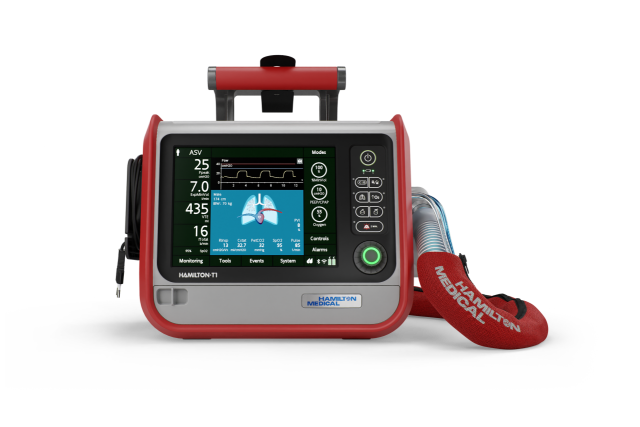
Si vos patients doivent quitter l'USI, leurs besoins en matière de ventilation restent tout aussi complexes. Pendant le transport, vous devez maintenir une thérapie respiratoire de haut niveau tout en pouvant accéder aux modes, au monitorage et aux réglages de précision, dans des environnements inconnus ou en mouvement.

L'état d'un patient peut se détériorer rapidement pendant le transport. Il vous faut un ventilateur qui répond tout aussi rapidement, vous donne des informations claires, un accès rapide aux alarmes et la capacité d'adapter les réglages ventilatoires en quelques secondes.
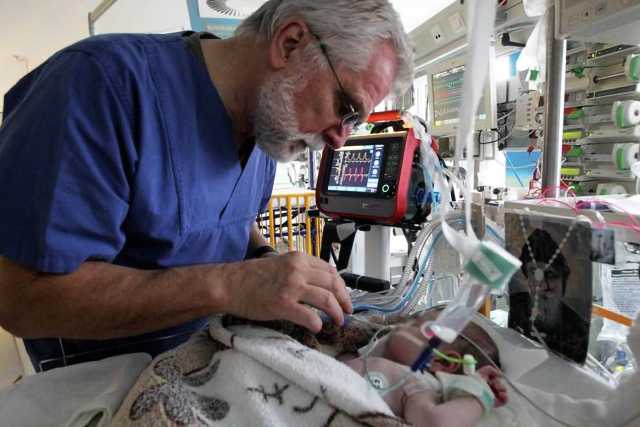
Nous utilisons le HAMILTON-T1 pour le transport intrahospitalier et les transferts vers d'autres hôpitaux. Le patient bénéficie ainsi de la même qualité de ventilation au cours du transport aussi bien qu'à son chevet.
Médecin-chef interdisciplinaire, USIP
Centre de pédiatrie et de médecine de l'adolescence, Mayence, Allemagne

En USI, les résultats d'analyses biologiques, les gaz artériels et l'imagerie guident la stratégie de ventilation. Pendant le transport, vous devez souvent vous passer de ces outils. C'est la raison pour laquelle vous dépendez des formes d'ondes, des tendances et des données intuitives en temps réel qui s'affichent pour prendre des décisions cliniques rapidement.

Ambulances, hélicoptères et avions médicalisés se caractérisent par un espace limité et de nombreux mouvements. Votre ventilateur doit être compact, stable et pouvoir fonctionner sans alimentation secteur, tout en restant bien en place dans n'importe quelle condition.

L'équipe de soins pré-hospitaliers Hamilton Medical s'engage à fournir des services et une assistance complets en matière de ventilation mécanique pendant le transport dans un contexte préhospitalier.