

Session expired

Due to inactivity your session has expired. Please login again.

 Technologies

Thérapie O2.

Oxygénation sur place

"" ""

O2 selon les besoins. Une première étape critique en ventilation préhospitalière

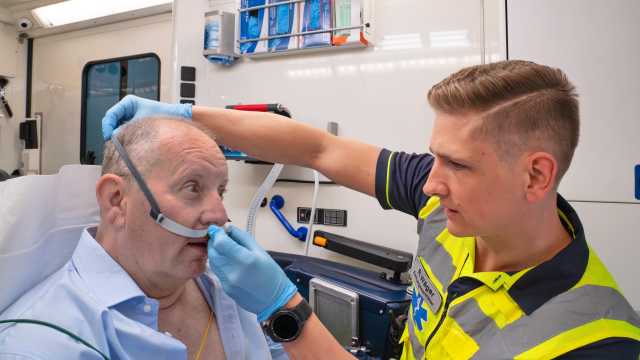
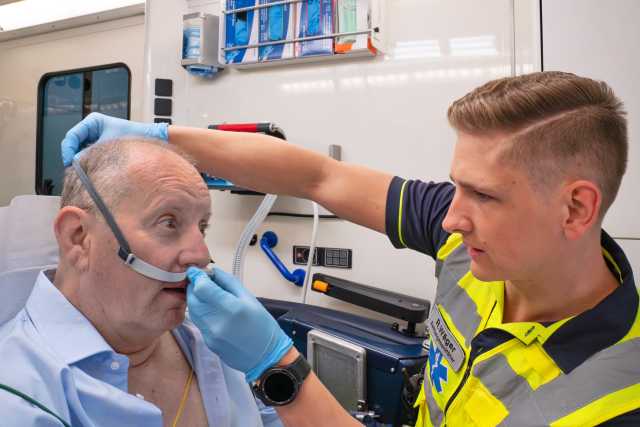
Pour les patients en hypoxémie ou présentant un risque d'hypoxémie, la thérapie d'apport en oxygène est destinée à maintenir une oxygénation adéquate des tissus (Branson RD, Johannigman JA. Pre-hospital oxygen therapy. Respir Care. 2013;58(1):86-97. doi:10.4187/respcare.022511​).

En contexte préhospitalier, l'administration rapide et précise de la thérapie d'oxygène peut être cruciale pour la survie du patient et des résultats optimaux (Branson RD, Johannigman JA. Pre-hospital oxygen therapy. Respir Care. 2013;58(1):86-97. doi:10.4187/respcare.022511​).

Les avantages de la thérapie O2 en soins préhospitaliers

""

Là où elle est essentielle. Applications cliniques dans les soins préhospitaliers

  1. Syndromes coronariens aigus : Administrer de l'oxygène aux patients présentant un infarctus aigu du myocarde et une douleur thoracique d'origine cardiaque afin de préserver la saturation en oxygène et d'assister la fonction du myocarde (Branson RD, Johannigman JA. Pre-hospital oxygen therapy. Respir Care. 2013;58(1):86-97. doi:10.4187/respcare.022511​)​.
  2. Urgences neurologiques (coma, crises d'épilepsie, lésion cérébrale, AVC, etc.) : Monitorer attentivement la saturation en oxygène et administrer un apport d'oxygène pour maintenir les niveaux dans la plage recommandée, pour éviter l'hypoxie qui pourrait aggraver les lésions neurologiques (Branson RD, Johannigman JA. Pre-hospital oxygen therapy. Respir Care. 2013;58(1):86-97. doi:10.4187/respcare.022511​).
  3. Lésions traumatiques : Assurer l'oxygénation adéquate des patients traumatisés pour prévenir toute lésion hypoxique secondaire, particulièrement en cas de traumatisme crânien ou de perte de sang importante (Branson RD, Johannigman JA. Pre-hospital oxygen therapy. Respir Care. 2013;58(1):86-97. doi:10.4187/respcare.022511​).
  4. Détresse respiratoire : Utiliser la thérapie d'oxygène pour les affections telles qu'exacerbation de l'asthme, poussées de bronchopneumopathie chronique obstructive (BPCO) et œdème pulmonaire aigu, en personnalisant les méthodes d'administration en fonction de l'affection et du statut d'oxygénation du patient (Branson RD, Johannigman JA. Pre-hospital oxygen therapy. Respir Care. 2013;58(1):86-97. doi:10.4187/respcare.022511​, Bentsen LP, Lassen AT, Titlestad IL, Brabrand M. A change from high-flow to titrated oxygen therapy in the prehospital setting is associated with lower mortality in COPD patients with acute exacerbations: an observational cohort study. Acute Med. 2020;19(2):76-82. 3​).
  5. Intoxication au monoxyde de carbone : Dans le contexte de la délivrance d'oxygène à concentration élevée aux patients présentant une intoxication au monoxyde de carbone, une hyperoxémie est souhaitable. La demi-vie de la carboxyhémoglobine est de 4 à 5 heures lorsque le patient respire l'air ambiant. Recevoir 100 % d'oxygène réduit cette demi-vie à 40 minutes (Branson RD, Johannigman JA. Pre-hospital oxygen therapy. Respir Care. 2013;58(1):86-97. doi:10.4187/respcare.022511​).


Disponibilité

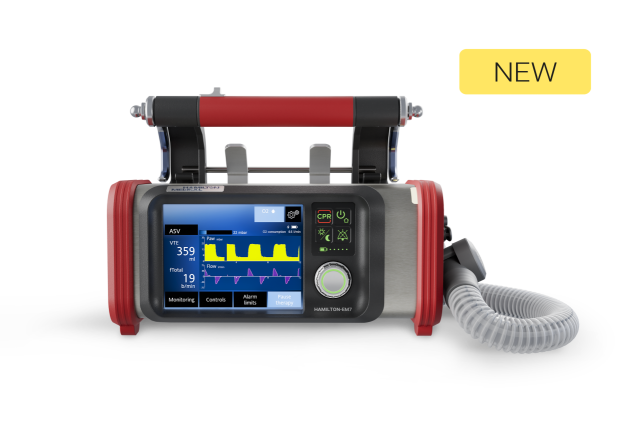
La thérapie d'O2 est disponible comme mode de thérapie en option sur le HAMILTON-EM7.

Pre-hospital oxygen therapy.

Branson RD, Johannigman JA. Pre-hospital oxygen therapy. Respir Care. 2013;58(1):86-97. doi:10.4187/respcare.02251

Oxygen use in prehospital care is aimed at treating or preventing hypoxemia. However, excess oxygen delivery has important consequences in select patients, and hyperoxia can adversely impact outcome. The unique environment of prehospital care poses logistical and educational challenges. Oxygen therapy in prehospital care should be provided to patients with hypoxemia and titrated to achieve normoxemia. Changes to the current practice of oxygen delivery in prehospital care are needed.

Emergency oxygen therapy: from guideline to implementation

Kane B, Decalmer S, O’Driscoll BR. Emergency oxygen therapy: from guideline to implementation. Breathe. 2013;9(4):246-253. doi:10.1183/20734735.025212

A change from high-flow to titrated oxygen therapy in the prehospital setting is associated with lower mortality in COPD patients with acute exacerbations: an observational cohort study.

Bentsen LP, Lassen AT, Titlestad IL, Brabrand M. A change from high-flow to titrated oxygen therapy in the prehospital setting is associated with lower mortality in COPD patients with acute exacerbations: an observational cohort study. Acute Med. 2020;19(2):76-82.

BACKGROUND The aim of this study was to investigate 30-day mortality for COPD patients treated by ambulances in the period before and after implementation of a pre-hospital oxygen protocol. METHODS Prehospital High-flow oxygen was used from April to September 2012 and titrated oxygen from April to September 2013. Primary outcome was 30-day mortality. RESULTS 707 patients were included; 209 in the high-flow group and 498 in the titration group. Of these, 56 and 132 arrived with acute exacerbation (AE). Overall 30-day mortality was 11.5% vs. 9.4% (p=0.41), respectively. For patients with AE, it was 19.6% vs. 4.6% (p=0.001). CONCLUSION Change of treatment protocol is associated with a lower 30-day mortality for patients registered with acute exacerbation, but not for all COPD patients.