

Session expired

Due to inactivity your session has expired. Please login again.

 Tecnologie

Terapia con O2:

ossigenazione sul campo

"" ""

O2 al giusto livello: un primo passo vitale nella ventilazione preospedaliera

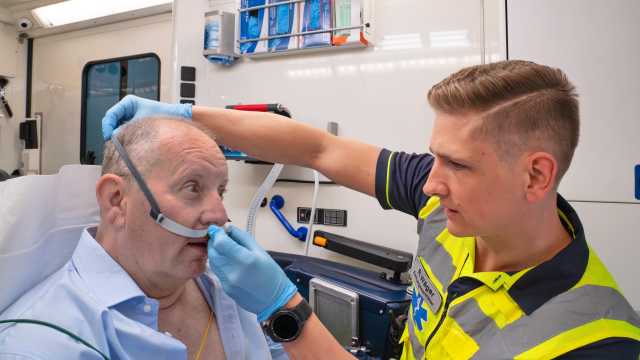
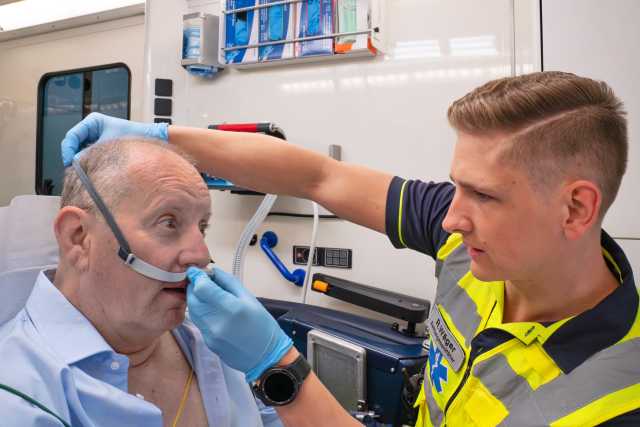
Per i pazienti con ipossiemia o che rischiano di svilupparla, la terapia con ossigeno supplementare serve a mantenere i tessuti adeguatamente ossigenati (Branson RD, Johannigman JA. Pre-hospital oxygen therapy. Respir Care. 2013;58(1):86-97. doi:10.4187/respcare.022511).

Nel contesto preospedaliero, una somministrazione della terapia con ossigeno tempestiva e precisa può essere cruciale per la sopravvivenza del paziente con esiti ottimali (Branson RD, Johannigman JA. Pre-hospital oxygen therapy. Respir Care. 2013;58(1):86-97. doi:10.4187/respcare.022511).

I vantaggi della terapia con O2 nell'assistenza preospedaliera

""

Quando è più utile: applicazioni cliniche nel contesto preospedaliero

  1. Sindromi coronariche acute: somministrare ossigeno ai pazienti con infarto acuto del miocardio e dolore toracico di origine cardiaca per mantenere la corretta saturazione dell'ossigeno e supportare la funzione del miocardio (Branson RD, Johannigman JA. Pre-hospital oxygen therapy. Respir Care. 2013;58(1):86-97. doi:10.4187/respcare.022511​)​.
  2. Emergenze neurologiche (coma, crisi convulsive, lesioni alla testa, ictus, ecc.): monitorare scrupolosamente la saturazione dell'ossigeno e fornire ossigeno supplementare per mantenere i valori entro l'intervallo consigliato, evitando lo stato di ipossia che può determinare il peggioramento delle lesioni neurologiche (Branson RD, Johannigman JA. Pre-hospital oxygen therapy. Respir Care. 2013;58(1):86-97. doi:10.4187/respcare.022511).
  3. Lesioni da trauma: garantire un'ossigenazione adeguata nei pazienti traumatizzati per evitare lesioni secondarie dovute a ipossia, soprattutto nel caso di traumi alla testa o emorragie significative (Branson RD, Johannigman JA. Pre-hospital oxygen therapy. Respir Care. 2013;58(1):86-97. doi:10.4187/respcare.022511).
  4. Distress respiratorio: utilizzare la terapia con ossigeno per condizioni quali esacerbazioni dell'asma, riacutizzazioni della broncopneumopatia cronica ostruttiva (BPCO) ed edema polmonare acuto, calibrando i metodi di erogazione a seconda delle condizioni e dello stato di ossigenazione del paziente (Branson RD, Johannigman JA. Pre-hospital oxygen therapy. Respir Care. 2013;58(1):86-97. doi:10.4187/respcare.022511​, Bentsen LP, Lassen AT, Titlestad IL, Brabrand M. A change from high-flow to titrated oxygen therapy in the prehospital setting is associated with lower mortality in COPD patients with acute exacerbations: an observational cohort study. Acute Med. 2020;19(2):76-82. 3).
  5. Avvelenamento da monossido di carbonio: somministrare ossigeno a concentrazioni elevate ai pazienti avvelenati da monossido di carbonio, una situazione in cui l'iperossiemia è una condizione positiva. L'emivita della carbossiemoglobina è di 4-5 ore se si respira aria ambiente. La respirazione di ossigeno al 100% riduce questo valore a 40 minuti (Branson RD, Johannigman JA. Pre-hospital oxygen therapy. Respir Care. 2013;58(1):86-97. doi:10.4187/respcare.022511​).


Disponibilità

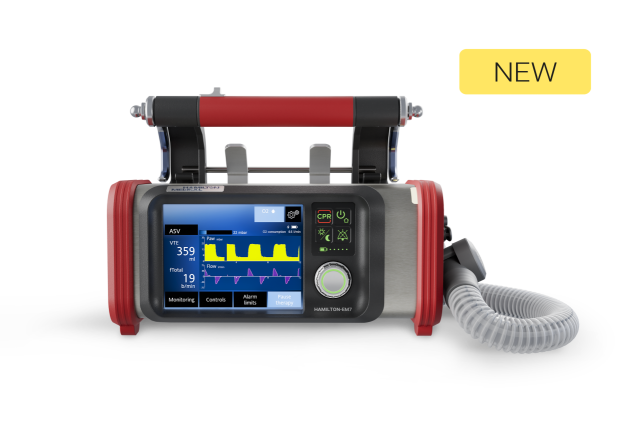
La terapia con O2 è disponibile come modalità terapeutica opzionale sul ventilatore HAMILTON-EM7.

Pre-hospital oxygen therapy.

Branson RD, Johannigman JA. Pre-hospital oxygen therapy. Respir Care. 2013;58(1):86-97. doi:10.4187/respcare.02251

Oxygen use in prehospital care is aimed at treating or preventing hypoxemia. However, excess oxygen delivery has important consequences in select patients, and hyperoxia can adversely impact outcome. The unique environment of prehospital care poses logistical and educational challenges. Oxygen therapy in prehospital care should be provided to patients with hypoxemia and titrated to achieve normoxemia. Changes to the current practice of oxygen delivery in prehospital care are needed.

Emergency oxygen therapy: from guideline to implementation

Kane B, Decalmer S, O’Driscoll BR. Emergency oxygen therapy: from guideline to implementation. Breathe. 2013;9(4):246-253. doi:10.1183/20734735.025212

A change from high-flow to titrated oxygen therapy in the prehospital setting is associated with lower mortality in COPD patients with acute exacerbations: an observational cohort study.

Bentsen LP, Lassen AT, Titlestad IL, Brabrand M. A change from high-flow to titrated oxygen therapy in the prehospital setting is associated with lower mortality in COPD patients with acute exacerbations: an observational cohort study. Acute Med. 2020;19(2):76-82.

BACKGROUND The aim of this study was to investigate 30-day mortality for COPD patients treated by ambulances in the period before and after implementation of a pre-hospital oxygen protocol. METHODS Prehospital High-flow oxygen was used from April to September 2012 and titrated oxygen from April to September 2013. Primary outcome was 30-day mortality. RESULTS 707 patients were included; 209 in the high-flow group and 498 in the titration group. Of these, 56 and 132 arrived with acute exacerbation (AE). Overall 30-day mortality was 11.5% vs. 9.4% (p=0.41), respectively. For patients with AE, it was 19.6% vs. 4.6% (p=0.001). CONCLUSION Change of treatment protocol is associated with a lower 30-day mortality for patients registered with acute exacerbation, but not for all COPD patients.