
Session expired

Due to inactivity your session has expired. Please login again.

Detectamos que você está visitando nosso site a partir de Estados Unidos.
Dispomos de uma versão separada do site para (Estados Unidos).

Mudar para ${país}
 Tecnologias

IntelliSync®+.

Mantenha um olho na sincronia paciente-respirador

Olho humano que capta e processa dados digitais

Como detectar assincronias? O “olho” digital

O olho treinado de um especialista em ventilação é capaz de detectar assincronias analisando as formas das ondas de fluxo e pressão.

No entanto, a condição do paciente pode mudar a cada respiração e o especialista não pode estar sempre junto ao leito.

É aí que o IntelliSync+ entra em ação. Esta tecnologia simula o olho do especialista para identificar o esforço (início da incursão) ou o relaxamento (início da excursão) do paciente na forma de onda

IntelliSync antes e depois

Como funciona? Princípios do IntelliSync+

O IntelliSync+ analisa continuamente os sinais da forma de onda, pelo menos, cem vezes por segundo. Isso permite que o IntelliSync+ detecte imediatamente os esforços do paciente e inicie a inspiração e a expiração em tempo real substituindo assim as configurações convencionais de disparo para inspiração e expiração.

Para obter o máximo de flexibilidade, pode optar por ativar o IntelliSync+ para o disparo inspiratório, ou para o disparo expiratório, ou para ambos.

Ilustração gráfica: dossier do paciente com lupa

As assincronias são realmente um problema? Uma análise das evidências

Um número elevado de assincronias graves entre o paciente e o respirador ocorre em cerca de 25% de todos os pacientes mecanicamente ventilados (Thille AW, Rodriguez P, Cabello B, Lellouche F, Brochard L. Patient-ventilator asynchrony during assisted mechanical ventilation. Intensive Care Med. 2006;32(10):1515-1522. doi:10.1007/s00134-006-0301-81​). Estas estão associadas a um aumento do trabalho respiratório (Tassaux D, Gainnier M, Battisti A, Jolliet P. Impact of expiratory trigger setting on delayed cycling and inspiratory muscle workload. Am J Respir Crit Care Med. 2005;172(10):1283-1289. doi:10.1164/rccm.200407-880OC2), tempo de ventilação prolongado (Thille AW, Rodriguez P, Cabello B, Lellouche F, Brochard L. Patient-ventilator asynchrony during assisted mechanical ventilation. Intensive Care Med. 2006;32(10):1515-1522. doi:10.1007/s00134-006-0301-81), e mortalidade mais elevada (Blanch L, Villagra A, Sales B, et al. Asynchronies during mechanical ventilation are associated with mortality. Intensive Care Med. 2015;41(4):633-641. doi:10.1007/s00134-015-3692-63​).

A análise das formas de onda é um método confiável, preciso e reproduzível para avaliar a interação paciente-respirador. A automação deste método pode permitir a monitorização contínua de pacientes ventilados e/ou melhorar o acionamento da respiração e o ciclo respiratório (Mojoli F, Iotti GA, Torriglia F, et al. In vivo calibration of esophageal pressure in the mechanically ventilated patient makes measurements reliable. Crit Care. 2016;20:98. Published 2016 Apr 11. doi:10.1186/s13054-016-1278-54​).

Desligamento automático para melhorar a sincronização do paciente com o respirador

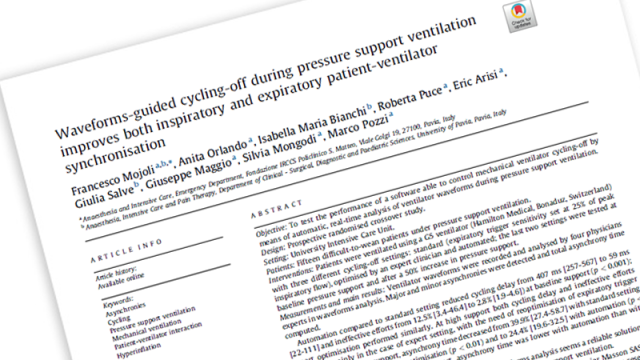
Mojoli F, Orlando A, Bianchi IM, et al.

Um estudo recente mostrou que o controle automatizado do ciclo de desligamento do respirador com base na análise em tempo real das formas de onda proporcionou um meio confiável de melhorar a sincronização em pacientes ventilados mecanicamente.

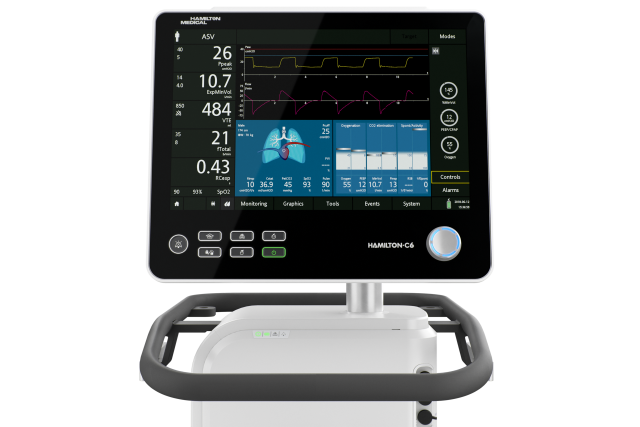
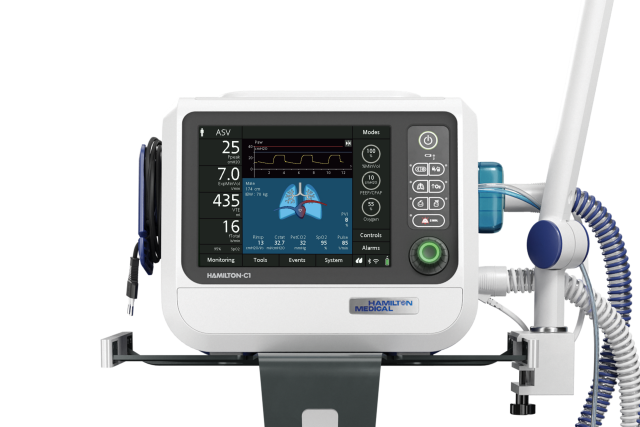
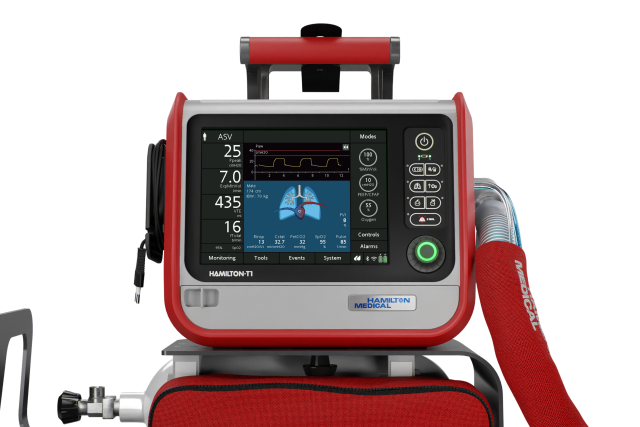
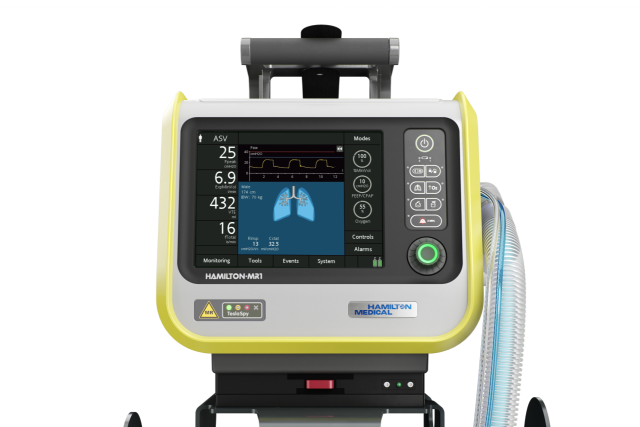
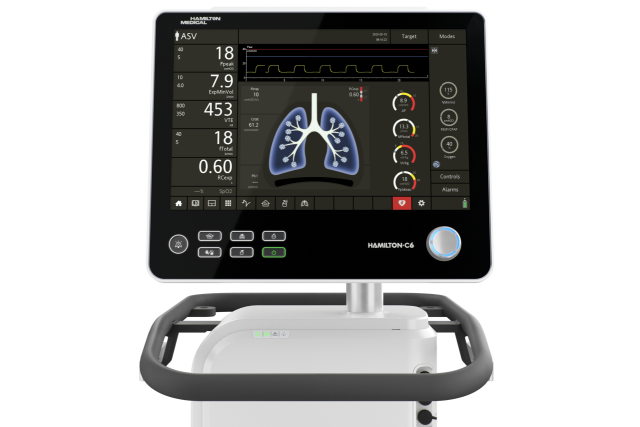
Imagem dos respiradores HAMILTON-C1/T1/MR1 e HAMILTON-C6 Imagem dos respiradores HAMILTON-C1/T1/MR1 e HAMILTON-C6

Como funciona? Configuração e operação do IntelliSync+

O IntelliSync+ é um método totalmente não invasivo que não requer qualquer hardware ou acessórios adicionais. Basta ativar a opção no seu respirador para utilizá-lo nos modos de ventilação invasiva ou não invasiva em pacientes adultos e pediátricos.

Como o IntelliSync+ também pode ser combinado com disparos convencionais, pode optar por utilizar o IntelliSync+ durante a inspiração, a expiração ou ambas.

O vídeo abaixo demonstra o IntelliSync+ em um HAMILTON-G5. O recurso funciona de forma semelhante em todos os dispositivos.

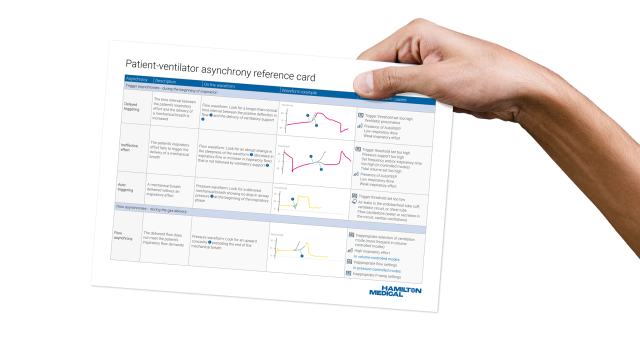
Ilustração gráfica: estudante segurando um certificado na mão

A ter em conta! Recursos de treinamento IntelliSync+

Cartão de referência de assincronia

Aprenda a identificar assincronias comuns! Cartão de referência gratuita

Nosso cartão de referência de assincronia oferece uma visão geral dos tipos de assincronia mais comuns, suas causas e como detectá-los.

Disponibilidade

IntelliSync+ está disponível como opção no HAMILTON-C6, no novo HAMILTON-C6, HAMILTON-C1, HAMILTON-T1, HAMILTON-MR1 e HAMILTON-G5, e é um recurso padrão no HAMILTON-S1.

Patient-ventilator asynchrony during assisted mechanical ventilation.

Thille AW, Rodriguez P, Cabello B, Lellouche F, Brochard L. Patient-ventilator asynchrony during assisted mechanical ventilation. Intensive Care Med. 2006;32(10):1515-1522. doi:10.1007/s00134-006-0301-8

OBJECTIVE The incidence, pathophysiology, and consequences of patient-ventilator asynchrony are poorly known. We assessed the incidence of patient-ventilator asynchrony during assisted mechanical ventilation and we identified associated factors. METHODS Sixty-two consecutive patients requiring mechanical ventilation for more than 24 h were included prospectively as soon as they triggered all ventilator breaths: assist-control ventilation (ACV) in 11 and pressure-support ventilation (PSV) in 51. MEASUREMENTS Gross asynchrony detected visually on 30-min recordings of flow and airway pressure was quantified using an asynchrony index. RESULTS Fifteen patients (24%) had an asynchrony index greater than 10% of respiratory efforts. Ineffective triggering and double-triggering were the two main asynchrony patterns. Asynchrony existed during both ACV and PSV, with a median number of episodes per patient of 72 (range 13-215) vs. 16 (4-47) in 30 min, respectively (p=0.04). Double-triggering was more common during ACV than during PSV, but no difference was found for ineffective triggering. Ineffective triggering was associated with a less sensitive inspiratory trigger, higher level of pressure support (15 cmH(2)O, IQR 12-16, vs. 17.5, IQR 16-20), higher tidal volume, and higher pH. A high incidence of asynchrony was also associated with a longer duration of mechanical ventilation (7.5 days, IQR 3-20, vs. 25.5, IQR 9.5-42.5). CONCLUSIONS One-fourth of patients exhibit a high incidence of asynchrony during assisted ventilation. Such a high incidence is associated with a prolonged duration of mechanical ventilation. Patients with frequent ineffective triggering may receive excessive levels of ventilatory support.

Impact of expiratory trigger setting on delayed cycling and inspiratory muscle workload.

Tassaux D, Gainnier M, Battisti A, Jolliet P. Impact of expiratory trigger setting on delayed cycling and inspiratory muscle workload. Am J Respir Crit Care Med. 2005;172(10):1283-1289. doi:10.1164/rccm.200407-880OC

RATIONALE During pressure-support ventilation, the ventilator cycles into expiration when inspiratory flow decreases to a given percentage of peak inspiratory flow ("expiratory trigger"). In obstructive disease, the slower rise and decrease of inspiratory flow entails delayed cycling, an increase in intrinsic positive end-expiratory pressure, and nontriggering breaths. OBJECTIVES We hypothesized that setting expiratory trigger at a higher than usual percentage of peak inspiratory flow would attenuate the adverse effects of delayed cycling. METHODS Ten intubated patients with obstructive disease undergoing pressure support were studied at expiratory trigger settings of 10, 25, 50, and 70% of peak inspiratory flow. MEASUREMENTS Continuous recording of diaphragmatic EMG activity with surface electrodes, and esophageal and gastric pressures with a dual-balloon nasogastric tube. MAIN RESULTS Compared with expiratory trigger 10, expiratory trigger 70 reduced the magnitude of delayed cycling (0.25 +/- 0.18 vs. 1.26 +/- 0.72 s, p < 0.05), intrinsic positive end-expiratory pressure (4.8 +/- 1.9 vs. 6.5 +/- 2.2 cm H(2)O, p < 0.05), nontriggering breaths (2 +/- 3 vs. 9 +/- 5 breaths/min, p < 0.05), and triggering pressure-time product (0.9 +/- 0.8 vs. 2.1 +/- 0.7 cm H2O . s, p < 0.05). CONCLUSIONS Setting expiratory trigger at a higher percentage of peak inspiratory flow in patients with obstructive disease during pressure support improves patient-ventilator synchrony and reduces inspiratory muscle effort. Further studies should explore whether these effects can influence patient outcome.

Asynchronies during mechanical ventilation are associated with mortality.

Blanch L, Villagra A, Sales B, et al. Asynchronies during mechanical ventilation are associated with mortality. Intensive Care Med. 2015;41(4):633-641. doi:10.1007/s00134-015-3692-6

PURPOSE This study aimed to assess the prevalence and time course of asynchronies during mechanical ventilation (MV). METHODS Prospective, noninterventional observational study of 50 patients admitted to intensive care unit (ICU) beds equipped with Better Care™ software throughout MV. The software distinguished ventilatory modes and detected ineffective inspiratory efforts during expiration (IEE), double-triggering, aborted inspirations, and short and prolonged cycling to compute the asynchrony index (AI) for each hour. We analyzed 7,027 h of MV comprising 8,731,981 breaths. RESULTS Asynchronies were detected in all patients and in all ventilator modes. The median AI was 3.41 % [IQR 1.95-5.77]; the most common asynchrony overall and in each mode was IEE [2.38 % (IQR 1.36-3.61)]. Asynchronies were less frequent from 12 pm to 6 am [1.69 % (IQR 0.47-4.78)]. In the hours where more than 90 % of breaths were machine-triggered, the median AI decreased, but asynchronies were still present. When we compared patients with AI > 10 vs AI ≤ 10 %, we found similar reintubation and tracheostomy rates but higher ICU and hospital mortality and a trend toward longer duration of MV in patients with an AI above the cutoff. CONCLUSIONS Asynchronies are common throughout MV, occurring in all MV modes, and more frequently during the daytime. Further studies should determine whether asynchronies are a marker for or a cause of mortality.

In vivo calibration of esophageal pressure in the mechanically ventilated patient makes measurements reliable.

Mojoli F, Iotti GA, Torriglia F, et al. In vivo calibration of esophageal pressure in the mechanically ventilated patient makes measurements reliable. Crit Care. 2016;20:98. Published 2016 Apr 11. doi:10.1186/s13054-016-1278-5

In screening programmes it is important to assess a preliminary effectiveness of the screening method as soon as possible in order to forecast survival figures. In March 1981 a controlled single-view mammographic screening trial for breast cancer was started in the south of Stockholm. The population invited for screening mammography consisted of 40,000 women aged 40-64 years, and 20,000 women served as a well-defined control group. The main aim of the trial was to determine whether repeated mammographic screening could reduce the mortality in the study population (SP) compared to the control population (CP). The cumulative number of advanced mammary carcinomas in the screening and the control populations from the first five years of screening have shown a tendency towards more favourable stages in the screened population aged 40-64 years. A breakdown by age suggests an effect in age group 50-59 years, but not yet in age groups 40-49 and 60-64 years. When comparing the rates of stage II+ cancer, an increased number is found in the study group. As the total rate of breast cancer is higher in SP than in CP, there ought to be a concealed group of stage II+ cancers in the CP which makes the comparison biased. A new approach has been designed, where an estimation of the 'hidden' number of stage II+ cancers in CP is added to the clinically detected cases, and in this respect a comparison has shown a decrease in the cumulative number of advanced cancers in the SP in relation to the CP (p less than 0.05).(ABSTRACT TRUNCATED AT 250 WORDS)