

Autore: Màrcia Santos
Data: 15.07.2021
Last change: 20.02.2023
Changed categorization to exclude ApplicationPatient efforts during mechanical ventilation can have both beneficial and deleterious effects. Vigorous efforts generate pendelluft and amplify regional lung stress and strain, causing regional lung injury which may induce P-SILI.
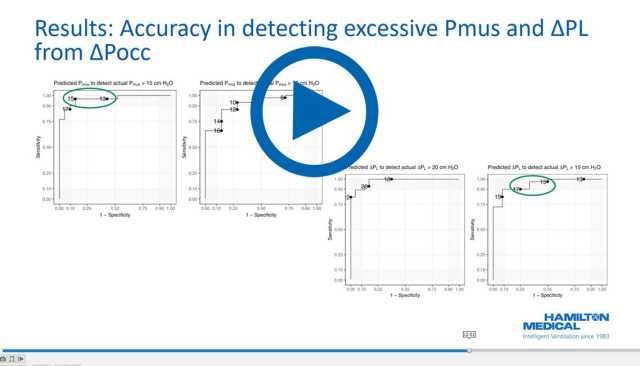
This Journal Club presentation looks at a study from Canada, which investigated whether swings in airway pressure generated by the inspiratory muscles under assisted ventilation when the airway is occluded (ΔPocc) could be used to screen for high respiratory effort and high dynamic lung stress. The authors found that both inspiratory effort and dynamic lung stress frequently exceeded safe thresholds and that the measurement of ΔPocc from end-expiratory occlusion maneuvers was able to detect excessive levels of both with high sensitivity and specificity. In addition, the magnitude of dynamic lung stress during spontaneous breathing was often seriously underestimated by airway pressures available on the ventilator. Watch the video presentation available below.
Full citations below: (