
Session expired

Due to inactivity your session has expired. Please login again.

Detectamos que você está visitando nosso site a partir de Estados Unidos.
Dispomos de uma versão separada do site para (Estados Unidos).

Mudar para ${país}
 Produtos

IntelliCuff.

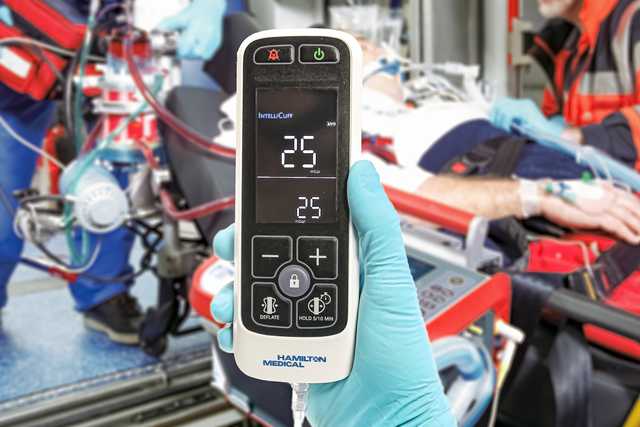
A forma inteligente de gerenciar a pressão do cuff

IntelliCuff IntelliCuff
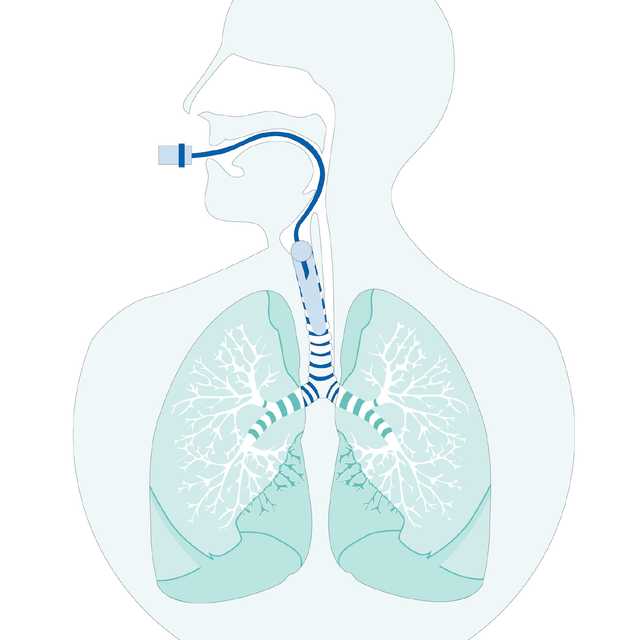
Ilustração gráfica: pressão do cuff controlada

Para uma pressão do cuff controlada e maior segurança do paciente

A pressão do cuff continuamente otimizada e controlada suporta o tratamento de ventilação e protege os seus pacientes contra pneumonia associada à ventilação (PAV) e lesões traqueais (Lorente L, Lecuona M, Jiménez A, et al. Continuous endotracheal tube cuff pressure control system protects against ventilator-associated pneumonia. Crit Care. 2014;18(2):R77. Published 2014 Apr 21. doi:10.1186/cc138371).

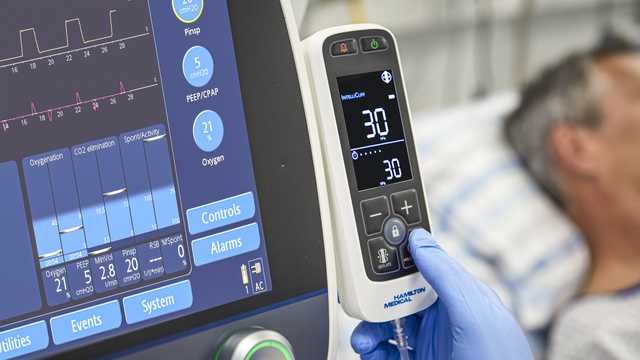
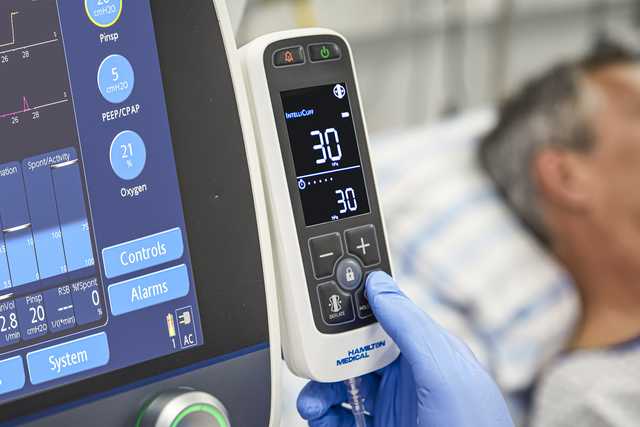
Com o IntelliCuff, a maior parte deste trabalho é feita por você. Basta definir a pressão desejada para o cuff e o IntelliCuff a mantém automaticamente. O dispositivo pode operar dentro de um amplo intervalo de pressões seguras para vários tubos endotraqueais com cuff.

Quer o utilize para transporte aéreo com pressão ambiente em rápida mudança ou na sala de operações durante narcose com N2O ou cirurgia, o IntelliCuff monitoriza e mantém continuamente a pressão ideal do cuff para maior segurança do paciente. Mesmo durante algumas das situações mais críticas (Nseir S, Zerimech F, Fournier C, et al. Continuous control of tracheal cuff pressure and microaspiration of gastric contents in critically ill patients. Am J Respir Crit Care Med. 2011;184(9):1041-1047. doi:10.1164/rccm.201104-0630OC2).

IntelliCuff IntelliCuff

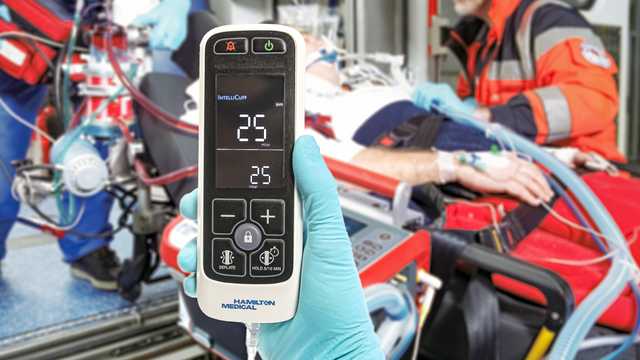
Com você onde quer que vá! Compacto e portátil para qualquer situação

Adequado para pacientes adultos, pediátricos e neonatos. O IntelliCuff garante o controle das vias aéreas em diversas situações — na UTI, na sala de cirurgia ou durante o transporte. Você pode utilizá-lo em resgates de emergência em terra ou no ar — mesmo em altitudes elevadas.

Sandra Rupp

Customer voices

Usamos o IntelliCuff como recurso padrão para ajudar a prevenir a PAV em pacientes ventilados mecanicamente. O IntelliCuff controla a pressão cuff automaticamente e regularmente. Isso é uma grande ajuda para nós, profissionais de saúde, pois não precisamos verificar a pressão cuff manualmente a cada hora.

Sandra Rupp

Head of ICU Nursing Department
Hospital Cantonal de Grisões, Chur, Suíça
Respiradores Hamilton Medical Respiradores Hamilton Medical

Boa capacidade de interação. Compatibilidade com respiradores

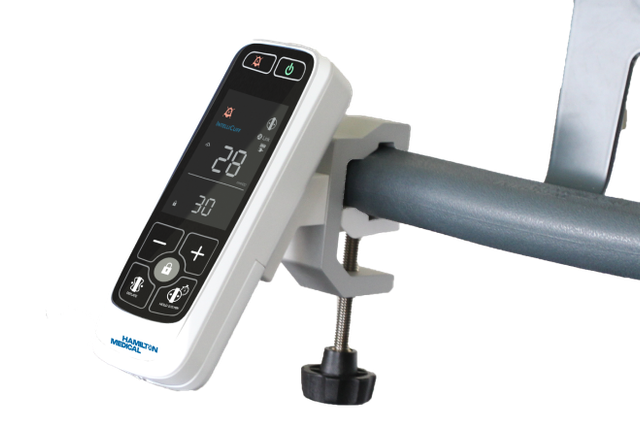
O dispositivo autônomo IntelliCuff é o companheiro perfeito para os respiradores Hamilton Medical.

Acessórios e consumíveis

Continuous endotracheal tube cuff pressure control system protects against ventilator-associated pneumonia.

Lorente L, Lecuona M, Jiménez A, et al. Continuous endotracheal tube cuff pressure control system protects against ventilator-associated pneumonia. Crit Care. 2014;18(2):R77. Published 2014 Apr 21. doi:10.1186/cc13837

INTRODUCTION The use of a system for continuous control of endotracheal tube cuff pressure reduced the incidence of ventilator-associated pneumonia (VAP) in one randomized controlled trial (RCT) with 112 patients but not in another RCT with 142 patients. In several guidelines on the prevention of VAP, the use of a system for continuous or intermittent control of endotracheal cuff pressure is not reviewed. The objective of this study was to compare the incidence of VAP in a large sample of patients (n = 284) treated with either continuous or intermittent control of endotracheal tube cuff pressure. METHODS We performed a prospective observational study of patients undergoing mechanical ventilation during more than 48 hours in an intensive care unit (ICU) using either continuous or intermittent endotracheal tube cuff pressure control. Multivariate logistic regression analysis (MLRA) and Cox proportional hazard regression analysis were used to predict VAP. The magnitude of the effect was expressed as odds ratio (OR) or hazard ratio (HR), respectively, and 95% confidence interval (CI). RESULTS We found a lower incidence of VAP with the continuous (n = 150) than with the intermittent (n = 134) pressure control system (22.0% versus 11.2%; p = 0.02). MLRA showed that the continuous pressure control system (OR = 0.45; 95% CI = 0.22-0.89; p = 0.02) and the use of an endotracheal tube incorporating a lumen for subglottic secretion drainage (SSD) (OR = 0.39; 95% CI = 0.19-0.84; p = 0.02) were protective factors against VAP. Cox regression analysis showed that the continuous pressure control system (HR = 0.45; 95% CI = 0.24-0.84; p = 0.01) and the use of an endotracheal tube incorporating a lumen for SSD (HR = 0.29; 95% CI = 0.15-0.56; p < 0.001) were protective factors against VAP. However, the interaction between type of endotracheal cuff pressure control system (continuous or intermittent) and endotracheal tube (with or without SSD) was not statistically significant in MLRA (OR = 0.41; 95% CI = 0.07-2.37; p = 0.32) or in Cox analysis (HR = 0.35; 95% CI = 0.06-1.84; p = 0.21). CONCLUSIONS The use of a continuous endotracheal cuff pressure control system and/or an endotracheal tube with a lumen for SSD could help to prevent VAP in patients requiring more than 48 hours of mechanical ventilation.

Continuous control of tracheal cuff pressure and microaspiration of gastric contents in critically ill patients.

Nseir S, Zerimech F, Fournier C, et al. Continuous control of tracheal cuff pressure and microaspiration of gastric contents in critically ill patients. Am J Respir Crit Care Med. 2011;184(9):1041-1047. doi:10.1164/rccm.201104-0630OC

RATIONALE Underinflation of the tracheal cuff frequently occurs in critically ill patients and represents a risk factor for microaspiration of contaminated oropharyngeal secretions and gastric contents that plays a major role in the pathogenesis of ventilator-associated pneumonia (VAP). OBJECTIVES To determine the impact of continuous control of tracheal cuff pressure (P(cuff)) on microaspiration of gastric contents. METHODS Prospective randomized controlled trial performed in a single medical intensive care unit. A total of 122 patients expected to receive mechanical ventilation for at least 48 hours through a tracheal tube were randomized to receive continuous control of P(cuff) using a pneumatic device (intervention group, n = 61) or routine care of P(cuff) (control group, n = 61). MEASUREMENTS AND MAIN RESULTS The primary outcome was microaspiration of gastric contents as defined by the presence of pepsin at a significant level in tracheal secretions collected during the 48 hours after randomization. Secondary outcomes included incidence of VAP, tracheobronchial bacterial concentration, and tracheal ischemic lesions. The pneumatic device was efficient in controlling P(cuff). Pepsin was measured in 1,205 tracheal aspirates. Percentage of patients with abundant microaspiration (18 vs. 46%; P = 0.002; OR [95% confidence interval], 0.25 [0.11-0.59]), bacterial concentration in tracheal aspirates (mean ± SD 1.6 ± 2.4 vs. 3.1 ± 3.7 log(10) cfu/ml, P = 0.014), and VAP rate (9.8 vs. 26.2%; P = 0.032; 0.30 [0.11-0.84]) were significantly lower in the intervention group compared with the control group. However, no significant difference was found in tracheal ischemia score between the two groups. CONCLUSIONS Continuous control of P(cuff) is associated with significantly decreased microaspiration of gastric contents in critically ill patients.