
Session expired

Due to inactivity your session has expired. Please login again.

Detectamos que você está visitando nosso site a partir de Estados Unidos.
Dispomos de uma versão separada do site para (Estados Unidos).

Mudar para ${país}
 Tecnologias

INTELLiVENT®-ASV®.

Seu assistente junto do leito

Ilustração gráfica: quatro lâmpadas escuras e uma lâmpada acesa

Avance para o próximo nível! O valor do INTELLiVENT‑ASV

Nosso modo de ventilação promove você de operador a supervisor. O INTELLiVENT-ASV reduz o número de interações manuais com o respirador (Beijers AJ, Roos AN, Bindels AJ. Fully automated closed-loop ventilation is safe and effective in post-cardiac surgery patients. Intensive Care Med. 2014;40(5):752-753. doi:10.1007/s00134-014-3234-71​, Bialais E, Wittebole X, Vignaux L, et al. Closed-loop ventilation mode (IntelliVent®-ASV) in intensive care unit: a randomized trial. Minerva Anestesiol. 2016;82(6):657-668. 2​, Fot EV, Izotova NN, Yudina AS, Smetkin AA, Kuzkov VV, Kirov MY. Automated Weaning from Mechanical Ventilation after Off-Pump Coronary Artery Bypass Grafting. Front Med (Lausanne). 2017;4:31. Published 2017 Mar 21. doi:10.3389/fmed.2017.000313), e oferece ventilação individualizada para proteção pulmonar dos seus pacientes (Bialais E, Wittebole X, Vignaux L, et al. Closed-loop ventilation mode (IntelliVent®-ASV) in intensive care unit: a randomized trial. Minerva Anestesiol. 2016;82(6):657-668. 2​, Fot EV, Izotova NN, Yudina AS, Smetkin AA, Kuzkov VV, Kirov MY. Automated Weaning from Mechanical Ventilation after Off-Pump Coronary Artery Bypass Grafting. Front Med (Lausanne). 2017;4:31. Published 2017 Mar 21. doi:10.3389/fmed.2017.000313​, Arnal JM, Saoli M, Garnero A. Airway and transpulmonary driving pressures and mechanical powers selected by INTELLiVENT-ASV in passive, mechanically ventilated ICU patients. Heart Lung. 2020;49(4):427-434. doi:10.1016/j.hrtlng.2019.11.0014​). Desde a intubação à extubação.

Modos de ventilação ASV (lado esquerdo) e INTELLiVENT-ASV (lado direito)

Qual é a diferença? Uma mudança de paradigma

Em modos convencionais, você define os controles do respirador, tais como o volume corrente ou a pressão, a frequência respiratória, FiO2, PEEP, e o tempo inspiratório e expiratório, para alcançar determinados alvos clínicos. Adicionalmente, todos esses controles precisam ser reavaliados e ajustados com frequência.

Com o INTELLiVENT‑ASV, seus alvos clínicos definidos e estratégias para oxigenação e ventilação são o foco central. Depois de definir esses alvos, pode decidir em que medida o INTELLiVENT‑ASV deve controlar a oxigenação e a ventilação para alcançá-los.

O INTELLiVENT‑ASV seleciona automaticamente as configurações do respirador, gerencia a transição entre os estados passivo e ativo e apoia ativamente seus protocolos de desmame usando o Quick Wean.

Ilustração gráfica: um paciente entubado com um médico ao seu lado

Será adequado para os meus pacientes? Para pacientes adultos e pediátricos intubados

Vários estudos internacionais demonstraram a segurança e o desempenho do INTELLiVENT-ASV em vários cenários clínicos — desde pós-cirurgia cardíaca (Beijers AJ, Roos AN, Bindels AJ. Fully automated closed-loop ventilation is safe and effective in post-cardiac surgery patients. Intensive Care Med. 2014;40(5):752-753. doi:10.1007/s00134-014-3234-71) até pneumonia por COVID-19 (Wendel Garcia PD, Hofmaenner DA, Brugger SD, et al. Closed-Loop Versus Conventional Mechanical Ventilation in COVID-19 ARDS. J Intensive Care Med. 2021;36(10):1184-1193. doi:10.1177/088506662110241395), e para várias condições específicas, como DPOC (Arnal JM, Saoli M, Garnero A. Airway and transpulmonary driving pressures and mechanical powers selected by INTELLiVENT-ASV in passive, mechanically ventilated ICU patients. Heart Lung. 2020;49(4):427-434. doi:10.1016/j.hrtlng.2019.11.0014), lesão cerebral (Sulemanji DS, Marchese A, Wysocki M, Kacmarek RM. Adaptive support ventilation with and without end-tidal CO2 closed loop control versus conventional ventilation. Intensive Care Med. 2013;39(4):703-710. doi:10.1007/s00134-012-2742-66), e SARA  (Arnal JM, Saoli M, Garnero A. Airway and transpulmonary driving pressures and mechanical powers selected by INTELLiVENT-ASV in passive, mechanically ventilated ICU patients. Heart Lung. 2020;49(4):427-434. doi:10.1016/j.hrtlng.2019.11.0014​).

Laurent Buscemi Dr. Adrian Wäckerlin Dr. João Alves

Customer voices

Economizamos tempo com o uso do INTELLiVENT-ASV, o que nos permite realizar outras tarefas importantes na UTI, como cuidar dos pacientes e prestar cuidados médicos essenciais.

Laurent Buscemi

ICU Nurse
Hospital Intercomunal, Departamento de Var, França

Customer voices

O conceito da Hamilton Medical de estabelecer ventilação automatizada na UTI é certamente um passo na direção certa.

Dr. Adrian Wäckerlin

Head of ICU
Hospital Cantonal de Grisões, Chur, Suíça

Customer voices

Do ponto de vista do atendimento clínico, o INTELLiVENT-ASV permite que o trabalho em segundo plano seja realizado no paciente enquanto estamos ocupados com tarefas mais essenciais na tomada de decisões.

Dr. João Alves

Intensivist, Internal Medicine and Emergency Department since 2018
Centro Hospitalar Universitário Lisboa Central, Lisboa, Portugal

Dr. Jean-Michel Arnal, Senior Intensivist Dr. Jean-Michel Arnal, Senior Intensivist

Como funciona? INTELLiVENT-ASV explicada junto ao leito

Neste vídeo, o Dr. Jean-Michel Arnal, Senior Intensivist, apresenta uma rápida demonstração das principais funcionalidades e configurações da INTELLiVENT-ASV em um paciente real de UTI.

Ilustração gráfica: dardo aponta para o alvo

Preparar, apontar, ventilar! Como começar

No início, defina a altura, o sexo e, se necessário, a condição específica do paciente: ARDS, Hipercapnia crônica, ou Lesão cerebral. Em seguida, defina os alvos clínicos em termos de oxigenação (SpO2) e eliminação de CO2 (PetCO2) para o seu paciente.


Dispõe de várias opções para ajustar o INTELLiVENT-ASV. Por exemplo, pode decidir se pretende definir a PEEP manualmente ou se pretende que a INTELLiVENT-ASV defina a PEEP dentro de um intervalo definido por você. Depois de revisar ou definir os limites de alarme, está pronto para iniciar a ventilação.

Ilustração gráfica: dardo atinge o alvo

Mantendo o paciente no caminho certo. Como ajustar a ventilação

A INTELLiVENT-ASV implementa sua estratégia junto ao leito. Em vez de fazer alterações frequentes nas configurações individuais, monitore e reajuste as metas e a estratégia quando necessário.


A INTELLiVENT‑ASV visa manter o paciente dentro da intervalo-alvo definido e mantê-lo lá, ao mesmo tempo em que mantém a ventilação de proteção pulmonar (Bialais E, Wittebole X, Vignaux L, et al. Closed-loop ventilation mode (IntelliVent®-ASV) in intensive care unit: a randomized trial. Minerva Anestesiol. 2016;82(6):657-668. 2​, Fot EV, Izotova NN, Yudina AS, Smetkin AA, Kuzkov VV, Kirov MY. Automated Weaning from Mechanical Ventilation after Off-Pump Coronary Artery Bypass Grafting. Front Med (Lausanne). 2017;4:31. Published 2017 Mar 21. doi:10.3389/fmed.2017.000313​, Arnal JM, Saoli M, Garnero A. Airway and transpulmonary driving pressures and mechanical powers selected by INTELLiVENT-ASV in passive, mechanically ventilated ICU patients. Heart Lung. 2020;49(4):427-434. doi:10.1016/j.hrtlng.2019.11.0014). Ajusta constantemente os controles individuais do respirador (como frequência, volume corrente, pressão inspiratória, PEEP e FiO2) e alterna entre ventilação controlada e assistida, tudo com base em informações fisiológicas avaliadas a cada respiração.


Essas informações são medidas por três sensores: o sensor de fluxo proximal fornece dados sobre a mecânica pulmonar e a atividade do paciente, enquanto os sensores SpO2 e CO2 fornecem dados sobre oxigenação e eliminação de CO2.

Gráfico de estatísticas: 3 fases do desmame de um paciente

Vamos desconectá-los do respirador! Como fazer o desmame a seus pacientes

Use o Quick Wean da INTELLiVENT-ASV para implementar seu protocolo de desmame. Pode ativar o Quick Wean durante a ventilação quando o paciente estiver respirando espontaneamente.

Você pode configurar o Quick Wean ativando a SBT para avaliar a prontidão do seu paciente para ser separado do respirador. Ajuste os critérios para iniciar uma SBT, as configurações a serem usadas enquanto a SBT estiver em execução e os critérios para interrompê-la.

A INTELLiVENT‑ASV exibe sempre o histórico de todas as SBTs realizadas. Se uma SBT não for bem-sucedida, a INTELLiVENT‑ASV reverte para as configurações de ventilação anteriores.

Gráfico de estatísticas: Lellouche F. Intensive Care Med. 2013 Mar;39(3):463-471.

Quais são os benefícios? Uma análise das evidências

Estudos clínicos demonstraram que a INTELLiVENT-ASV seleciona uma pressão diferencial (Arnal JM, Saoli M, Garnero A. Airway and transpulmonary driving pressures and mechanical powers selected by INTELLiVENT-ASV in passive, mechanically ventilated ICU patients. Heart Lung. 2020;49(4):427-434. doi:10.1016/j.hrtlng.2019.11.0014), energia mecânica (Arnal JM, Saoli M, Garnero A. Airway and transpulmonary driving pressures and mechanical powers selected by INTELLiVENT-ASV in passive, mechanically ventilated ICU patients. Heart Lung. 2020;49(4):427-434. doi:10.1016/j.hrtlng.2019.11.0014), e volume corrente seguros (Lellouche F, Bouchard PA, Simard S, L'Her E, Wysocki M. Evaluation of fully automated ventilation: a randomized controlled study in post-cardiac surgery patients. Intensive Care Med. 2013;39(3):463-471. doi:10.1007/s00134-012-2799-27​).

O INTELLiVENT-ASV requer menos ajustes manuais do que a ventilação convencional, reduzindo, consequentemente, a carga de trabalho da equipe de saúde (Beijers AJ, Roos AN, Bindels AJ. Fully automated closed-loop ventilation is safe and effective in post-cardiac surgery patients. Intensive Care Med. 2014;40(5):752-753. doi:10.1007/s00134-014-3234-71​, Bialais E, Wittebole X, Vignaux L, et al. Closed-loop ventilation mode (IntelliVent®-ASV) in intensive care unit: a randomized trial. Minerva Anestesiol. 2016;82(6):657-668. 2​, Fot EV, Izotova NN, Yudina AS, Smetkin AA, Kuzkov VV, Kirov MY. Automated Weaning from Mechanical Ventilation after Off-Pump Coronary Artery Bypass Grafting. Front Med (Lausanne). 2017;4:31. Published 2017 Mar 21. doi:10.3389/fmed.2017.000313​).

Ilustração gráfica: alunos jogando suas cartolas

A ter em conta! Recursos de treinamento INTELLiVENT-ASV

Disponibilidade

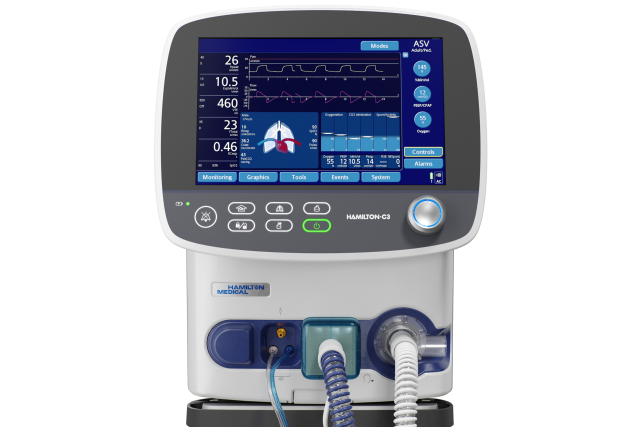
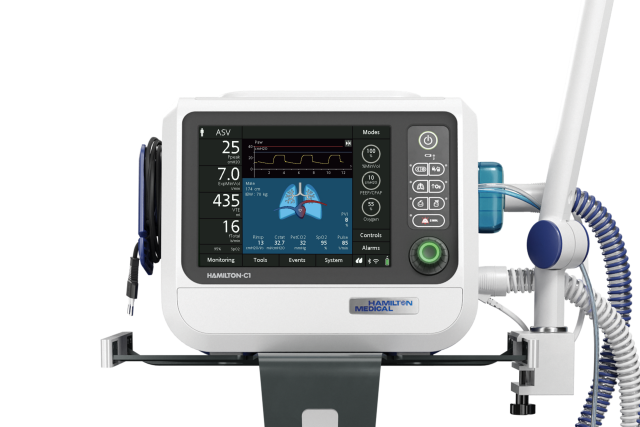
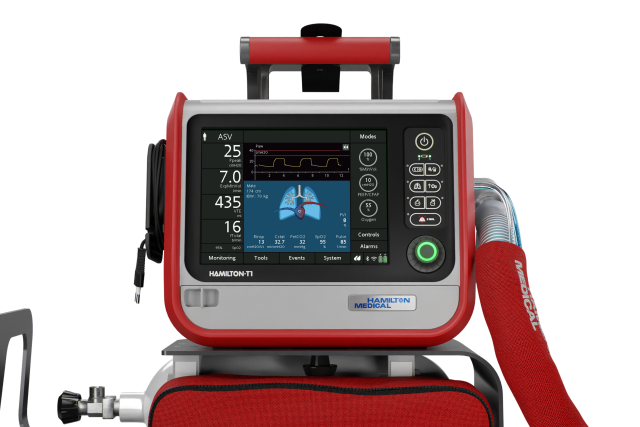
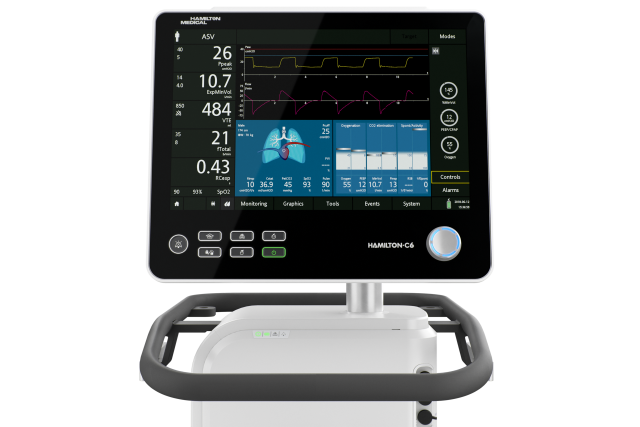
A INTELLiVENT-ASV disponível como opção no HAMILTON-C6, HAMILTON-G5, HAMILTON-C3, HAMILTON-C1 e no HAMILTON-T1, e é um modo padrão no HAMILTON-S1.

References

  1. 1. Beijers AJ, Roos AN, Bindels AJ. Fully automated closed-loop ventilation is safe and effective in post-cardiac surgery patients. Intensive Care Med. 2014;40(5):752-753. doi:10.1007/s00134-014-3234-7
  2. 2. Bialais E, Wittebole X, Vignaux L, et al. Closed-loop ventilation mode (IntelliVent®-ASV) in intensive care unit: a randomized trial. Minerva Anestesiol. 2016;82(6):657-668.
  3. 3. Fot EV, Izotova NN, Yudina AS, Smetkin AA, Kuzkov VV, Kirov MY. Automated Weaning from Mechanical Ventilation after Off-Pump Coronary Artery Bypass Grafting. Front Med (Lausanne). 2017;4:31. Published 2017 Mar 21. doi:10.3389/fmed.2017.00031
  4. 4. Arnal JM, Saoli M, Garnero A. Airway and transpulmonary driving pressures and mechanical powers selected by INTELLiVENT-ASV in passive, mechanically ventilated ICU patients. Heart Lung. 2020;49(4):427-434. doi:10.1016/j.hrtlng.2019.11.001


  1. 5. Wendel Garcia PD, Hofmaenner DA, Brugger SD, et al. Closed-Loop Versus Conventional Mechanical Ventilation in COVID-19 ARDS. J Intensive Care Med. 2021;36(10):1184-1193. doi:10.1177/08850666211024139
  2. 6. Sulemanji DS, Marchese A, Wysocki M, Kacmarek RM. Adaptive support ventilation with and without end-tidal CO2 closed loop control versus conventional ventilation. Intensive Care Med. 2013;39(4):703-710. doi:10.1007/s00134-012-2742-6
  3. 7. Lellouche F, Bouchard PA, Simard S, L'Her E, Wysocki M. Evaluation of fully automated ventilation: a randomized controlled study in post-cardiac surgery patients. Intensive Care Med. 2013;39(3):463-471. doi:10.1007/s00134-012-2799-2

Footnotes


Fully automated closed-loop ventilation is safe and effective in post-cardiac surgery patients.

Beijers AJ, Roos AN, Bindels AJ. Fully automated closed-loop ventilation is safe and effective in post-cardiac surgery patients. Intensive Care Med. 2014;40(5):752-753. doi:10.1007/s00134-014-3234-7

Closed-loop ventilation mode (IntelliVent®-ASV) in intensive care unit: a randomized trial.

Bialais E, Wittebole X, Vignaux L, et al. Closed-loop ventilation mode (IntelliVent®-ASV) in intensive care unit: a randomized trial. Minerva Anestesiol. 2016;82(6):657-668.

BACKGROUND Closed-loop modes automatically adjust ventilation settings, delivering individualized ventilation over short periods of time. The objective of this randomized controlled trial was to compare safety, efficacy and workload for the health care team between IntelliVent®-ASV and conventional modes over a 48-hour period. METHODS ICU patients admitted with an expected duration of mechanical ventilation of more than 48 hours were randomized to IntelliVent®-ASV or conventional ventilation modes. All ventilation parameters were recorded breath-by-breath. The number of manual adjustments assesses workload for the healthcare team. Safety and efficacy were assessed by calculating the time spent within previously defined ranges of non-optimal and optimal ventilation, respectively. RESULTS Eighty patients were analyzed. The median values of ventilation parameters over 48 hours were similar in both groups except for PEEP (7[4] cmH2O versus 6[3] cmH2O with IntelliVent®-ASV and conventional ventilation, respectively, P=0.028) and PETCO2 (36±7 mmHg with IntelliVent®-ASV versus 40±8 mmHg with conventional ventilation, P=0.041). Safety was similar between IntelliVent®-ASV and conventional ventilation for all parameters except for PMAX, which was more often non-optimal with IntelliVent®-ASV (P=0.001). Efficacy was comparable between the 2 ventilation strategies, except for SpO2 and VT, which were more often optimal with IntelliVent®-ASV (P=0.005, P=0.016, respectively). IntelliVent®-ASV required less manual adjustments than conventional ventilation (P<0.001) for a higher total number of adjustments (P<0.001). The coefficient of variation over 48 hours was larger with IntelliVent®-ASV in regard of maximum pressure, inspiratory pressure (PINSP), and PEEP as compared to conventional ventilation. CONCLUSIONS IntelliVent®-ASV required less manual intervention and delivered more variable PEEP and PINSP, while delivering ventilation safe and effective ventilation in terms of VT, RR, SpO2 and PETCO2.

Automated Weaning from Mechanical Ventilation after Off-Pump Coronary Artery Bypass Grafting.

Fot EV, Izotova NN, Yudina AS, Smetkin AA, Kuzkov VV, Kirov MY. Automated Weaning from Mechanical Ventilation after Off-Pump Coronary Artery Bypass Grafting. Front Med (Lausanne). 2017;4:31. Published 2017 Mar 21. doi:10.3389/fmed.2017.00031

BACKGROUND The discontinuation of mechanical ventilation after coronary surgery may prolong and significantly increase the load on intensive care unit personnel. We hypothesized that automated mode using INTELLiVENT-ASV can decrease duration of postoperative mechanical ventilation, reduce workload on medical staff, and provide safe ventilation after off-pump coronary artery bypass grafting (OPCAB). The primary endpoint of our study was to assess the duration of postoperative mechanical ventilation during different modes of weaning from respiratory support (RS) after OPCAB. The secondary endpoint was to assess safety of the automated weaning mode and the number of manual interventions to the ventilator settings during the weaning process in comparison with the protocolized weaning mode. MATERIALS AND METHODS Forty adult patients undergoing elective OPCAB were enrolled into a prospective single-center study. Patients were randomized into two groups: automated weaning (n = 20) using INTELLiVENT-ASV mode with quick-wean option; and protocolized weaning (n = 20), using conventional synchronized intermittent mandatory ventilation (SIMV) + pressure support (PS) mode. We assessed the duration of postoperative ventilation, incidence and duration of unacceptable RS, and the load on medical staff. We also performed the retrospective analysis of 102 patients (standard weaning) who were weaned from ventilator with SIMV + PS mode based on physician's experience without prearranged algorithm. RESULTS AND DISCUSSION Realization of the automated weaning protocol required change in respiratory settings in 2 patients vs. 7 (5-9) adjustments per patient in the protocolized weaning group. Both incidence and duration of unacceptable RS were reduced significantly by means of the automated weaning approach. The FiO2 during spontaneous breathing trials was significantly lower in the automated weaning group: 30 (30-35) vs. 40 (40-45) % in the protocolized weaning group (p < 0.01). The average time until tracheal extubation did not differ in the automated weaning and the protocolized weaning groups: 193 (115-309) and 197 (158-253) min, respectively, but increased to 290 (210-411) min in the standard weaning group. CONCLUSION The automated weaning system after off-pump coronary surgery might provide postoperative ventilation in a more protective way, reduces the workload on medical staff, and does not prolong the duration of weaning from ventilator. The use of automated or protocolized weaning can reduce the duration of postoperative mechanical ventilation in comparison with non-protocolized weaning based on the physician's decision.

Airway and transpulmonary driving pressures and mechanical powers selected by INTELLiVENT-ASV in passive, mechanically ventilated ICU patients.

Arnal JM, Saoli M, Garnero A. Airway and transpulmonary driving pressures and mechanical powers selected by INTELLiVENT-ASV in passive, mechanically ventilated ICU patients. Heart Lung. 2020;49(4):427-434. doi:10.1016/j.hrtlng.2019.11.001

BACKGROUND Driving pressure (ΔP) and mechanical power (MP) are predictors of the risk of ventilation- induced lung injuries (VILI) in mechanically ventilated patients. INTELLiVENT-ASV® is a closed-loop ventilation mode that automatically adjusts respiratory rate and tidal volume, according to the patient's respiratory mechanics. OBJECTIVES This prospective observational study investigated ΔP and MP (and also transpulmonary ΔP (ΔPL) and MP (MPL) for a subgroup of patients) delivered by INTELLiVENT-ASV. METHODS Adult patients admitted to the ICU were included if they were sedated and met the criteria for a single lung condition (normal lungs, COPD, or ARDS). INTELLiVENT-ASV was used with default target settings. If PEEP was above 16 cmH2O, the recruitment strategy used transpulmonary pressure as a reference, and ΔPL and MPL were computed. Measurements were made once for each patient. RESULTS Of the 255 patients included, 98 patients were classified as normal-lungs, 28 as COPD, and 129 as ARDS patients. The median ΔP was 8 (7 - 10), 10 (8 - 12), and 9 (8 - 11) cmH2O for normal-lungs, COPD, and ARDS patients, respectively. The median MP was 9.1 (4.9 - 13.5), 11.8 (8.6 - 16.5), and 8.8 (5.6 - 13.8) J/min for normal-lungs, COPD, and ARDS patients, respectively. For the 19 patients managed with transpulmonary pressure ΔPL was 6 (4 - 7) cmH2O and MPL was 3.6 (3.1 - 4.4) J/min. CONCLUSIONS In this short term observation study, INTELLiVENT-ASV selected ΔP and MP considered in safe ranges for lung protection. In a subgroup of ARDS patients, the combination of a recruitment strategy and INTELLiVENT-ASV resulted in an apparently safe ΔPL and MPL.

Closed-Loop Versus Conventional Mechanical Ventilation in COVID-19 ARDS.

Wendel Garcia PD, Hofmaenner DA, Brugger SD, et al. Closed-Loop Versus Conventional Mechanical Ventilation in COVID-19 ARDS. J Intensive Care Med. 2021;36(10):1184-1193. doi:10.1177/08850666211024139

BACKGROUND Lung-protective ventilation is key in bridging patients suffering from COVID-19 acute respiratory distress syndrome (ARDS) to recovery. However, resource and personnel limitations during pandemics complicate the implementation of lung-protective protocols. Automated ventilation modes may prove decisive in these settings enabling higher degrees of lung-protective ventilation than conventional modes. METHOD Prospective study at a Swiss university hospital. Critically ill, mechanically ventilated COVID-19 ARDS patients were allocated, by study-blinded coordinating staff, to either closed-loop or conventional mechanical ventilation, based on mechanical ventilator availability. Primary outcome was the overall achieved percentage of lung-protective ventilation in closed-loop versus conventional mechanical ventilation, assessed minute-by-minute, during the initial 7 days and overall mechanical ventilation time. Lung-protective ventilation was defined as the combined target of tidal volume <8 ml per kg of ideal body weight, dynamic driving pressure <15 cmH2O, peak pressure <30 cmH2O, peripheral oxygen saturation ≥88% and dynamic mechanical power <17 J/min. RESULTS Forty COVID-19 ARDS patients, accounting for 1,048,630 minutes (728 days) of cumulative mechanical ventilation, allocated to either closed-loop (n = 23) or conventional ventilation (n = 17), presenting with a median paO2/ FiO2 ratio of 92 [72-147] mmHg and a static compliance of 18 [11-25] ml/cmH2O, were mechanically ventilated for 11 [4-25] days and had a 28-day mortality rate of 20%. During the initial 7 days of mechanical ventilation, patients in the closed-loop group were ventilated lung-protectively for 65% of the time versus 38% in the conventional group (Odds Ratio, 1.79; 95% CI, 1.76-1.82; P < 0.001) and for 45% versus 33% of overall mechanical ventilation time (Odds Ratio, 1.22; 95% CI, 1.21-1.23; P < 0.001). CONCLUSION Among critically ill, mechanically ventilated COVID-19 ARDS patients during an early highpoint of the pandemic, mechanical ventilation using a closed-loop mode was associated with a higher degree of lung-protective ventilation than was conventional mechanical ventilation.

Adaptive support ventilation with and without end-tidal CO2 closed loop control versus conventional ventilation.

Sulemanji DS, Marchese A, Wysocki M, Kacmarek RM. Adaptive support ventilation with and without end-tidal CO2 closed loop control versus conventional ventilation. Intensive Care Med. 2013;39(4):703-710. doi:10.1007/s00134-012-2742-6

PURPOSE Our aim was to compare adaptive support ventilation with and without closed loop control by end tidal CO2 (ASVCO2, ASV) with pressure (PC) and volume control ventilation (VC) during simulated clinical scenarios [normal lungs (N), COPD, ARDS, brain injury (BI)]. METHODS A lung model was used to simulate representative compliance (mL/cmH2O): resistance (cmH2O/L/s) combinations, 45:5 for N and BI, 60:7.7 for COPD, 15:7.7 and 35:7.7 for ARDS. Two levels of PEEP (cmH2O) were used for each scenario, 12/16 for ARDS, and 5/10 for others. The CO2 productions of 2, 3, 4 and 5 mL/kg predicted body weight/min were simulated. Tidal volume was set to 6 mL/kg during VC and PC. Outcomes of interest were end tidal CO2 (etCO2) and plateau pressure (P Plat). RESULTS EtCO2 levels in N and BI and COPD were similar for all modes. In ARDS, etCO2 was higher in ASVCO2 than in other modes (p < 0.001). Under all mechanical conditions ASVCO2 revealed a narrower range of etCO2. P Plat was similar for all modes in all scenarios but ARDS where P Plat in ASV and ASVCO2 were lower than in VC (p = 0.001). When P Plat was ≥ 28 cmH2O, P plat in ASV and ASVCO2 were lower than in VC and PC (p = 0.024). CONCLUSION All modes performed similarly in most cases. Minor differences observed were in favor of the closed loop modes. Overall, ASVCO2 maintained tighter CO2 control. The ASVCO2 had the greatest impact during ARDS allowing etCO2 to increase and protecting against hypocapnia evident with other modes while ensuring lower P plat and tidal volumes.

Evaluation of fully automated ventilation: a randomized controlled study in post-cardiac surgery patients.

Lellouche F, Bouchard PA, Simard S, L'Her E, Wysocki M. Evaluation of fully automated ventilation: a randomized controlled study in post-cardiac surgery patients. Intensive Care Med. 2013;39(3):463-471. doi:10.1007/s00134-012-2799-2

PURPOSE Discrepancies between the demand and availability of clinicians to care for mechanically ventilated patients can be anticipated due to an aging population and to increasing severity of illness. The use of closed-loop ventilation provides a potential solution. The aim of the study was to evaluate the safety of a fully automated ventilator. METHODS We conducted a randomized controlled trial comparing automated ventilation (AV) and protocolized ventilation (PV) in 60 ICU patients after cardiac surgery. In the PV group, tidal volume, respiratory rate, FiO(2) and positive end-expiratory pressure (PEEP) were set according to the local hospital protocol based on currently available guidelines. In the AV group, only sex, patient height and a maximum PEEP level of 10 cmH(2)O were set. The primary endpoint was the duration of ventilation within a "not acceptable" range of tidal volume. Zones of optimal, acceptable and not acceptable ventilation were based on several respiratory parameters and defined a priori. RESULTS The patients were assigned equally to each group, 30 to PV and 30 to AV. The percentage of time within the predefined zones of optimal, acceptable and not acceptable ventilation were 12 %, 81 %, and 7 % respectively with PV, and 89.5 %, 10 % and 0.5 % with AV (P < 0.001). There were 148 interventions required during PV compared to only 5 interventions with AV (P < 0.001). CONCLUSION Fully AV was safe in hemodynamically stable patients immediately following cardiac surgery. In addition to a reduction in the number of interventions, the AV system maintained patients within a predefined target range of optimal ventilation.