
Session expired

Due to inactivity your session has expired. Please login again.

Detectamos que você está visitando nosso site a partir de Estados Unidos.
Dispomos de uma versão separada do site para (Estados Unidos).

Mudar para ${país}
 Tecnologias

P/V Tool®.

Avaliar a recrutabilidade e realizar manobras de recrutamento

Balões amarelos em diferentes fases para representar diferentes condições dos pulmões

Recrutado ou não recrutado? Uma ferramenta de diagnóstico

A Ferramenta de Ventilação de Proteção (P/V Tool) realiza uma manobra de mecânica respiratória que registra uma curva pressão/volume quasi-estática, que descreve o comportamento mecânico dos pulmões e da parede torácica durante a inflação e a deflação.

Este método pode ser usado para avaliar a recrutabilidade pulmonar e determinar a estratégia de recrutamento a aplicar (Demory D, Arnal JM, Wysocki M, et al. Recruitability of the lung estimated by the pressure volume curve hysteresis in ARDS patients. Intensive Care Med. 2008;34(11):2019-2025. doi:10.1007/s00134-008-1167-81​).

Curvas de pressão e volume com P/V Tool

Qual é a estratégia correta? Use uma ferramenta de recrutamento

A P/V Tool também pode ser usada para realizar uma manobra de recrutamento de insuflação prolongada e medir o aumento no volume pulmonar (Documentos brancos, manobras de recrutamento pulmonar2). Pode definir a rampa de pressão, a pressão máxima, a duração e o nível de PEEP após a manobra para se adequar a cada paciente.

Isto é particularmente útil em pacientes com SARA, uma vez que a seleção apropriada de uma estratégia de recrutamento pulmonar e a configuração correta de PEEP como força antidesrecrutamento são críticas para este grupo de paciente (Gattinoni L, Caironi P, Cressoni M, et al. Lung recruitment in patients with the acute respiratory distress syndrome. N Engl J Med. 2006;354(17):1775-1786. doi:10.1056/NEJMoa0520523​).

Cateter nasogástrico multifuncional NutriVent

Isso pode melhorar sua estratégia de ventilação? Uma ferramenta de proteção pulmonar

Em combinação com a medição da pressão esofágica, o P/V Tool pode-lhe fornecer uma compreensão mais clara das mecânicas de pulmão e da parede torácica.

Isto permite que você aplique uma estratégia de ventilação de proteção pulmonar, titulando o nível de PEEP (Caironi P, Cressoni M, Chiumello D, et al. Lung opening and closing during ventilation of acute respiratory distress syndrome. Am J Respir Crit Care Med. 2010;181(6):578-586. doi:10.1164/rccm.200905-0787OC4​) e otimizando os parâmetros para a manobra de recrutamento, e, subsequentemente, otimizando a pressão diferencial e volume corrente.

Interface do usuário da P/V Tool Interface do usuário da P/V Tool

Como funciona? Princípios P/V Tool

Pode realizar manobras com a P/V Tool sem alterar o modo ou as configurações do respirador. A ventilação normal pode ser retomada a qualquer momento. A P/V Tool registra a relação pressão/volume dos pulmões em condições de baixo fluxo (2–5 cmH2O/s).

O circuito de respiração é pressurizado linearmente até atingir a pressão pretendida definida pelo operador. Quando a pressão atinge o alvo, é reduzida novamente para a pressão inicial.


Ken Hargett Camille Neville

Customer voices

Usamos a P/V Tool para determinar as configurações iniciais de PEEP em quase todos os pacientes ventilados, uma vez que eles tenham sido sedados para a intubação. Também usamos bastante a parte de recrutamento da P/V Tool, principalmente para pacientes que apresentam atelectasia repetida.

Ken Hargett

Director Respiratory Care (até 2019)
Methodist Hospital, Houston (TX), EUA

Customer voices

Nossos terapeutas respiratórios utilizam P/V Tool assim que colocam o paciente no respirador para obter a PEEP ideal. Os terapeutas consideram isso muito útil, especialmente em pacientes mais graves.

Camille Neville

Clinical Educator for the Respiratory Department
Florida Hospital, Orlando, EUA

Gráfico de estatísticas: Amato MB. Nengl J Med. 1998 Feb 5;338(6):347-54

Existem evidências? Uma análise das evidências

A proteção pulmonar é um dos principais objetivos da ventilação mecânica de um paciente.

Em termos de alterações na oxigenação, volume recrutado ou hiperinsuflação, as características e a morfologia pulmonar são fortes indicadores da resposta às configurações de PEEP ou manobras de recrutamento (Constantin JM, Futier E, Cherprenet AL, et al. A recruitment maneuver increases oxygenation after intubation of hypoxemic intensive care unit patients: a randomized controlled study. Crit Care. 2010;14(2):R76. doi:10.1186/cc89895​).

Uma estratégia personalizada pode diminuir a mortalidade em pacientes com SARA moderada a grave se a morfologia pulmonar for avaliada corretamente (Constantin JM, Jabaudon M, Lefrant JY, et al. Personalised mechanical ventilation tailored to lung morphology versus low positive end-expiratory pressure for patients with acute respiratory distress syndrome in France (the LIVE study): a multicentre, single-blind, randomised controlled trial. Lancet Respir Med. 2019;7(10):870-880. doi:10.1016/S2213-2600(19)30138-96​). A proteção pulmonar não só reduz a mortalidade em pacientes com SARA, (Acute Respiratory Distress Syndrome Network, Brower RG, Matthay MA, et al. Ventilation with lower tidal volumes as compared with traditional tidal volumes for acute lung injury and the acute respiratory distress syndrome. N Engl J Med. 2000;342(18):1301-1308. doi:10.1056/NEJM2000050434218017), mas também reduz o risco de SARA secundária em pacientes com pulmões normais (Determann RM, Royakkers A, Wolthuis EK, et al. Ventilation with lower tidal volumes as compared with conventional tidal volumes for patients without acute lung injury: a preventive randomized controlled trial. Crit Care. 2010;14(1):R1. doi:10.1186/cc82308) e de complicações em pacientes pós-cirúrgicos (Costa Leme A, Hajjar LA, Volpe MS, et al. Effect of Intensive vs Moderate Alveolar Recruitment Strategies Added to Lung-Protective Ventilation on Postoperative Pulmonary Complications: A Randomized Clinical Trial. JAMA. 2017;317(14):1422-1432. doi:10.1001/jama.2017.22979​, Hu MC, Yang YL, Chen TT, Chen JT, Tiong TY, Tam KW. Recruitment maneuvers in patients undergoing thoracic surgery: a meta-analysis. Gen Thorac Cardiovasc Surg. 2021;69(12):1553-1559. doi:10.1007/s11748-021-01673-7 10​) .

Ilustração gráfica: estudante segurando um certificado na mão

A ter em conta! Recursos de treinamento P/V Tool

Setas pretas apontando para um círculo azul com a inscrição “To the point”

Direto ao assunto. Saiba tudo sobre os marcos da pesquisa médica

Saiba mais sobre a curva PV quasi-estática para avaliar a capacidade de recrutamento junto ao leito! Esse é apenas um dos artigos da nossa coleção que apresenta os principais fatos e descobertas de artigos importantes em um formato fácil de digerir.

Disponibilidade

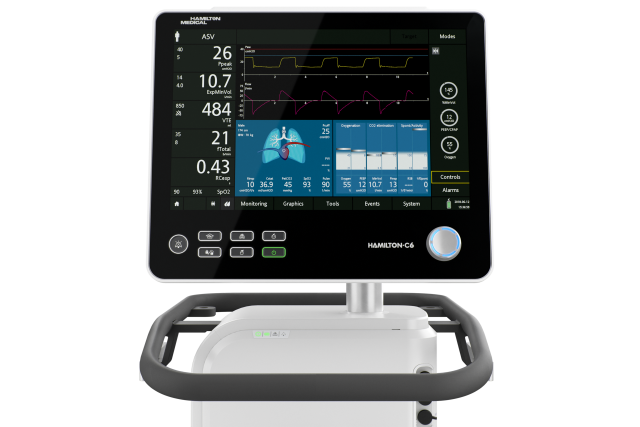
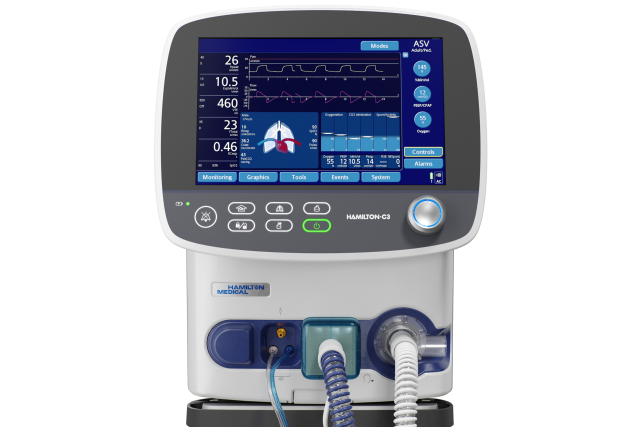
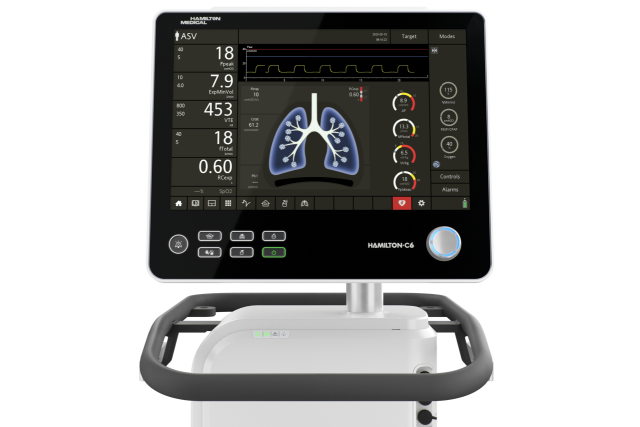
A P/V Tool está disponível como opção no HAMILTON-C3, HAMILTON-C6, no novo HAMILTON-C6, e HAMILTON-G5, e é um recurso padrão no HAMILTON-S1.

References

  1. 1. Demory D, Arnal JM, Wysocki M, et al. Recruitability of the lung estimated by the pressure volume curve hysteresis in ARDS patients. Intensive Care Med. 2008;34(11):2019-2025. doi:10.1007/s00134-008-1167-8
  2. 2. ELO20160409S.01
  3. 3. Gattinoni L, Caironi P, Cressoni M, et al. Lung recruitment in patients with the acute respiratory distress syndrome. N Engl J Med. 2006;354(17):1775-1786. doi:10.1056/NEJMoa052052
  4. 4. Caironi P, Cressoni M, Chiumello D, et al. Lung opening and closing during ventilation of acute respiratory distress syndrome. Am J Respir Crit Care Med. 2010;181(6):578-586. doi:10.1164/rccm.200905-0787OC
  5. 5. Constantin JM, Futier E, Cherprenet AL, et al. A recruitment maneuver increases oxygenation after intubation of hypoxemic intensive care unit patients: a randomized controlled study. Crit Care. 2010;14(2):R76. doi:10.1186/cc8989


  1. 6. Constantin JM, Jabaudon M, Lefrant JY, et al. Personalised mechanical ventilation tailored to lung morphology versus low positive end-expiratory pressure for patients with acute respiratory distress syndrome in France (the LIVE study): a multicentre, single-blind, randomised controlled trial. Lancet Respir Med. 2019;7(10):870-880. doi:10.1016/S2213-2600(19)30138-9
  2. 7. Acute Respiratory Distress Syndrome Network, Brower RG, Matthay MA, et al. Ventilation with lower tidal volumes as compared with traditional tidal volumes for acute lung injury and the acute respiratory distress syndrome. N Engl J Med. 2000;342(18):1301-1308. doi:10.1056/NEJM200005043421801
  3. 8. Determann RM, Royakkers A, Wolthuis EK, et al. Ventilation with lower tidal volumes as compared with conventional tidal volumes for patients without acute lung injury: a preventive randomized controlled trial. Crit Care. 2010;14(1):R1. doi:10.1186/cc8230
  4. 9. Costa Leme A, Hajjar LA, Volpe MS, et al. Effect of Intensive vs Moderate Alveolar Recruitment Strategies Added to Lung-Protective Ventilation on Postoperative Pulmonary Complications: A Randomized Clinical Trial. JAMA. 2017;317(14):1422-1432. doi:10.1001/jama.2017.2297
  5. 10. Hu MC, Yang YL, Chen TT, Chen JT, Tiong TY, Tam KW. Recruitment maneuvers in patients undergoing thoracic surgery: a meta-analysis. Gen Thorac Cardiovasc Surg. 2021;69(12):1553-1559. doi:10.1007/s11748-021-01673-7

Footnotes


Recruitability of the lung estimated by the pressure volume curve hysteresis in ARDS patients.

Demory D, Arnal JM, Wysocki M, et al. Recruitability of the lung estimated by the pressure volume curve hysteresis in ARDS patients. Intensive Care Med. 2008;34(11):2019-2025. doi:10.1007/s00134-008-1167-8

OBJECTIVE To assess the hysteresis of the pressure-volume curve (PV curve) as to estimate, easily and at the bedside, the recruitability of the lung in ARDS patients. DESIGN Prospective study. SETTING Twelve medico-surgical ICU beds of a general hospital. PATIENTS Twenty-six patients within the first 24 h from meeting ARDS criteria. INTERVENTION A Quasi-static inflation and deflation PV curve from 0 to 40 cmH(2)O and a 40 cmH(2)O recruitment maneuver (RM) maintained for 10 s were successively done with an interval of 30 min in between. RECORDINGS AND CALCULATION: Hysteresis of the PV curve (H(PV)) was calculated as the ratio of the area enclosed by the pressure volume loop divided by the predicted body weight (PBW). The volume increase during the RM (V(RM)) was measured by integration of the flow required to maintain the pressure at 40 cmH(2)O and divided by PBW, as an estimation of the volume recruited during the RM. RESULTS A positive linear correlation was found between H(PV) and V(RM) (r = 0.81, P < 0.0001). CONCLUSIONS The results suggest using the hysteresis of the PV curve to assess the recruitability of the lung.

Lung recruitment in patients with the acute respiratory distress syndrome.

Gattinoni L, Caironi P, Cressoni M, et al. Lung recruitment in patients with the acute respiratory distress syndrome. N Engl J Med. 2006;354(17):1775-1786. doi:10.1056/NEJMoa052052

BACKGROUND In the acute respiratory distress syndrome (ARDS), positive end-expiratory pressure (PEEP) may decrease ventilator-induced lung injury by keeping lung regions open that otherwise would be collapsed. Since the effects of PEEP probably depend on the recruitability of lung tissue, we conducted a study to examine the relationship between the percentage of potentially recruitable lung, as indicated by computed tomography (CT), and the clinical and physiological effects of PEEP. METHODS Sixty-eight patients with acute lung injury or ARDS underwent whole-lung CT during breath-holding sessions at airway pressures of 5, 15, and 45 cm of water. The percentage of potentially recruitable lung was defined as the proportion of lung tissue in which aeration was restored at airway pressures between 5 and 45 cm of water. RESULTS The percentage of potentially recruitable lung varied widely in the population, accounting for a mean (+/-SD) of 13+/-11 percent of the lung weight, and was highly correlated with the percentage of lung tissue in which aeration was maintained after the application of PEEP (r2=0.72, P<0.001). On average, 24 percent of the lung could not be recruited. Patients with a higher percentage of potentially recruitable lung (greater than the median value of 9 percent) had greater total lung weights (P<0.001), poorer oxygenation (defined as a ratio of partial pressure of arterial oxygen to fraction of inspired oxygen) (P<0.001) and respiratory-system compliance (P=0.002), higher levels of dead space (P=0.002), and higher rates of death (P=0.02) than patients with a lower percentage of potentially recruitable lung. The combined physiological variables predicted, with a sensitivity of 71 percent and a specificity of 59 percent, whether a patient's proportion of potentially recruitable lung was higher or lower than the median. CONCLUSIONS In ARDS, the percentage of potentially recruitable lung is extremely variable and is strongly associated with the response to PEEP.

Lung opening and closing during ventilation of acute respiratory distress syndrome.

Caironi P, Cressoni M, Chiumello D, et al. Lung opening and closing during ventilation of acute respiratory distress syndrome. Am J Respir Crit Care Med. 2010;181(6):578-586. doi:10.1164/rccm.200905-0787OC

RATIONALE The effects of high positive end-expiratory pressure (PEEP) strictly depend on lung recruitability, which varies widely during acute respiratory distress syndrome (ARDS). Unfortunately, increasing PEEP may lead to opposing effects on two main factors potentially worsening the lung injury, that is, alveolar strain and intratidal opening and closing, being detrimental (increasing the former) or beneficial (decreasing the latter). OBJECTIVES To investigate how lung recruitability influences alveolar strain and intratidal opening and closing after the application of high PEEP. METHODS We analyzed data from a database of 68 patients with acute lung injury or ARDS who underwent whole-lung computed tomography at 5, 15, and 45 cm H(2)O airway pressure. MEASUREMENTS AND MAIN RESULTS End-inspiratory nonaerated lung tissue was estimated from computed tomography pressure-volume curves. Alveolar strain and opening and closing lung tissue were computed at 5 and 15 cm H(2)O PEEP. In patients with a higher percentage of potentially recruitable lung, the increase in PEEP markedly reduced opening and closing lung tissue (P < 0.001), whereas no differences were observed in patients with a lower percentage of potentially recruitable lung. In contrast, alveolar strain similarly increased in the two groups (P = 0.89). Opening and closing lung tissue was distributed mainly in the dependent and hilar lung regions, and it appeared to be an independent risk factor for death (odds ratio, 1.10 for each 10-g increase). CONCLUSIONS In ARDS, especially in patients with higher lung recruitability, the beneficial impact of reducing intratidal alveolar opening and closing by increasing PEEP prevails over the effects of increasing alveolar strain.

A recruitment maneuver increases oxygenation after intubation of hypoxemic intensive care unit patients: a randomized controlled study.

Constantin JM, Futier E, Cherprenet AL, et al. A recruitment maneuver increases oxygenation after intubation of hypoxemic intensive care unit patients: a randomized controlled study. Crit Care. 2010;14(2):R76. doi:10.1186/cc8989

INTRODUCTION Tracheal intubation and anaesthesia promotes lung collapse and hypoxemia. In acute lung injury patients, recruitment maneuvers (RMs) increase lung volume and oxygenation, and decrease atelectasis. The aim of this study was to evaluate the efficacy and safety of RMs performed immediately after intubation. METHODS This randomized controlled study was conducted in two 16-bed medical-surgical intensive care units within the same university hospital. Consecutive patients requiring intubation for acute hypoxemic respiratory failure were included. Patients were randomized to undergo a RM immediately (within 2 minutes) after intubation, consisting of a continuous positive airway pressure (CPAP) of 40 cmH2O over 30 seconds (RM group), or not (control group). Blood gases were sampled and blood samples taken for culture before, within 2 minutes, 5 minutes, and 30 minutes after intubation. Haemodynamic and respiratory parameters were continuously recorded throughout the study. Positive end expiratory pressure (PEEP) was set at 5 cmH2O throughout. RESULTS The control (n = 20) and RM (n = 20) groups were similar in terms of age, disease severity, diagnosis at time of admission, and PaO2 obtained under 10-15 L/min oxygen flow immediately before (81 +/- 15 vs 83 +/- 35 mmHg, P = 0.9), and within 2 minutes after, intubation under 100% FiO2 (81 +/- 15 vs 83 +/- 35 mmHg, P = 0.9). Five minutes after intubation, PaO2 obtained under 100% FiO2 was significantly higher in the RM group compared with the control group (93 +/- 36 vs 236 +/- 117 mmHg, P = 0.008). The difference remained significant at 30 minutes with 110 +/- 39 and 180 +/- 79 mmHg, respectively, for the control and RM groups. No significant difference in haemodynamic conditions was observed between groups at any time. Following tracheal intubation, 15 patients had positive blood cultures, showing microorganisms shared with tracheal aspirates, with no significant difference in the incidence of culture positivity between groups. CONCLUSIONS Recruitment maneuver following intubation in hypoxemic patients improved short-term oxygenation, and was not associated with increased adverse effects. TRIAL REGISTRATION NCT01014299.

Personalised mechanical ventilation tailored to lung morphology versus low positive end-expiratory pressure for patients with acute respiratory distress syndrome in France (the LIVE study): a multicentre, single-blind, randomised controlled trial.

Constantin JM, Jabaudon M, Lefrant JY, et al. Personalised mechanical ventilation tailored to lung morphology versus low positive end-expiratory pressure for patients with acute respiratory distress syndrome in France (the LIVE study): a multicentre, single-blind, randomised controlled trial. Lancet Respir Med. 2019;7(10):870-880. doi:10.1016/S2213-2600(19)30138-9

BACKGROUND The effect of personalised mechanical ventilation on clinical outcomes in patients with acute respiratory distress syndrome (ARDS) remains uncertain and needs to be evaluated. We aimed to test whether a mechanical ventilation strategy that was personalised to individual patients' lung morphology would improve the survival of patients with ARDS when compared with standard of care. METHODS We designed a multicentre, single-blind, stratified, parallel-group, randomised controlled trial enrolling patients with moderate-to-severe ARDS in 20 university or non-university intensive care units in France. Patients older than 18 years with early ARDS for less than 12 h were randomly assigned (1:1) to either the control group or the personalised group using a minimisation algorithm and stratified according to the study site, lung morphology, and duration of mechanical ventilation. Only the patients were masked to allocation. In the control group, patients received a tidal volume of 6 mL/kg per predicted bodyweight and positive end-expiratory pressure (PEEP) was selected according to a low PEEP and fraction of inspired oxygen table, and early prone position was encouraged. In the personalised group, the treatment approach was based on lung morphology; patients with focal ARDS received a tidal volume of 8 mL/kg, low PEEP, and prone position. Patients with non-focal ARDS received a tidal volume of 6 mL/kg, along with recruitment manoeuvres and high PEEP. The primary outcome was 90-day mortality as established by intention-to-treat analysis. This study is registered online with ClinicalTrials.gov, NCT02149589. FINDINGS From June 12, 2014, to Feb 2, 2017, 420 patients were randomly assigned to treatment. 11 patients were excluded in the personalised group and nine patients were excluded in the control group; 196 patients in the personalised group and 204 in the control group were included in the analysis. In a multivariate analysis, there was no difference in 90-day mortality between the group treated with personalised ventilation and the control group in the intention-to-treat analysis (hazard ratio [HR] 1·01; 95% CI 0·61-1·66; p=0·98). However, misclassification of patients as having focal or non-focal ARDS by the investigators was observed in 85 (21%) of 400 patients. We found a significant interaction between misclassification and randomised group allocation with respect to the primary outcome (p<0·001). In the subgroup analysis, the 90-day mortality of the misclassified patients was higher in the personalised group (26 [65%] of 40 patients) than in the control group (18 [32%] of 57 patients; HR 2·8; 95% CI 1·5-5·1; p=0·012. INTERPRETATION Personalisation of mechanical ventilation did not decrease mortality in patients with ARDS, possibly because of the misclassification of 21% of patients. A ventilator strategy misaligned with lung morphology substantially increases mortality. Whether improvement in ARDS phenotyping can decrease mortality should be assessed in a future clinical trial. FUNDING French Ministry of Health (Programme Hospitalier de Recherche Clinique InterRégional 2013).

Ventilation with lower tidal volumes as compared with traditional tidal volumes for acute lung injury and the acute respiratory distress syndrome.

Acute Respiratory Distress Syndrome Network, Brower RG, Matthay MA, et al. Ventilation with lower tidal volumes as compared with traditional tidal volumes for acute lung injury and the acute respiratory distress syndrome. N Engl J Med. 2000;342(18):1301-1308. doi:10.1056/NEJM200005043421801

BACKGROUND Traditional approaches to mechanical ventilation use tidal volumes of 10 to 15 ml per kilogram of body weight and may cause stretch-induced lung injury in patients with acute lung injury and the acute respiratory distress syndrome. We therefore conducted a trial to determine whether ventilation with lower tidal volumes would improve the clinical outcomes in these patients. METHODS Patients with acute lung injury and the acute respiratory distress syndrome were enrolled in a multicenter, randomized trial. The trial compared traditional ventilation treatment, which involved an initial tidal volume of 12 ml per kilogram of predicted body weight and an airway pressure measured after a 0.5-second pause at the end of inspiration (plateau pressure) of 50 cm of water or less, with ventilation with a lower tidal volume, which involved an initial tidal volume of 6 ml per kilogram of predicted body weight and a plateau pressure of 30 cm of water or less. The primary outcomes were death before a patient was discharged home and was breathing without assistance and the number of days without ventilator use from day 1 to day 28. RESULTS The trial was stopped after the enrollment of 861 patients because mortality was lower in the group treated with lower tidal volumes than in the group treated with traditional tidal volumes (31.0 percent vs. 39.8 percent, P=0.007), and the number of days without ventilator use during the first 28 days after randomization was greater in this group (mean [+/-SD], 12+/-11 vs. 10+/-11; P=0.007). The mean tidal volumes on days 1 to 3 were 6.2+/-0.8 and 11.8+/-0.8 ml per kilogram of predicted body weight (P<0.001), respectively, and the mean plateau pressures were 25+/-6 and 33+/-8 cm of water (P<0.001), respectively. CONCLUSIONS In patients with acute lung injury and the acute respiratory distress syndrome, mechanical ventilation with a lower tidal volume than is traditionally used results in decreased mortality and increases the number of days without ventilator use.

Ventilation with lower tidal volumes as compared with conventional tidal volumes for patients without acute lung injury: a preventive randomized controlled trial.

Determann RM, Royakkers A, Wolthuis EK, et al. Ventilation with lower tidal volumes as compared with conventional tidal volumes for patients without acute lung injury: a preventive randomized controlled trial. Crit Care. 2010;14(1):R1. doi:10.1186/cc8230

INTRODUCTION Recent cohort studies have identified the use of large tidal volumes as a major risk factor for development of lung injury in mechanically ventilated patients without acute lung injury (ALI). We compared the effect of conventional with lower tidal volumes on pulmonary inflammation and development of lung injury in critically ill patients without ALI at the onset of mechanical ventilation. METHODS We performed a randomized controlled nonblinded preventive trial comparing mechanical ventilation with tidal volumes of 10 ml versus 6 ml per kilogram of predicted body weight in critically ill patients without ALI at the onset of mechanical ventilation. The primary end point was cytokine levels in bronchoalveolar lavage fluid and plasma during mechanical ventilation. The secondary end point was the development of lung injury, as determined by consensus criteria for ALI, duration of mechanical ventilation, and mortality. RESULTS One hundred fifty patients (74 conventional versus 76 lower tidal volume) were enrolled and analyzed. No differences were observed in lavage fluid cytokine levels at baseline between the randomization groups. Plasma interleukin-6 (IL-6) levels decreased significantly more strongly in the lower-tidal-volume group ((from 51 (20 to 182) ng/ml to 11 (5 to 20) ng/ml versus 50 (21 to 122) ng/ml to 21 (20 to 77) ng/ml; P = 0.01)). The trial was stopped prematurely for safety reasons because the development of lung injury was higher in the conventional tidal-volume group as compared with the lower tidal-volume group (13.5% versus 2.6%; P = 0.01). Univariate analysis showed statistical relations between baseline lung-injury score, randomization group, level of positive end-expiratory pressure (PEEP), the number of transfused blood products, the presence of a risk factor for ALI, and baseline IL-6 lavage fluid levels and the development of lung injury. Multivariate analysis revealed the randomization group and the level of PEEP as independent predictors of the development of lung injury. CONCLUSIONS Mechanical ventilation with conventional tidal volumes is associated with sustained cytokine production, as measured in plasma. Our data suggest that mechanical ventilation with conventional tidal volumes contributes to the development of lung injury in patients without ALI at the onset of mechanical ventilation. TRIAL REGISTRATION ISRCTN82533884.

Effect of Intensive vs Moderate Alveolar Recruitment Strategies Added to Lung-Protective Ventilation on Postoperative Pulmonary Complications: A Randomized Clinical Trial.

Costa Leme A, Hajjar LA, Volpe MS, et al. Effect of Intensive vs Moderate Alveolar Recruitment Strategies Added to Lung-Protective Ventilation on Postoperative Pulmonary Complications: A Randomized Clinical Trial. JAMA. 2017;317(14):1422-1432. doi:10.1001/jama.2017.2297

Importance Perioperative lung-protective ventilation has been recommended to reduce pulmonary complications after cardiac surgery. The protective role of a small tidal volume (VT) has been established, whereas the added protection afforded by alveolar recruiting strategies remains controversial. Objective To determine whether an intensive alveolar recruitment strategy could reduce postoperative pulmonary complications, when added to a protective ventilation with small VT. Design, Setting, and Participants Randomized clinical trial of patients with hypoxemia after cardiac surgery at a single ICU in Brazil (December 2011-2014). Interventions Intensive recruitment strategy (n=157) or moderate recruitment strategy (n=163) plus protective ventilation with small VT. Main Outcomes and Measures Severity of postoperative pulmonary complications computed until hospital discharge, analyzed with a common odds ratio (OR) to detect ordinal shift in distribution of pulmonary complication severity score (0-to-5 scale, 0, no complications; 5, death). Prespecified secondary outcomes were length of stay in the ICU and hospital, incidence of barotrauma, and hospital mortality. Results All 320 patients (median age, 62 years; IQR, 56-69 years; 125 women [39%]) completed the trial. The intensive recruitment strategy group had a mean 1.8 (95% CI, 1.7 to 2.0) and a median 1.7 (IQR, 1.0-2.0) pulmonary complications score vs 2.1 (95% CI, 2.0-2.3) and 2.0 (IQR, 1.5-3.0) for the moderate strategy group. Overall, the distribution of primary outcome scores shifted consistently in favor of the intensive strategy, with a common OR for lower scores of 1.86 (95% CI, 1.22 to 2.83; P = .003). The mean hospital stay for the moderate group was 12.4 days vs 10.9 days in the intensive group (absolute difference, -1.5 days; 95% CI, -3.1 to -0.3; P = .04). The mean ICU stay for the moderate group was 4.8 days vs 3.8 days for the intensive group (absolute difference, -1.0 days; 95% CI, -1.6 to -0.2; P = .01). Hospital mortality (2.5% in the intensive group vs 4.9% in the moderate group; absolute difference, -2.4%, 95% CI, -7.1% to 2.2%) and barotrauma incidence (0% in the intensive group vs 0.6% in the moderate group; absolute difference, -0.6%; 95% CI, -1.8% to 0.6%; P = .51) did not differ significantly between groups. Conclusions and Relevance Among patients with hypoxemia after cardiac surgery, the use of an intensive vs a moderate alveolar recruitment strategy resulted in less severe pulmonary complications while in the hospital. Trial Registration clinicaltrials.gov Identifier: NCT01502332.

Recruitment maneuvers in patients undergoing thoracic surgery: a meta-analysis.

Hu MC, Yang YL, Chen TT, Chen JT, Tiong TY, Tam KW. Recruitment maneuvers in patients undergoing thoracic surgery: a meta-analysis. Gen Thorac Cardiovasc Surg. 2021;69(12):1553-1559. doi:10.1007/s11748-021-01673-7

OBJECTIVE Pulmonary atelectasis is a common postoperative complication that may lead to intrapulmonary shunt, refractory hypoxemia, and respiratory distress. Recruitment maneuvers may relieve pulmonary atelectasis in patients undergoing thoracic surgery. This meta-analysis of randomized controlled trials (RCTs) is to evaluate the effectiveness and safety of recruitment maneuvers in patients undergoing thoracic surgery. METHODS We performed a literature search on the PubMed, Embase, and Cochrane Library databases and the ClinicalTrials.gov registry for trials published before April 2021. We investigated postoperative pulmonary atelectasis incidence, intrapulmonary shunt fraction, static lung compliance, and mean arterial pressure. RESULTS Six RCTs involving 526 patients were reviewed. Patients receiving a recruitment maneuver exhibited a significant decrease in intrapulmonary shunt fraction [weighted mean difference (WMD) - 0.02, 95% CI - 0.03 to - 0.01], improved static lung compliance (WMD 2.16; 95% CI 1.14-3.18), and PaO2/FIO2 ratio (WMD 31.31; 95% CI 12.11-50.52) without a significant difference in mean arterial pressure (WMD - 0.64; 95% CI - 4.92 to 3.64). The incidence pulmonary atelectasis favored recruitment maneuver group, but was not statistically significant (RR 0.55; 95% CI 0.27-1.12). CONCLUSIONS Recruitment maneuvers may be a viable treatment for reducing intra-pulmonary shunt and improving static lung compliance and PaO2/FIO2 ratio without the disturbance of hemodynamics in patients undergoing thoracic surgery.