
Session expired

Due to inactivity your session has expired. Please login again.

Detectamos que você está visitando nosso site a partir de Estados Unidos.
Dispomos de uma versão separada do site para (Estados Unidos).

Mudar para ${país}
 Tecnologias

O Cockpit de Ventilação.

Visualize dados complexos com clareza

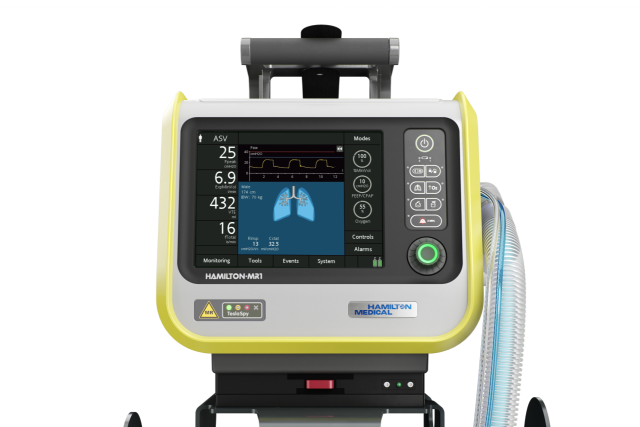
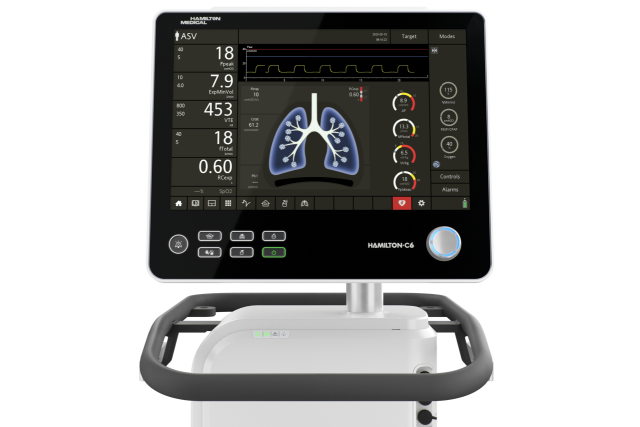
Família de respiradores Hamilton

Nossa visão. Uma interface para operar todos

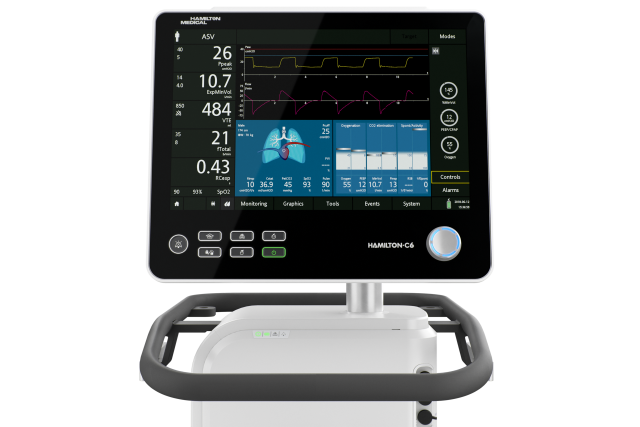
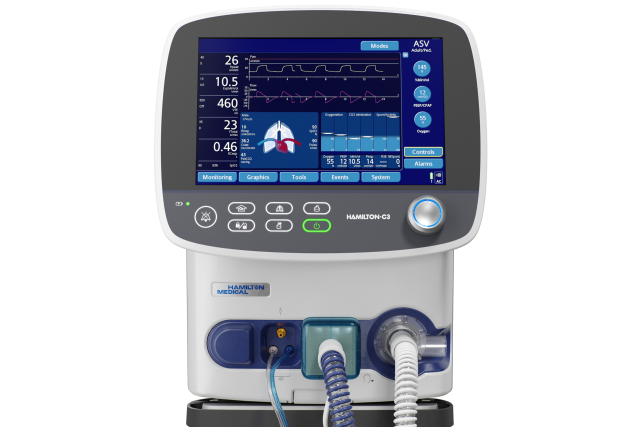
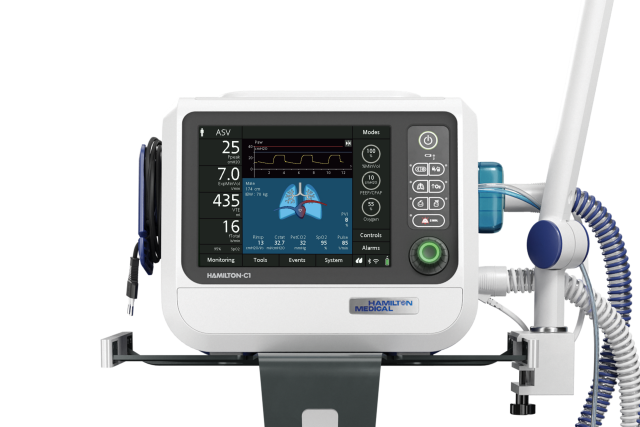
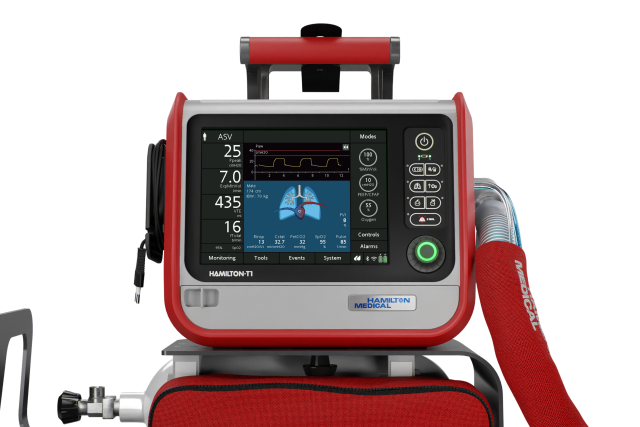
Quer o dispositivo esteja a ser usado na UTI, na sala de IRM ou durante o transporte, a interface de usuário de todos os respiradores da Hamilton Medical funciona da mesma maneira.

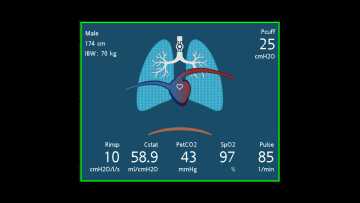
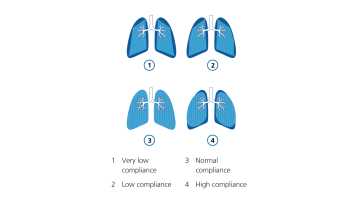
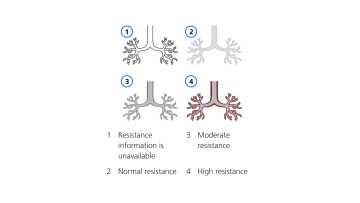
Nosso Cockpit de Ventilação integra dados complexos em visualizações intuitivas.

A inspiração. Representação gráfica de dados complexos

Um estudo descobriu que telas numéricas e de forma de onda por si só não são suficientes para fornecer aos médicos um nível ideal de suporte (Drews FA, Westenskow DR. The right picture is worth a thousand numbers: data displays in anesthesia. Hum Factors. 2006;48(1):59-71. doi:10.1518/0018720067764122701​). Alternativamente, os gráficos que integram os dados em visualizações podem ajudar os médicos a detectar e tratar eventos respiratórios adversos mais rapidamente, o que pode levar a uma diminuição perceptível da carga de trabalho (Wachter SB, Johnson K, Albert R, Syroid N, Drews F, Westenskow D. The evaluation of a pulmonary display to detect adverse respiratory events using high resolution human simulator. J Am Med Inform Assoc. 2006;13(6):635-642. doi:10.1197/jamia.M21232​).

Nosso Cockpit de Ventilação foi inspirado nos cockpits de aeronaves, nos quais dados complexos são integrados e visualizados de forma simplificada.

Visão do cockpit de um avião com pilotos operando o cockpit. Visão do cockpit de um avião com pilotos operando o cockpit.
Painel Status Vent

Pronto para o desmame? O painel Status Vent

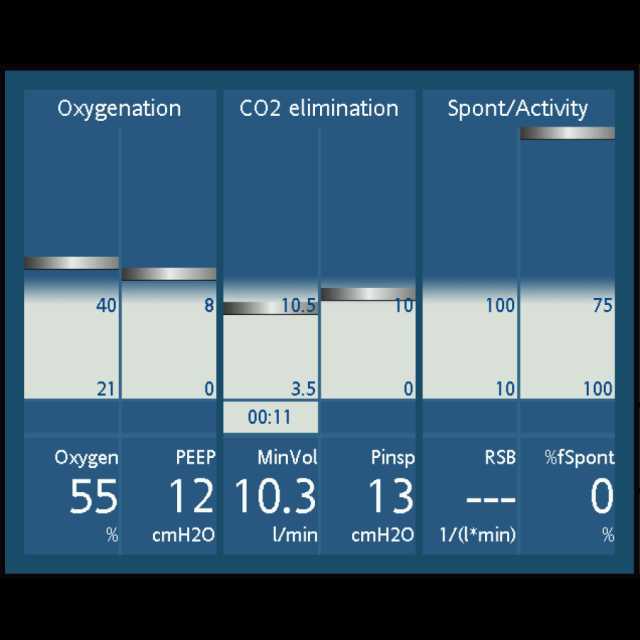
O painel Status Vent exibe seis parâmetros que indicam o grau de dependência do paciente em relação ao respirador, incluindo oxigenação, eliminação de CO2 e atividade do paciente.

Um indicador flutuante dentro da coluna exibe o valor de um determinado parâmetro respiração a respiração. Quando o indicador está na zona cinza de desmame, um timer é iniciado e indica há quanto tempo o valor está na zona de desmame.

Quando todos os valores estão na zona de desmame, o painel é envolvido por uma moldura verde, indicando que as provas de respiração espontânea podem ser consideradas.

Craig Jolly

Customer voices

Na minha experiência, o Pulmão Dinâmico é muito útil, pois nem todos conseguem interpretar os números, especialmente os terapeutas que estão começando. Mas conseguem entender a imagem.

Craig Jolly

Clinical Education Coordinator
University Medical Center, Lubbock (TX), EUA

Disponibilidade

O Cockpit de Ventilação é um recurso padrão em todos os nossos respiradores para terapia intensiva.

The right picture is worth a thousand numbers: data displays in anesthesia.

Drews FA, Westenskow DR. The right picture is worth a thousand numbers: data displays in anesthesia. Hum Factors. 2006;48(1):59-71. doi:10.1518/001872006776412270

OBJECTIVE To review the literature on data displays in anesthesia identifying issues and developing design recommendations. BACKGROUND Unexpected incidents are common in critical care medicine. Adverse outcomes are frequently the catastrophic endpoints of an "evolving" chain of subtle incidents. One strategy to reduce the likelihood of an adverse patient outcome during anesthesia is to improve the anesthesiologist's ability to detect, diagnose, and treat critical incidents. METHOD A literature review and analysis of data displays. RESULTS Current numerical and waveform displays do not support anesthesiologists optimally. An alternative is graphical displays that functionally integrate variables into objects. In a well-designed graphic object, deviations from normal are shown by distortions in the object's symmetry. The emerging patterns that result from distorted symmetry facilitate the correct diagnosis. When treatment is effective, an object's shape is restored to normal. Graphical displays can be an effective tool in supporting anesthesiologists' situation awareness. CONCLUSION Problems related to graphical displays have delayed their use in anesthesia, including the lack of conclusive clinical evidence of their value. However, currently more evidence is accumulating that graphical displays have the potential to improve clinical performance. The successful development of these graphical displays takes into account task requirements, a user's perceptual processes, and task-specific cognition. APPLICATION This paper provides suggestions for the development of more effective displays in anesthesiology. Graphical displays can increase the anesthesiologist's situation awareness and improve clinical performance. Clinical use of these displays has the potential to significantly improve patient safety.

The evaluation of a pulmonary display to detect adverse respiratory events using high resolution human simulator.

Wachter SB, Johnson K, Albert R, Syroid N, Drews F, Westenskow D. The evaluation of a pulmonary display to detect adverse respiratory events using high resolution human simulator. J Am Med Inform Assoc. 2006;13(6):635-642. doi:10.1197/jamia.M2123

OBJECTIVE Authors developed a picture-graphics display for pulmonary function to present typical respiratory data used in perioperative and intensive care environments. The display utilizes color, shape and emergent alerting to highlight abnormal pulmonary physiology. The display serves as an adjunct to traditional operating room displays and monitors. DESIGN To evaluate the prototype, nineteen clinician volunteers each managed four adverse respiratory events and one normal event using a high-resolution patient simulator which included the new displays (intervention subjects) and traditional displays (control subjects). Between-group comparisons included (i) time to diagnosis and treatment for each adverse respiratory event; (ii) the number of unnecessary treatments during the normal scenario; and (iii) self-reported workload estimates while managing study events. MEASUREMENTS Two expert anesthesiologists reviewed video-taped transcriptions of the volunteers to determine time to treat and time to diagnosis. Time values were then compared between groups using a Mann-Whitney-U Test. Estimated workload for both groups was assessed using the NASA-TLX and compared between groups using an ANOVA. P-values < 0.05 were considered significant. RESULTS Clinician volunteers detected and treated obstructed endotracheal tubes and intrinsic PEEP problems faster with graphical rather than conventional displays (p < 0.05). During the normal scenario simulation, 3 clinicians using the graphical display, and 5 clinicians using the conventional display gave unnecessary treatments. Clinician-volunteers reported significantly lower subjective workloads using the graphical display for the obstructed endotracheal tube scenario (p < 0.001) and the intrinsic PEEP scenario (p < 0.03). CONCLUSION Authors conclude that the graphical pulmonary display may serve as a useful adjunct to traditional displays in identifying adverse respiratory events.