

Session expired

Due to inactivity your session has expired. Please login again.


 Technologies

O2 therapy.

On-scene oxygenation

"" ""

O2 on cue. A critical first step in prehospital ventilation

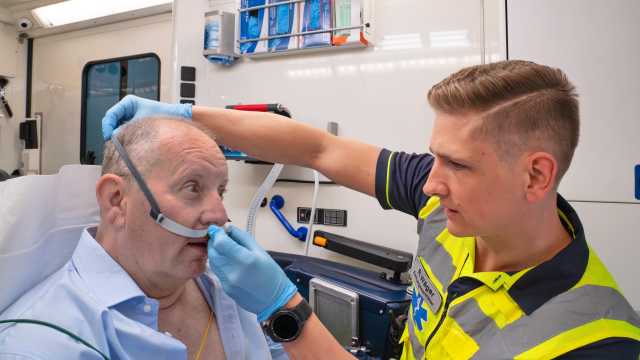
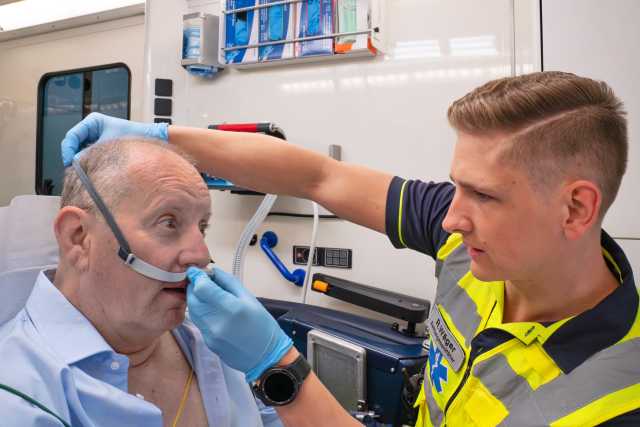
For patients with hypoxemia or at risk of developing it, supplemental oxygen therapy is intended to maintain adequate tissue oxygenation (Except CPR and INTELLiVENT®-ASV®A​).

In the prehospital setting, prompt and accurate administration of oxygen therapy can be crucial for patient survival and optimal outcomes (Use active humidificationB​).

The benefits of O2 therapy in prehospital care

""

Where it matters most. Clinical applications in prehospital care

  1. Acute coronary syndromes: Administer oxygen to patients with acute myocardial infarction and cardiac chest pain to maintain oxygen saturation and support myocardial function (Branson RD, Johannigman JA. Pre-hospital oxygen therapy. Respir Care. 2013;58(1):86-97. doi:10.4187/respcare.022511​)​.
  2. Neurological emergencies (coma, seizures, head injury, stroke, etc.): Monitor oxygen saturation closely and provide supplemental oxygen to maintain levels within the recommended range, avoiding hypoxia that may may worsen neurological injury​ (Branson RD, Johannigman JA. Pre-hospital oxygen therapy. Respir Care. 2013;58(1):86-97. doi:10.4187/respcare.022511​).
  3. Traumatic injuries: Ensure adequate oxygenation in trauma patients to prevent secondary hypoxic injury, particularly in the case of head trauma or significant blood loss​​ (Branson RD, Johannigman JA. Pre-hospital oxygen therapy. Respir Care. 2013;58(1):86-97. doi:10.4187/respcare.022511​).
  4. Respiratory distress: Use oxygen therapy for conditions like asthma exacerbation, chronic obstructive pulmonary disease (COPD) flare-ups, and acute pulmonary edema, tailoring delivery methods to suit the patient's condition and oxygenation status (Branson RD, Johannigman JA. Pre-hospital oxygen therapy. Respir Care. 2013;58(1):86-97. doi:10.4187/respcare.022511​, Bentsen LP, Lassen AT, Titlestad IL, Brabrand M. A change from high-flow to titrated oxygen therapy in the prehospital setting is associated with lower mortality in COPD patients with acute exacerbations: an observational cohort study. Acute Med. 2020;19(2):76-82. 3​).
  5. Carbon monoxide poisoning: Delivering high concentrations of oxygen to patients with carbon monoxide poisoning is one condition where hyperoxemia is desirable. The half-life of carboxyhemoglobin is 4 to 5 hours breathing room air. Breathing 100% oxygen reduces this to 40 minutes (Branson RD, Johannigman JA. Pre-hospital oxygen therapy. Respir Care. 2013;58(1):86-97. doi:10.4187/respcare.022511​).


Availability

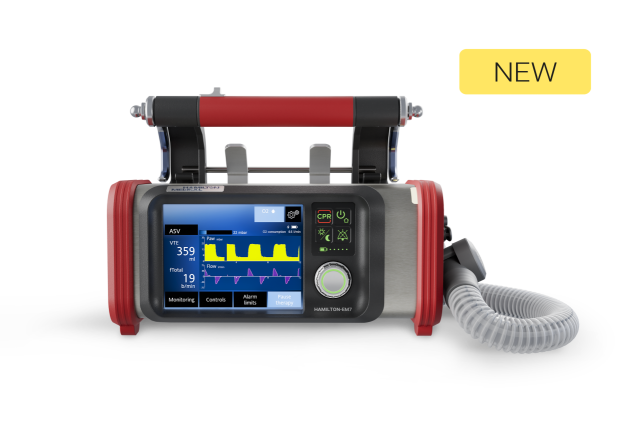
O2 therapy is available as an optional therapy mode on the HAMILTON-EM7.

Pre-hospital oxygen therapy.

Branson RD, Johannigman JA. Pre-hospital oxygen therapy. Respir Care. 2013;58(1):86-97. doi:10.4187/respcare.02251

Oxygen use in prehospital care is aimed at treating or preventing hypoxemia. However, excess oxygen delivery has important consequences in select patients, and hyperoxia can adversely impact outcome. The unique environment of prehospital care poses logistical and educational challenges. Oxygen therapy in prehospital care should be provided to patients with hypoxemia and titrated to achieve normoxemia. Changes to the current practice of oxygen delivery in prehospital care are needed.

Emergency oxygen therapy: from guideline to implementation

Kane B, Decalmer S, O’Driscoll BR. Emergency oxygen therapy: from guideline to implementation. Breathe. 2013;9(4):246-253. doi:10.1183/20734735.025212

A change from high-flow to titrated oxygen therapy in the prehospital setting is associated with lower mortality in COPD patients with acute exacerbations: an observational cohort study.

Bentsen LP, Lassen AT, Titlestad IL, Brabrand M. A change from high-flow to titrated oxygen therapy in the prehospital setting is associated with lower mortality in COPD patients with acute exacerbations: an observational cohort study. Acute Med. 2020;19(2):76-82.

BACKGROUND The aim of this study was to investigate 30-day mortality for COPD patients treated by ambulances in the period before and after implementation of a pre-hospital oxygen protocol. METHODS Prehospital High-flow oxygen was used from April to September 2012 and titrated oxygen from April to September 2013. Primary outcome was 30-day mortality. RESULTS 707 patients were included; 209 in the high-flow group and 498 in the titration group. Of these, 56 and 132 arrived with acute exacerbation (AE). Overall 30-day mortality was 11.5% vs. 9.4% (p=0.41), respectively. For patients with AE, it was 19.6% vs. 4.6% (p=0.001). CONCLUSION Change of treatment protocol is associated with a lower 30-day mortality for patients registered with acute exacerbation, but not for all COPD patients.