




Session expired

Due to inactivity your session has expired. Please login again.

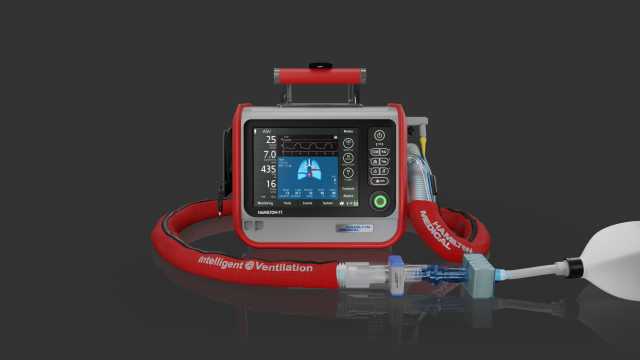
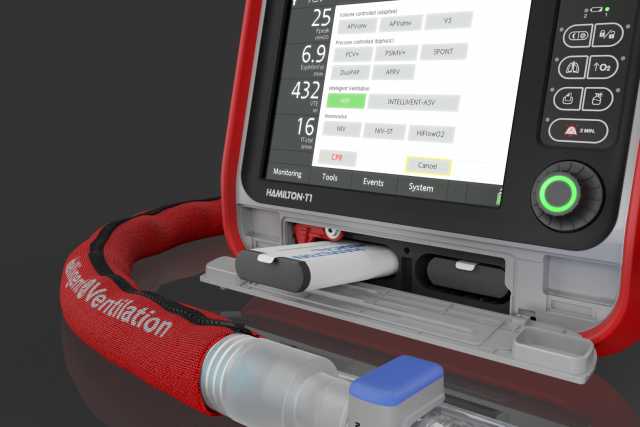
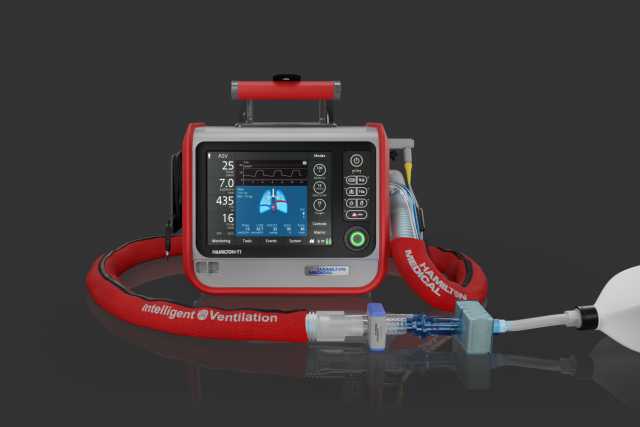
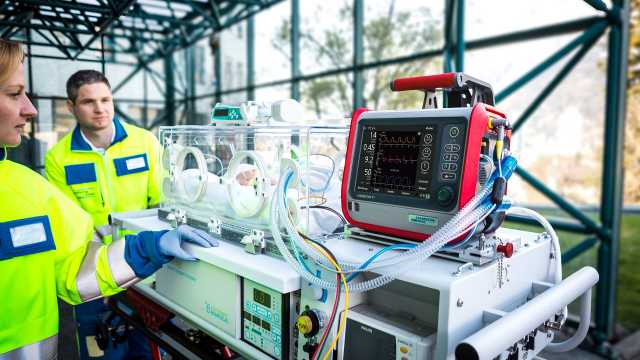
HAMILTON-T1.

Надежная вентиляция при транспортировке в реанимацию

HAMILTON-T1

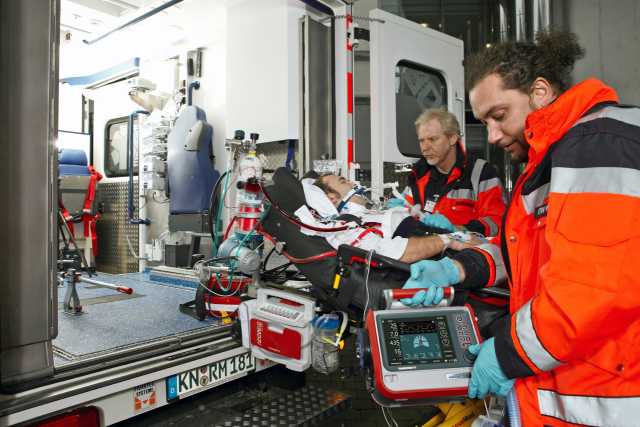
Специально для вентиляции во время транспортировки. Для пациентов всех групп от младенцев до взрослых

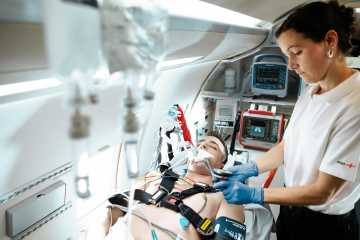
  • Полноценный реанимационный аппарат ИВЛ для условий транспортировки
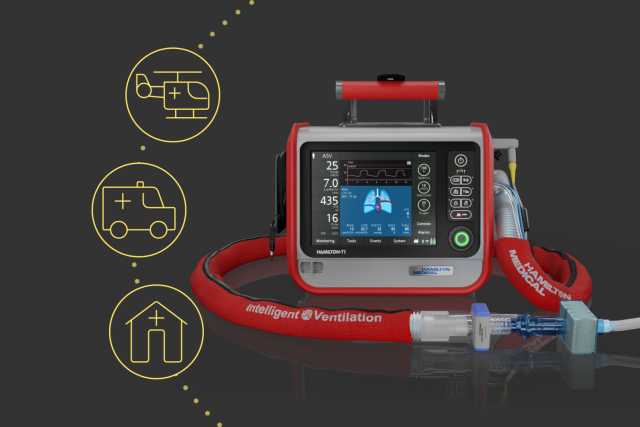
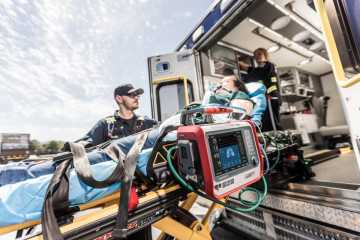
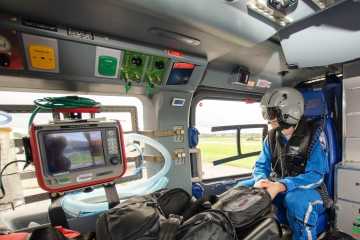
  • Одобрен для перевозки по земле, воздуху и воде
  • Может использоваться как в медицинском учреждении, так и за его пределами
HAMILTON-T1
HAMILTON-T1

Специально для вентиляции во время транспортировки. Для пациентов всех групп от младенцев до взрослых

  • Полноценный реанимационный аппарат ИВЛ для условий транспортировки
  • одобрен для перевозки пациентов по земле, воздуху и воде
  • может использоваться как в медицинском учреждении, так и за его пределами
HAMILTON-T1

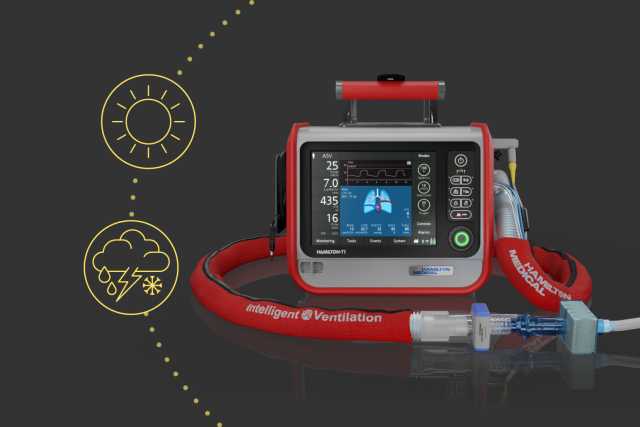
Побеждает сильнейший. В самых сложных условиях

  • Температура от -15 до +50 °C
  • степень защиты IP54
  • высота до 7620 метров над уровнем моря
  • прочный усиленный корпус с защитой от ударов и вибрации
  • ударостойкий дисплей с антибликовым покрытием
HAMILTON-T1

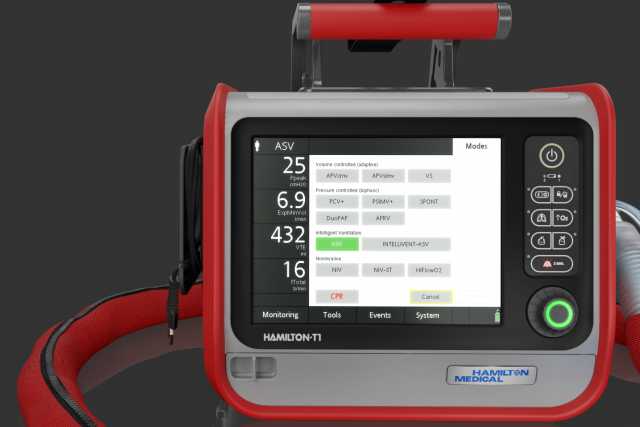
Непрерывная вентиляция легких. Вы можете использовать тот же режим и настройки, что и в палате пациента

  • Режимы вентиляции с управлением по целевому объему и давлению
  • адаптивная вентиляция с помощью ASV® и INTELLiVENT®-ASV
  • неинвазивная вентиляция
  • терапия с высокой скоростью потока с помощью назальной канюли
HAMILTON-T1

Абсолютно автономная работа. Без сжатого воздуха, питание от аккумулятора

  • Высокопроизводительная турбина
  • два аккумулятора – встроенный и заменяемый без отключения аппарата
  • дополнительный разъем для источника кислорода низкого давления
HAMILTON-T1

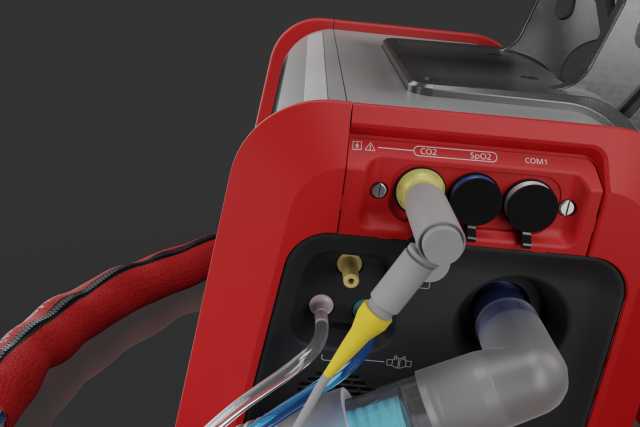
Коммуникация – залог успеха. Для лучшей связи

Опции панели подключения устройств для подсоединения:

  • датчиков SpO2 и/или CO2
  • вызова медсестры
  • PDMS
  • HAMILTON-H900
  • RS232
HAMILTON-T1

Области применения

Полезно знать

""

Готов к любой задаче. Характеристики, соответствующие вашим потребностям

  • Габариты (Ш x Г x В):
    320 x 220 x 270 мм (аппарат ИВЛ)
    630 x 630 x 1380 мм (без ручки)
    630 x 630 x 1433 мм (с ручкой)

  • Масса:

    6,5 кг

  • Продолжительность работы от батареи: 4 часа с одним аккумулятором / 8 часов с двумя аккумуляторами

  • Дополнительный аккумулятор, заменяемый без отключения аппарата

  • Все аппараты для применения при транспортировке пациентов от компании Hamilton Medical оснащены модулем Hamilton Connect.

  • Специально разработанный протокол интерфейса позволяет подключать сторонние устройства для передачи данных с аппарата ИВЛ через Bluetooth.

  • С управлением по давлению и целевому объему

  • Интеллектуальная вентиляция: Режимы ASV®, INTELLiVENT®‑ASV® (доступно не на всех рынкахA​), функция O2 assist (доступно не на всех рынкахA​)

  • Неинвазивные режимы (опциональноB​)

  • Кислородная терапия с высокой скоростью потока (опциональноB​)

  • Визуализация механики легких (панель «Динам. Легк.»)

  • Визуализация степени зависимости пациента от аппарата ИВЛ

  • Волюметрическая капнография (опциональноB​)

  • Мониторинг SpO2 (опциональноB​)

Хотите увидеть больше?
Посмотрите трехмерную модель

Рассматривайте аппарат ИВЛ HAMILTON-T1 со всех сторон и нажимайте на информационные точки, чтобы узнать о нем больше.

Круговая диаграмма, показывающая, что 71% спасательных организаций (в Германии, Австрии, Швейцарии, Италии и Люксембурге) выбрали аппарат ИВЛ HAMILTON‑T1 для реанимационных вертолетов

Частый выбор. Для 71% реанимационных вертолетов

Согласно опросу HOVER (Транспортировка механически вентилируемых пациентов вертолетной службой неотложной помощи [HEMS] в отделение реанимацииC), проведенному в режиме онлайн в спасательных организациях Германии, Австрии, Швейцарии, Италии и Люксембурга, 71% организаций выбирает аппарат ИВЛ HAMILTON-T1 для реанимационных вертолетов (Hilbert-Carius, P., Struck, M.F., Hofer, V. et al. Nutzung des Hubschrauber-Respirators vom Landeplatz zum Zielort im Krankenhaus. Notfall Rettungsmed 23, 106–112 (2020). 1​).


Упростите рабочий процесс с помощью интеллектуальных функций

Терапия O2. Оксигенация на месте происшествия

Терапия O2 – эффективный метод улучшения состояния пациентов до госпитализации, не требующий интубации.

С помощью этой опции можно проводить точную преоксигенацию прямо на месте происшествия.

Пневматический небулайзер. для дополнительного лечения

Подача лекарственной смеси в виде мелкодисперсных аэрозольных частиц улучшает эффективность вентиляции, устраняет бронхоспазм и уменьшает гиперкапнию (Dhand R. New frontiers in aerosol delivery during mechanical ventilation. Respir Care. 2004;49(6):666-677. 100). 

Неинвазивная вентиляция. Ваша первая линия защиты

Выбирайте между режимами NIV, NIV-С/В (доступны только для аппарата ИВЛ HAMILTON-T1a) или CPAP (доступен только для аппарата ИВЛ HAMILTON-EM7b), чтобы обеспечить поддержку в самых разных ситуациях и повысить комфорт пациента.

По сравнению с аппаратами, которые используют сжатый воздух, наши турбинные аппараты ИВЛ обеспечивают более высокую скорость пикового потока. Таким образом, аппарат ИВЛ может работать даже при серьезных утечках.

Режим вентиляции СЛР. Сосредоточьтесь на массаже сердца, а не на аппарате ИВЛ

В критические моменты первостепенное значение имеют сосредоточенность, скорость и точность, а отвлекающие факторы должны быть сведены к минимуму. С помощью режима вентиляции СЛР параметры ИВЛ можно адаптировать к условиям проведения реанимационных мероприятий в соответствии с международными рекомендациями (Del Rios M, Bartos JA, Panchal AR, Atkins DL, Cabanas JG, Cao D, Dainty KN, Dezfulian C, Donoghue AJ, Drennan IR, Elmer J, Hirsch KG, Idris AH, Joyner BL, Kamath-Rayne BD, Kleinman ME, Kurz MC, Lasa JJ, Lee HC, McBride ME, Raymond TT, Rittenberger, JC, Schexnayder SM, Szyld E, Topjian A, Wigginton JG, Previdi JK. Part 1: executive summary: 2025 American Heart Association Guidelines for Cardiopulmonary Resuscitation and Emergency Cardiovascular Care. Circulation. 2025;152(suppl):S284–S312. doi: 10.1161/CIR.0000000000001372 101​, Greif R, Lauridsen KG, Djärv T, et al. European Resuscitation Council Guidelines 2025 Executive Summary. Resuscitation. 2025;215 Suppl 1:110770. doi:10.1016/j.resuscitation.2025.110770102​).

В данном режиме обеспечивается быстрый доступ к предварительно заданным настройкам, соответствующая регулировка сигнала тревоги и триггера, а также отображение таймера СЛР.

Контролируемая по времени капнография. Помощь в принятии обоснованных решений

Чтобы оценивать эффективность вентиляции, проходимость дыхательных путей и состояние пациента в режиме реального времени, капнография обеспечивает непрерывный мониторинг etCO2.

Благодаря мгновенному получению данных в ходе респираторной поддержки, реанимации при остановке сердца или транспортировки специалисты могут действовать уверенно и принимать обоснованные решения.

ASV – Adaptive Support Ventilation®. Поддержка для вас и ваших пациентов

ASV – это адаптивный режим ИВЛ, который непрерывно корректирует параметры в зависимости от механики легких и усилий пациента.

Это позволяет упростить проведение вентиляции для выездных бригад скорой помощи, предоставляя единый режим как для активных, так и для пассивных интубированных пациентов, а управление оксигенацией и элиминацией CO2 осуществляется с помощью всего трех параметров.

O2 assist. Интеллектуальное титрование кислорода при оказании помощи до госпитализации

Функция O2 assist (недоступна для некоторых странc) – это передовая технология управления подачей кислорода, разработанная для оптимизации оксигенации, в том числе во время транспортировки.

Чтобы поддерживать уровни SpO2 у пациента в пределах установленного целевого диапазона, она непрерывно регулирует подачу O2. Это сокращает не только нецелевой расход кислорода (Atakul G, Ceylan G, Sandal O, et al. Closed-loop oxygen usage during invasive mechanical ventilation of pediatric patients (CLOUDIMPP): a randomized controlled cross-over study. Front Med (Lausanne). 2024;11:1426969. Published 2024 Sep 10. doi:10.3389/fmed.2024.1426969103​, Trottier M, Bouchard PA, L'Her E, Lellouche F. Automated Oxygen Titration During CPAP and Noninvasive Ventilation in Healthy Subjects With Induced Hypoxemia. Respir Care. 2023;68(11):1553-1560. doi:10.4187/respcare.09866104​), но и потребность вручную настраивать параметры (Roca O, Caritg O, Santafé M, et al. Closed-loop oxygen control improves oxygen therapy in acute hypoxemic respiratory failure patients under high flow nasal oxygen: a randomized cross-over study (the HILOOP study). Crit Care. 2022;26(1):108. Published 2022 Apr 14. doi:10.1186/s13054-022-03970-w105​).

Динамическое легкое. Все ясно в один миг

С помощью панели «Динам. Легк.» можно преобразовать данные мониторинга в простую и понятную визуализацию.

Всего на одном графике отображаются податливость, резистентность, SpO2, частота пульса и спонтанная активность пациента.

Опция «Очки ночного видения». Видеть в темноте

Благодаря опции «Очки ночного видения» (NVG), аппарат ИВЛ можно безопасно использовать в темноте: экран не слепит пилота и не создает помех для приборов ночного видения.

Всего одним нажатием кнопки яркость дисплея настраивается до уровня, подходящего для работы в очках ночного видения.

INTELLiVENT®-ASV®. Ваш помощник в пути

Интеллектуальный режим вентиляции INTELLiVENT-ASV (недоступен для некоторых странc) – это улучшенная версия ASV, с помощью которой вы превращаетесь из оператора, настраивающего параметры вручную, в контролера системы.

В режиме INTELLiVENT-ASV сокращается количество ручных взаимодействий с аппаратом ИВЛ (Arnal JM, Garnero A, Novotni D, et al. Closed loop ventilation mode in Intensive Care Unit: a randomized controlled clinical trial comparing the numbers of manual ventilator setting changes. Minerva Anestesiol. 2018;84(1):58-67. doi:10.23736/S0375-9393.17.11963-2106​), а также поддерживается вентиляция с защитой легких пациентов (Bialais E, Wittebole X, Vignaux L, et al. Closed-loop ventilation mode (IntelliVent®-ASV) in intensive care unit: a randomized trial. Minerva Anestesiol. 2016;82(6):657-668. 107​).

Пульсовая оксиметрия. для измерения уровня SpO2

Встроенная опция SpO2 обеспечивает неинвазивное измерение SpO2 с удобным отображением данных на экране аппарата ИВЛ.
С ее помощью можно быстро выявлять гипоксемию и оценивать эффективность оксигенотерапии во время транспортировки.

Благодаря технологии Masimo rainbow у пациентов с отравлением продуктами горения уровень карбоксигемоглобина (SpCO) измеряют неинвазивно, что помогает принимать обоснованные решения при медицинской сортировке.

Волюметрическая капнография. Новый уровень помощи до госпитализации

С помощью волюметрической капнографии можно непрерывно контролировать показатели вентиляции и перфузии путем измерения уровня CO2 на протяжении всего выдоха. Благодаря этому в реальном времени выявляют изменения, связанные с обструкцией дыхательных путей, эффективностью вентиляции и состоянием перфузии (Blanch L, Romero PV, Lucangelo U. Volumetric capnography in the mechanically ventilated patient. Minerva Anestesiol. 2006;72(6):577-585. 108​).

Эта опция незаменима при транспортировке, когда состояние пациента нестабильно и когда критически важно иметь точные данные.

Настраиваемые петли и тренды. Полный контроль

При механической вентиляции петли и тренды дают возможность в реальном времени получать данные о состоянии органов дыхания пациента, что помогает быстро выявлять такие проблемы, как обструкция дыхательных путей или асинхрония между пациентом и аппаратом ИВЛ.

Это обеспечивает точную настройку вентиляции во время транспортировки, способствуя улучшению результатов и повышению безопасности лечения в меняющихся условиях помощи до госпитализации.

Режимы nCPAP. Специализированная поддержка для самых маленьких

В режиме nCPAP вашим самым крошечным пациентам обеспечивается поддержка постоянным положительным давлением в дыхательных путях. Наличие его в аппарате для вентиляции легких при транспортировке расширяет ваш инструментарий, чтобы оказывать респираторную поддержку новорожденным в соответствии с современными передовыми практиками.

Гордон Миллер

Отзывы клиентов

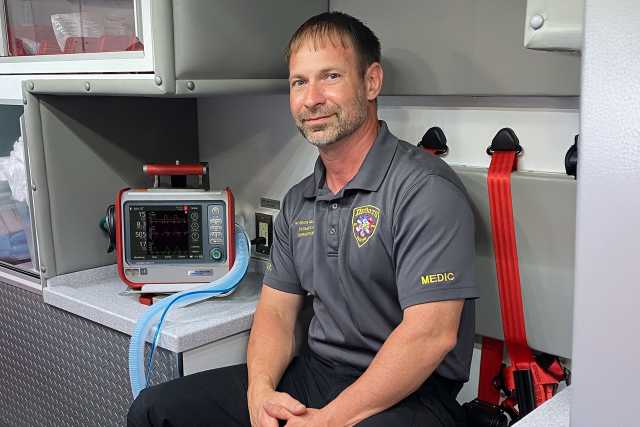
Благодаря наличию режимов неинвазивной вентиляции на аппарате ИВЛ HAMILTON-T1 я могу предотвратить множество интубаций, снизить риски для пациентов и улучшить результаты лечения. За 8 лет работы с этим устройством мне пришлось интубировать лишь одного пациента из тех, кто на момент начала оказания помощи подходил для неинвазивной вентиляции.

Гордон Миллер

Руководитель и инструктор по обучению
Служба неотложной медицинской помощи прихода Де-Сото, г. Мэнсфилд, штат Луизиана, США

Удобные расходные материалы

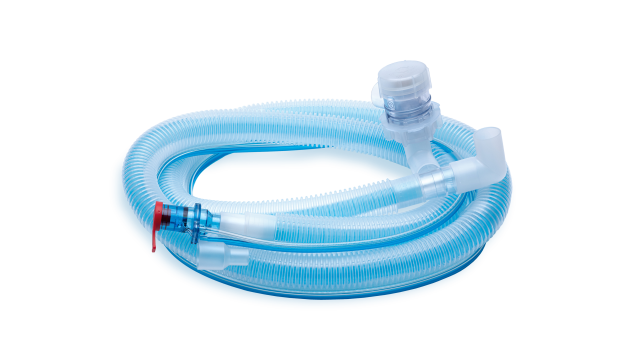
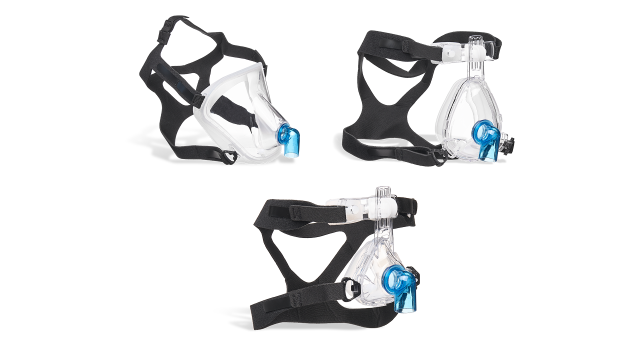
Основные расходные материалы для работы вашего аппарата ИВЛ

Все основные расходные материалы от компании Hamilton Medical созданы для оптимальной работы с нашими аппаратами ИВЛ. Чтобы обеспечить максимальное удобство для пользователя и минимизацию рисков для пациента, мы разработали их в соответствии с высочайшими стандартами качества и безопасности.

Начните обучение работе на аппарате ИВЛ

""

Научитесь! Планы изучения и имитационные программы

Центр обучения HAMILTON-T1 предлагает простые и понятные планы изучения, чтобы вы могли как можно быстрее ознакомиться со своим аппаратом ИВЛ и его технологиями.

Затем вы сможете отточить полученные навыки в безопасной среде, используя модель виртуального пациента в нашем приложении VenTrainer.

Наши комплексные услуги

""

Для вас. Ваш партнер в сфере догоспитальной помощи при транспортировке

Команда догоспитальной помощи Hamilton Medical стремится предоставлять комплексные услуги и поддержку в области искусственной вентиляции легких при транспортировке и оказании помощи пациентам до госпитализации.

EMS_Prehospital-team_Contact-us

Есть вопросы? Свяжитесь с нами.

Наша команда специалистов по догоспитальной помощи с радостью ответит на ваши вопросы и предоставит экспертную консультацию.

Сноски

  • A. Недоступен для некоторых стран
  • B. Дополнительно для аппарата ИВЛ HAMILTON-T1
  • C. Передача механически вентилируемых пациентов вертолетной службой неотложной помощи [HEMS] в отделение неотложной помощи
  • a. Доступно только для аппарата ИВЛ HAMILTON-T1
  • b. Доступно только для аппарата ИВЛ HAMILTON-EM7
  • c. Недоступен для некоторых стран

Список литературы

  1. 1. Hilbert-Carius, P., Struck, M.F., Hofer, V. et al. Nutzung des Hubschrauber-Respirators vom Landeplatz zum Zielort im Krankenhaus. Notfall Rettungsmed 23, 106–112 (2020).
  2. 100. Dhand R. New frontiers in aerosol delivery during mechanical ventilation. Respir Care. 2004;49(6):666-677.
  3. 101. Del Rios M, Bartos JA, Panchal AR, Atkins DL, Cabanas JG, Cao D, Dainty KN, Dezfulian C, Donoghue AJ, Drennan IR, Elmer J, Hirsch KG, Idris AH, Joyner BL, Kamath-Rayne BD, Kleinman ME, Kurz MC, Lasa JJ, Lee HC, McBride ME, Raymond TT, Rittenberger, JC, Schexnayder SM, Szyld E, Topjian A, Wigginton JG, Previdi JK. Part 1: executive summary: 2025 American Heart Association Guidelines for Cardiopulmonary Resuscitation and Emergency Cardiovascular Care. Circulation. 2025;152(suppl):S284–S312. doi: 10.1161/CIR.0000000000001372
  4. 102. Greif R, Lauridsen KG, Djärv T, et al. European Resuscitation Council Guidelines 2025 Executive Summary. Resuscitation. 2025;215 Suppl 1:110770. doi:10.1016/j.resuscitation.2025.110770
  5. 103. Atakul G, Ceylan G, Sandal O, et al. Closed-loop oxygen usage during invasive mechanical ventilation of pediatric patients (CLOUDIMPP): a randomized controlled cross-over study. Front Med (Lausanne). 2024;11:1426969. Published 2024 Sep 10. doi:10.3389/fmed.2024.1426969
  6. 104. Trottier M, Bouchard PA, L'Her E, Lellouche F. Automated Oxygen Titration During CPAP and Noninvasive Ventilation in Healthy Subjects With Induced Hypoxemia. Respir Care. 2023;68(11):1553-1560. doi:10.4187/respcare.09866
  7. 105. Roca O, Caritg O, Santafé M, et al. Closed-loop oxygen control improves oxygen therapy in acute hypoxemic respiratory failure patients under high flow nasal oxygen: a randomized cross-over study (the HILOOP study). Crit Care. 2022;26(1):108. Published 2022 Apr 14. doi:10.1186/s13054-022-03970-w
  8. 106. Arnal JM, Garnero A, Novotni D, et al. Closed loop ventilation mode in Intensive Care Unit: a randomized controlled clinical trial comparing the numbers of manual ventilator setting changes. Minerva Anestesiol. 2018;84(1):58-67. doi:10.23736/S0375-9393.17.11963-2
  9. 107. Bialais E, Wittebole X, Vignaux L, et al. Closed-loop ventilation mode (IntelliVent®-ASV) in intensive care unit: a randomized trial. Minerva Anestesiol. 2016;82(6):657-668.
  10. 108. Blanch L, Romero PV, Lucangelo U. Volumetric capnography in the mechanically ventilated patient. Minerva Anestesiol. 2006;72(6):577-585.

Nutzung des Hubschrauber-Respirators vom Landeplatz zum Zielort im Krankenhaus Sekundäranalyse der HOVER-Umfrage zu beatmeten Notfallpatienten in der Luftrettung

Hilbert-Carius, P., Struck, M.F., Hofer, V. et al. Nutzung des Hubschrauber-Respirators vom Landeplatz zum Zielort im Krankenhaus. Notfall Rettungsmed 23, 106–112 (2020).

New frontiers in aerosol delivery during mechanical ventilation.

Dhand R. New frontiers in aerosol delivery during mechanical ventilation. Respir Care. 2004;49(6):666-677.

The scientific basis for inhalation therapy in mechanically-ventilated patients is now firmly established. A variety of new devices that deliver drugs to the lung with high efficiency could be employed for drug delivery during mechanical ventilation. Encapsulation of drugs within liposomes could increase the amount of drug delivered, prolong the effect of a dose, and minimize adverse effects. With improved inhalation devices and surfactant formulations, inhaled surfactant could be employed for several indications in mechanically-ventilated patients. Research is unraveling the causes of some disorders that have been poorly understood, and our improved understanding of the causal mechanisms of various respiratory disorders will provide new applications for inhaled therapies.

2025 American Heart Association Guidelines for Cardiopulmonary Resuscitation and Emergency Cardiovascular Care

Del Rios M, Bartos JA, Panchal AR, Atkins DL, Cabanas JG, Cao D, Dainty KN, Dezfulian C, Donoghue AJ, Drennan IR, Elmer J, Hirsch KG, Idris AH, Joyner BL, Kamath-Rayne BD, Kleinman ME, Kurz MC, Lasa JJ, Lee HC, McBride ME, Raymond TT, Rittenberger, JC, Schexnayder SM, Szyld E, Topjian A, Wigginton JG, Previdi JK. Part 1: executive summary: 2025 American Heart Association Guidelines for Cardiopulmonary Resuscitation and Emergency Cardiovascular Care. Circulation. 2025;152(suppl):S284–S312. doi: 10.1161/CIR.0000000000001372

European Resuscitation Council Guidelines 2025 Executive Summary.

Greif R, Lauridsen KG, Djärv T, et al. European Resuscitation Council Guidelines 2025 Executive Summary. Resuscitation. 2025;215 Suppl 1:110770. doi:10.1016/j.resuscitation.2025.110770

The 2025 European Resuscitation Council (ERC) Guidelines present the most up-to-date evidence-based guidelines for the practice of resuscitation across Europe. The ERC Guidelines 2025 are based on evidence produced by the International Liaison Committee on Resuscitation (ILCOR) in the form of systematic reviews, scoping reviews, and evidence updates, published as the ILCOR Consensus on Science with Treatment Recommendations. The certainty of evidence of these ILCOR treatment recommendations was used to issue the ERC Guidelines 2025 Recommendations. In some cases, the ERC made good practice statements when evidence was absent for certain topics. If no ILCOR review was available, the ERC writing groups conducted their own reviews to provide recommendations. The ERC Guidelines 2025 cover the epidemiology of cardiac arrest, the role that systems play in saving lives, adult basic life support, adult advanced life support, resuscitation in special circumstances, post resuscitation care, newborn resuscitation and support of transition of infants at birth, paediatric basic and advanced life support, resuscitation ethics, education for resuscitation, and first aid. These guidelines are a framework of recommendations for the approach to out-of-hospital and in-hospital resuscitation; the implementation is achieved locally taking local legislation and health care regulations into consideration.

Closed-loop oxygen usage during invasive mechanical ventilation of pediatric patients (CLOUDIMPP): a randomized controlled cross-over study.

Atakul G, Ceylan G, Sandal O, et al. Closed-loop oxygen usage during invasive mechanical ventilation of pediatric patients (CLOUDIMPP): a randomized controlled cross-over study. Front Med (Lausanne). 2024;11:1426969. Published 2024 Sep 10. doi:10.3389/fmed.2024.1426969

BACKGROUND The aim of this study is the evaluation of a closed-loop oxygen control system in pediatric patients undergoing invasive mechanical ventilation (IMV). METHODS Cross-over, multicenter, randomized, single-blind clinical trial. Patients between the ages of 1 month and 18 years who were undergoing IMV therapy for acute hypoxemic respiratory failure (AHRF) were assigned at random to either begin with a 2-hour period of closed-loop oxygen control or manual oxygen titrations. By using closed-loop oxygen control, the patients' SpO2 levels were maintained within a predetermined target range by the automated adjustment of the FiO2. During the manual oxygen titration phase of the trial, healthcare professionals at the bedside made manual changes to the FiO2, while maintaining the same target range for SpO2. Following either period, the patient transitioned to the alternative therapy. The outcomes were the percentage of time spent in predefined SpO2 ranges ±2% (primary), FiO2, total oxygen use, and the number of manual adjustments. FINDINGS The median age of included 33 patients was 17 (13-55.5) months. In contrast to manual oxygen titrations, patients spent a greater proportion of time within a predefined optimal SpO2 range when the closed-loop oxygen controller was enabled (95.7% [IQR 92.1-100%] vs. 65.6% [IQR 41.6-82.5%]), mean difference 33.4% [95%-CI 24.5-42%]; P < 0.001). Median FiO2 was lower (32.1% [IQR 23.9-54.1%] vs. 40.6% [IQR 31.1-62.8%]; P < 0.001) similar to total oxygen use (19.8 L/h [IQR 4.6-64.8] vs. 39.4 L/h [IQR 16.8-79]; P < 0.001); however, median SpO2/FiO2 was higher (329.4 [IQR 180-411.1] vs. 246.7 [IQR 151.1-320.5]; P < 0.001) with closed-loop oxygen control. With closed-loop oxygen control, the median number of manual adjustments reduced (0.0 [IQR 0.0-0.0] vs. 1 [IQR 0.0-2.2]; P < 0.001). CONCLUSION Closed-loop oxygen control enhances oxygen therapy in pediatric patients undergoing IMV for AHRF, potentially leading to more efficient utilization of oxygen. This technology also decreases the necessity for manual adjustments, which could reduce the workloads of healthcare providers. CLINICAL TRIAL REGISTRATION This research has been submitted to ClinicalTrials.gov (NCT05714527).

Automated Oxygen Titration During CPAP and Noninvasive Ventilation in Healthy Subjects With Induced Hypoxemia.

Trottier M, Bouchard PA, L'Her E, Lellouche F. Automated Oxygen Titration During CPAP and Noninvasive Ventilation in Healthy Subjects With Induced Hypoxemia. Respir Care. 2023;68(11):1553-1560. doi:10.4187/respcare.09866

BACKGROUND Automated oxygen titration to maintain a stable SpO2 has been developed for spontaneously breathing patients but has not been evaluated during CPAP and noninvasive ventilation (NIV). METHODS We performed a randomized controlled crossover, double-blind study on 10 healthy subjects with induced hypoxemia during 3 situations: spontaneous breathing with oxygen support, CPAP (5 cm H2O), and NIV (7/3 cm H2O). We conducted in random order 3 dynamic hypoxic challenges of 5 min (FIO2 0.08 ± 0.02, 0.11± 0.02, and 0.14 ± 0.02). For each condition, we compared automated oxygen titration and manual oxygen titration by experienced respiratory therapists (RTs), with the aim to maintain the SpO2 at 94 ± 2%. In addition, we included 2 subjects hospitalized for exacerbation of COPD under NIV and a subject managed after bariatric surgery with CPAP and automated oxygen titration. RESULTS The percentage of time in the SpO2 target was higher with automated compared with manual oxygen titration for all conditions, on average 59.6 ± 22.8% compared to 44.3 ± 23.9% (P = .004). Hyperoxemia (SpO2 > 96%) was less frequent with automated titration for each mode of oxygen administration (24.0 ± 24.4% vs 39.1 ± 25.3%, P < .001). During the manual titration periods, the RT made several changes to oxygen flow (5.1 ± 3.3 interventions that lasted 122 ± 70 s/period) compared to none during the automated titration to maintain oxygenation in the targeted SpO2 . Time in the SpO2 target was higher with stable hospitalized subjects in comparison with healthy subjects under dynamic-induced hypoxemia. CONCLUSIONS In this proof-of-concept study, automated oxygen titration was used during CPAP and NIV. The performances to maintain the SpO2 target were significantly better compared to manual oxygen titration in the setting of this study protocol. This technology may allow decreasing the number of manual interventions for oxygen titration during CPAP and NIV.

Closed-loop oxygen control improves oxygen therapy in acute hypoxemic respiratory failure patients under high flow nasal oxygen: a randomized cross-over study (the HILOOP study).

Roca O, Caritg O, Santafé M, et al. Closed-loop oxygen control improves oxygen therapy in acute hypoxemic respiratory failure patients under high flow nasal oxygen: a randomized cross-over study (the HILOOP study). Crit Care. 2022;26(1):108. Published 2022 Apr 14. doi:10.1186/s13054-022-03970-w

BACKGROUND We aimed to assess the efficacy of a closed-loop oxygen control in critically ill patients with moderate to severe acute hypoxemic respiratory failure (AHRF) treated with high flow nasal oxygen (HFNO). METHODS In this single-centre, single-blinded, randomized crossover study, adult patients with moderate to severe AHRF who were treated with HFNO (flow rate ≥ 40 L/min with FiO2 ≥ 0.30) were randomly assigned to start with a 4-h period of closed-loop oxygen control or 4-h period of manual oxygen titration, after which each patient was switched to the alternate therapy. The primary outcome was the percentage of time spent in the individualized optimal SpO2 range. RESULTS Forty-five patients were included. Patients spent more time in the optimal SpO2 range with closed-loop oxygen control compared with manual titrations of oxygen (96.5 [93.5 to 98.9] % vs. 89 [77.4 to 95.9] %; p < 0.0001) (difference estimate, 10.4 (95% confidence interval 5.2 to 17.2). Patients spent less time in the suboptimal range during closed-loop oxygen control, both above and below the cut-offs of the optimal SpO2 range, and less time above the suboptimal range. Fewer number of manual adjustments per hour were needed with closed-loop oxygen control. The number of events of SpO2 < 88% and < 85% were not significantly different between groups. CONCLUSIONS Closed-loop oxygen control improves oxygen administration in patients with moderate-to-severe AHRF treated with HFNO, increasing the percentage of time in the optimal oxygenation range and decreasing the workload of healthcare personnel. These results are especially relevant in a context of limited oxygen supply and high medical demand, such as the COVID-19 pandemic. Trial registration The HILOOP study was registered at www. CLINICALTRIALS gov under the identifier NCT04965844 .

Closed loop ventilation mode in Intensive Care Unit: a randomized controlled clinical trial comparing the numbers of manual ventilator setting changes.

Arnal JM, Garnero A, Novotni D, et al. Closed loop ventilation mode in Intensive Care Unit: a randomized controlled clinical trial comparing the numbers of manual ventilator setting changes. Minerva Anestesiol. 2018;84(1):58-67. doi:10.23736/S0375-9393.17.11963-2

BACKGROUND There is an equipoise regarding closed-loop ventilation modes and the ability to reduce workload for providers. On one hand some settings are managed by the ventilator but on another hand the automatic mode introduces new settings for the user. METHODS This randomized controlled trial compared the number of manual ventilator setting changes between a full closed loop ventilation and oxygenation mode (INTELLiVENT-ASV®) and conventional ventilation modes (volume assist control and pressure support) in Intensive Care Unit (ICU) patients. The secondary endpoints were to compare the number of arterial blood gas analysis, the sedation dose and the user acceptance. Sixty subjects with an expected duration of mechanical ventilation of at least 48 hours were randomized to be ventilated using INTELLiVENT-ASV® or conventional modes with a protocolized weaning. All manual ventilator setting changes were recorded continuously from inclusion to successful extubation or death. Arterial blood gases were performed upon decision of the clinician in charge. User acceptance score was assessed for nurses and physicians once daily using a Likert Scale. RESULTS The number of manual ventilator setting changes per 24 h-period per subject was lower in INTELLiVENT-ASV® as compared to conventional ventilation group (5 [4-7] versus 10 [7-17]) manuals settings per subject per day [P<0.001]). The number of arterial blood gas analysis and the sedation doses were not significantly different between the groups. Nurses and physicians reported that INTELLiVENT-ASV® was significantly easier to use as compared to conventional ventilation (P<0.001 for nurses and P<0.01 for physicians). CONCLUSIONS For mechanically ventilated ICU patients, INTELLiVENT-ASV® significantly reduces the number of manual ventilator setting changes with the same number of arterial blood gas analysis and sedation dose, and is easier to use for the caregivers as compared to conventional ventilation modes.

Closed-loop ventilation mode (IntelliVent®-ASV) in intensive care unit: a randomized trial.

Bialais E, Wittebole X, Vignaux L, et al. Closed-loop ventilation mode (IntelliVent®-ASV) in intensive care unit: a randomized trial. Minerva Anestesiol. 2016;82(6):657-668.

BACKGROUND Closed-loop modes automatically adjust ventilation settings, delivering individualized ventilation over short periods of time. The objective of this randomized controlled trial was to compare safety, efficacy and workload for the health care team between IntelliVent®-ASV and conventional modes over a 48-hour period. METHODS ICU patients admitted with an expected duration of mechanical ventilation of more than 48 hours were randomized to IntelliVent®-ASV or conventional ventilation modes. All ventilation parameters were recorded breath-by-breath. The number of manual adjustments assesses workload for the healthcare team. Safety and efficacy were assessed by calculating the time spent within previously defined ranges of non-optimal and optimal ventilation, respectively. RESULTS Eighty patients were analyzed. The median values of ventilation parameters over 48 hours were similar in both groups except for PEEP (7[4] cmH2O versus 6[3] cmH2O with IntelliVent®-ASV and conventional ventilation, respectively, P=0.028) and PETCO2 (36±7 mmHg with IntelliVent®-ASV versus 40±8 mmHg with conventional ventilation, P=0.041). Safety was similar between IntelliVent®-ASV and conventional ventilation for all parameters except for PMAX, which was more often non-optimal with IntelliVent®-ASV (P=0.001). Efficacy was comparable between the 2 ventilation strategies, except for SpO2 and VT, which were more often optimal with IntelliVent®-ASV (P=0.005, P=0.016, respectively). IntelliVent®-ASV required less manual adjustments than conventional ventilation (P<0.001) for a higher total number of adjustments (P<0.001). The coefficient of variation over 48 hours was larger with IntelliVent®-ASV in regard of maximum pressure, inspiratory pressure (PINSP), and PEEP as compared to conventional ventilation. CONCLUSIONS IntelliVent®-ASV required less manual intervention and delivered more variable PEEP and PINSP, while delivering ventilation safe and effective ventilation in terms of VT, RR, SpO2 and PETCO2.

Volumetric capnography in the mechanically ventilated patient.

Blanch L, Romero PV, Lucangelo U. Volumetric capnography in the mechanically ventilated patient. Minerva Anestesiol. 2006;72(6):577-585.

Expiratory capnogram provides qualitative information on the waveform patterns associated with mechanical ventilation and quantitative estimation of expired CO2. Volumetric capnography simultaneously measures expired CO2 and tidal volume and allows identification of CO2 from 3 sequential lung compartments: apparatus and anatomic dead space, from progressive emptying of alveoli and alveolar gas. Lung heterogeneity creates regional differences in CO2 concentration and sequential emptying contributes to the rise of the alveolar plateau and to the steeper the expired CO2 slope. The concept of dead space accounts for those lung areas that are ventilated but not perfused. In patients with sudden pulmonary vascular occlusion due to pulmonary embolism, the resultant high V/Q mismatch produces an increase in alveolar dead space. Calculations derived from volumetric capnography are useful to suspect pulmonary embolism at the bedside. Alveolar dead space is large in acute lung injury and when the effect of positive end-expiratory pressure (PEEP) is to recruit collapsed lung units resulting in an improvement of oxygenation, alveolar dead space may decrease, whereas PEEP-induced overdistension tends to increase alveolar dead space. Finally, measurement of physiologic dead space and alveolar ejection volume at admission or the trend during the first 48 hours of mechanical ventilation might provide useful information on outcome of critically ill patients with acute lung injury or acute respiratory distress syndrome.