Session expired

Due to inactivity your session has expired. Please login again.

 Технологии

Поддержка быстрой последовательной интубации (RSI).

От преоксигенации до интубации

"" ""

Прямой доступ к дыхательным путям. Поддержка RSI без лишнего стресса

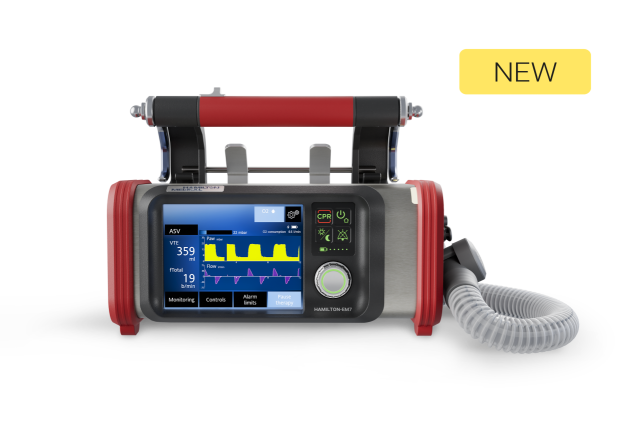
Когда счет идет на секунды, уверенность важна еще больше. Аппарат HAMILTON-EM7 разработан для поддержки бригад неотложной помощи на каждом этапе RSI – от неинвазивной преоксигенации до инвазивной ИВЛ.

RSI – это процедура с высоким уровнем риска, требующая предельной точности (Hayes-Bradley C, McCreery M, Delorenzo A, Bendall J, Lewis A, Bowles KA. Predictive and protective factors for failing first pass intubation in prehospital rapid sequence intubation: an aetiology and risk systematic review with meta-analysis. Br J Anaesth. 2024;132(5):918-935. doi:10.1016/j.bja.2024.02.0041​). Аппарат ИВЛ HAMILTON-EM7 помогает снизить сложность манипуляции благодаря встроенному рабочему процессу RSI, который автоматизирует основные шаги и обеспечивает оперативность (Hayes-Bradley C, McCreery M, Delorenzo A, Bendall J, Lewis A, Bowles KA. Predictive and protective factors for failing first pass intubation in prehospital rapid sequence intubation: an aetiology and risk systematic review with meta-analysis. Br J Anaesth. 2024;132(5):918-935. doi:10.1016/j.bja.2024.02.0041​).

Преимущества режима RSI при проведении вентиляции до госпитализации

Доступность

Режим RSI является стандартным на всех устройствах HAMILTON-EM7.

Predictive and protective factors for failing first pass intubation in prehospital rapid sequence intubation: an aetiology and risk systematic review with meta-analysis.

Hayes-Bradley C, McCreery M, Delorenzo A, Bendall J, Lewis A, Bowles KA. Predictive and protective factors for failing first pass intubation in prehospital rapid sequence intubation: an aetiology and risk systematic review with meta-analysis. Br J Anaesth. 2024;132(5):918-935. doi:10.1016/j.bja.2024.02.004

BACKGROUND Prehospital rapid sequence intubation first pass success rates vary between 59% and 98%. Patient morbidity is associated with repeat intubation attempts. Understanding what influences first pass success can guide improvements in practice. We performed an aetiology and risk systematic review to answer the research question 'what factors are associated with success or failure at first attempt laryngoscopy in prehospital rapid sequence intubation?'. METHODS MEDLINE, EMBASE, CINAHL, and Cochrane Library were searched on March 3, 2023 for studies examining first pass success rates for rapid sequence intubation of prehospital live patients. Screening was performed via Covidence, and data synthesised by meta-analysis. The review was registered with PROSPERO and performed and reported as per Preferred Reporting Items for Systematic Reviews and Meta-Analyses (PRISMA) guidelines. RESULTS Reasonable evidence was discovered for predictive and protective factors for failure of first pass intubation. Predictive factors included age younger than 1 yr, the presence of blood or fluid in the airway, restricted jaw or neck movement, trauma patients, nighttime procedures, chronic or acute distortions of normal face/upper airway anatomy, and equipment issues. Protective factors included an experienced intubator, adequate training, use of certain videolaryngoscopes, elevating the patient on a stretcher in an inclined position, use of a bougie, and laryngeal manoeuvres. CONCLUSIONS Managing bloody airways, positioning well, using videolaryngoscopes with bougies, and appropriate training should be further explored as opportunities for prehospital services to increase first pass success. Heterogeneity of studies limits stronger conclusions. SYSTEMATIC REVIEW PROTOCOL PROSPERO (CRD42022353609).