

Session expired

Due to inactivity your session has expired. Please login again.

 技术

氧气治疗。

现场氧合

"" ""

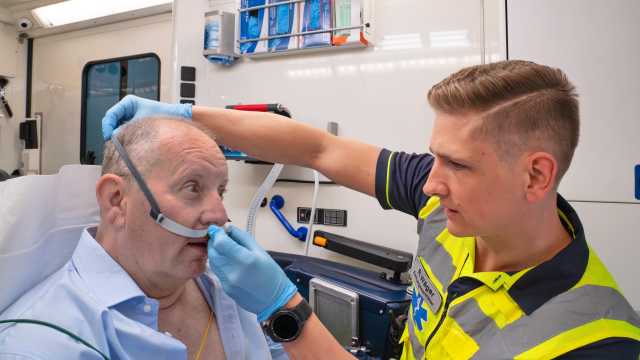
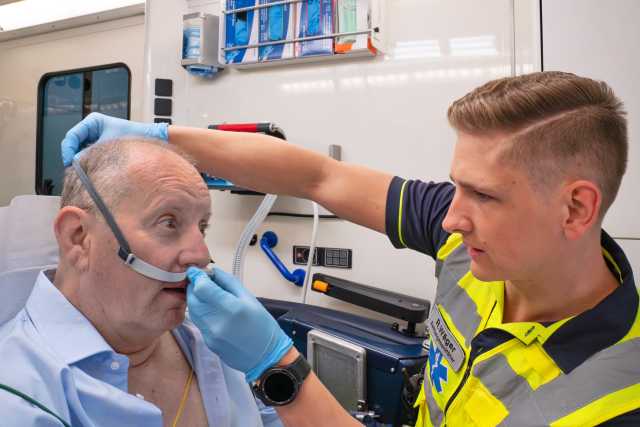
适时输氧。 院前通气的关键第一步

对于低氧血症或面临出现低氧血症风险的病人,辅助氧气治疗旨在维持适当的组织氧合 (Branson RD, Johannigman JA.Pre-hospital oxygen therapy.Respir Care.2013;58(1):86-97. doi:10.4187/respcare.022511​)。

在院前环境中,及时准确地进行氧气治疗对病人生存和最佳预后至关重要 (Branson RD, Johannigman JA.Pre-hospital oxygen therapy.Respir Care.2013;58(1):86-97. doi:10.4187/respcare.022511​)。

氧气治疗在院前护理中的益处

""

关键时刻,尽显价值。 在院前护理中的临床应用

  1. 急性冠脉综合征:为急性心肌梗死和心源性胸痛病人输氧,以维持氧饱和度并支持心肌功能 (Branson RD, Johannigman JA.Pre-hospital oxygen therapy.Respir Care.2013;58(1):86-97. doi:10.4187/respcare.022511​)。
  2. 神经系统急症(昏迷、癫痫发作、头部损伤、中风等):密切监测氧饱和度,并提供辅助氧气治疗以将氧饱和度水平维持在推荐范围内,避免可能加重神经损伤的缺氧情况 (Branson RD, Johannigman JA.Pre-hospital oxygen therapy.Respir Care.2013;58(1):86-97. doi:10.4187/respcare.022511​)。
  3. 创伤性损伤:确保创伤病人获得适当的氧合,以防止继发性缺氧损伤,特别是在头部创伤或大量失血的情况下 (Branson RD, Johannigman JA.Pre-hospital oxygen therapy.Respir Care.2013;58(1):86-97. doi:10.4187/respcare.022511​)。
  4. 呼吸窘迫:对哮喘恶化、慢性阻塞性肺疾病 (COPD) 发作和急性肺水肿等疾病实施氧气治疗,根据病人的病情和氧合状态定制输送方法 (Branson RD, Johannigman JA.Pre-hospital oxygen therapy.Respir Care.2013;58(1):86-97. doi:10.4187/respcare.022511​, Bentsen LP, Lassen AT, Titlestad IL, Brabrand M. A change from high-flow to titrated oxygen therapy in the prehospital setting is associated with lower mortality in COPD patients with acute exacerbations: an observational cohort study.Acute Med.2020;19(2):76-82.3​)。
  5. 一氧化碳中毒:向一氧化碳中毒病人输送高浓度氧气预期会出现高氧血症。碳氧血红蛋白的半衰期为呼吸室内空气 4-5 小时。呼吸 100% 浓度氧气可缩短至 40 分钟 (Branson RD, Johannigman JA.Pre-hospital oxygen therapy.Respir Care.2013;58(1):86-97. doi:10.4187/respcare.022511​)。


可用性

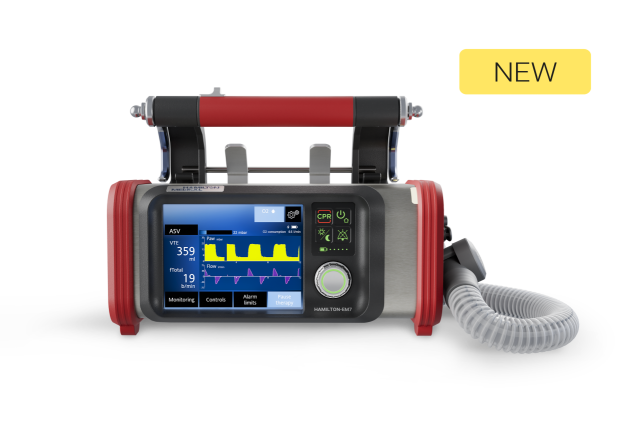
氧气治疗可作为 HAMILTON-EM7 呼吸机的选配治疗模式。

Pre-hospital oxygen therapy.

Branson RD, Johannigman JA. Pre-hospital oxygen therapy. Respir Care. 2013;58(1):86-97. doi:10.4187/respcare.02251

Oxygen use in prehospital care is aimed at treating or preventing hypoxemia. However, excess oxygen delivery has important consequences in select patients, and hyperoxia can adversely impact outcome. The unique environment of prehospital care poses logistical and educational challenges. Oxygen therapy in prehospital care should be provided to patients with hypoxemia and titrated to achieve normoxemia. Changes to the current practice of oxygen delivery in prehospital care are needed.

Emergency oxygen therapy: from guideline to implementation

Kane B, Decalmer S, O’Driscoll BR. Emergency oxygen therapy: from guideline to implementation. Breathe. 2013;9(4):246-253. doi:10.1183/20734735.025212

A change from high-flow to titrated oxygen therapy in the prehospital setting is associated with lower mortality in COPD patients with acute exacerbations: an observational cohort study.

Bentsen LP, Lassen AT, Titlestad IL, Brabrand M. A change from high-flow to titrated oxygen therapy in the prehospital setting is associated with lower mortality in COPD patients with acute exacerbations: an observational cohort study. Acute Med. 2020;19(2):76-82.

BACKGROUND The aim of this study was to investigate 30-day mortality for COPD patients treated by ambulances in the period before and after implementation of a pre-hospital oxygen protocol. METHODS Prehospital High-flow oxygen was used from April to September 2012 and titrated oxygen from April to September 2013. Primary outcome was 30-day mortality. RESULTS 707 patients were included; 209 in the high-flow group and 498 in the titration group. Of these, 56 and 132 arrived with acute exacerbation (AE). Overall 30-day mortality was 11.5% vs. 9.4% (p=0.41), respectively. For patients with AE, it was 19.6% vs. 4.6% (p=0.001). CONCLUSION Change of treatment protocol is associated with a lower 30-day mortality for patients registered with acute exacerbation, but not for all COPD patients.