




Session expired

Due to inactivity your session has expired. Please login again.

我们检测到您正在 美国 访问我们的网站。
我们针对您的国家(美国)提供单独版本的网站。

切换至 美国
 技术

O2 assist。

您的精准护理助手

O2 assist 图示

持续守护。 持续氧疗管理

O2 assist(具体市场供应情况可能存在地区差异A)可在床旁为您提供精准护理。通过持续调节供氧水平,将病人的氧饱和度 (SpO2) 水平始终维持在个体化设定的目标范围内。这可确保为病人提供持续稳定、灵敏响应的氧疗管理,还可减少旋钮操作次数(Roca O, Caritg O, Santafé M, et al.Closed-loop oxygen control improves oxygen therapy in acute hypoxemic respiratory failure patients under high flow nasal oxygen: a randomized cross-over study (the HILOOP study).Crit Care.2022;26(1):108.2022 年 4 月 14 日出版。doi:10.1186/s13054-022-03970-w1​, Atakul G, Ceylan G, Sandal O, et al.Closed-loop oxygen usage during invasive mechanical ventilation of pediatric patients (CLOUDIMPP): a randomized controlled cross-over study.Front Med (Lausanne).2024;11:1426969.2024 年 9 月 10 日出版。doi:10.3389/fmed.2024.14269692)。

人在吹花的图示

多功能解决方案。 应用和病人状况

O2 assist 可兼容所有有创和无创通气模式(CPR 和 INTELLiVENT®-ASV® 除外B)以及高流量氧疗,是一种多功能解决方案。该功能适用于成人、儿童病人和胎龄达 37 周或以上的新生儿。

该功能可为罹患引发需氧量波动疾病的病人提供获益益,例如:

由于气体交换受损,AHRF 病人的需氧量出现波动。O2 assist 可以根据这些变化动态调节供氧水平,始终保持在最佳氧饱和度范围内(Roca O, Caritg O, Santafé M, et al.Closed-loop oxygen control improves oxygen therapy in acute hypoxemic respiratory failure patients under high flow nasal oxygen: a randomized cross-over study (the HILOOP study).Crit Care.2022;26(1):108.2022 年 4 月 14 日出版。doi:10.1186/s13054-022-03970-w1​, Atakul G, Ceylan G, Sandal O, et al.Closed-loop oxygen usage during invasive mechanical ventilation of pediatric patients (CLOUDIMPP): a randomized controlled cross-over study.Front Med (Lausanne).2024;11:1426969.2024 年 9 月 10 日出版。doi:10.3389/fmed.2024.14269692​, Sandal O, Ceylan G, Topal S, et al.Closed-loop oxygen control improves oxygenation in pediatric patients under high-flow nasal oxygen-A randomized crossover study.Front Med (Lausanne).2022;9:1046902.2022 年 11 月 16 日出版。doi:10.3389/fmed.2022.10469023)。

ARDS 病人经常出现肺功能的快速变化,需要频繁调整呼吸机氧浓度设置以保持充分氧合。O2 assist 功能结合适当的 PEEP 管理能够迅速响应这些变化,并确保始终维持在最佳 SpO2 范围内(Soydan E, Ceylan G, Topal S, et al.Automated closed-loop FiO2 titration increases the percentage of time spent in optimal zones of oxygen saturation in pediatric patients-A randomized crossover clinical trial.Front Med (Lausanne).2022;9:969218.2022 年 8 月 25 日出版。doi:10.3389/fmed.2022.9692184)。


毛细支气管炎病人的气道炎症和粘液分泌可能引发低氧血症(Erickson EN, Bhakta RT, Tristram D, Mendez MD. Pediatric Bronchiolitis. In: StatPearls. Treasure Island (FL): StatPearls Publishing; January 12, 2025.7)。这意味着治疗效果在很大程度上取决于 FiO2 与 PEEP 之间的相互作用,因此 SpO2 值会不断发生变化(Roca O, Caritg O, Santafé M, et al.Closed-loop oxygen control improves oxygen therapy in acute hypoxemic respiratory failure patients under high flow nasal oxygen: a randomized cross-over study (the HILOOP study).Crit Care.2022;26(1):108.2022 年 4 月 14 日出版。doi:10.1186/s13054-022-03970-w1, Atakul G, Ceylan G, Sandal O, et al.Closed-loop oxygen usage during invasive mechanical ventilation of pediatric patients (CLOUDIMPP): a randomized controlled cross-over study.Front Med (Lausanne).2024;11:1426969.2024 年 9 月 10 日出版。doi:10.3389/fmed.2024.14269692​, Sandal O, Ceylan G, Topal S, et al.Closed-loop oxygen control improves oxygenation in pediatric patients under high-flow nasal oxygen-A randomized crossover study.Front Med (Lausanne).2022;9:1046902.2022 年 11 月 16 日出版。doi:10.3389/fmed.2022.10469023​, Soydan E, Ceylan G, Topal S, et al.Automated closed-loop FiO2 titration increases the percentage of time spent in optimal zones of oxygen saturation in pediatric patients-A randomized crossover clinical trial.Front Med (Lausanne).2022;9:969218.2022 年 8 月 25 日出版。doi:10.3389/fmed.2022.9692184)。O2 assist 可根据病人的实时需求调节供氧水平,始终将 SpO2 维持在所需的目标范围内 (Roca O, Caritg O, Santafé M, et al.Closed-loop oxygen control improves oxygen therapy in acute hypoxemic respiratory failure patients under high flow nasal oxygen: a randomized cross-over study (the HILOOP study).Crit Care.2022;26(1):108.2022 年 4 月 14 日出版。doi:10.1186/s13054-022-03970-w1, Atakul G, Ceylan G, Sandal O, et al.Closed-loop oxygen usage during invasive mechanical ventilation of pediatric patients (CLOUDIMPP): a randomized controlled cross-over study.Front Med (Lausanne).2024;11:1426969.2024 年 9 月 10 日出版。doi:10.3389/fmed.2024.14269692​, Sandal O, Ceylan G, Topal S, et al.Closed-loop oxygen control improves oxygenation in pediatric patients under high-flow nasal oxygen-A randomized crossover study.Front Med (Lausanne).2022;9:1046902.2022 年 11 月 16 日出版。doi:10.3389/fmed.2022.10469023​, Soydan E, Ceylan G, Topal S, et al.Automated closed-loop FiO2 titration increases the percentage of time spent in optimal zones of oxygen saturation in pediatric patients-A randomized crossover clinical trial.Front Med (Lausanne).2022;9:969218.2022 年 8 月 25 日出版。doi:10.3389/fmed.2022.9692184)。

临床证据

O2 assist 图示

您有证据吗? 了解证据

O2 assist 通过帮助医疗专业人士严格遵循氧疗目标和规范治疗方案,为他们带来显著优势。研究表明,持续氧疗管理有可能:

与手动调节相比,使用 O2 assist 进行氧疗管理能够延长 SpO2 在目标范围内的时间(Roca O, Caritg O, Santafé M, et al.Closed-loop oxygen control improves oxygen therapy in acute hypoxemic respiratory failure patients under high flow nasal oxygen: a randomized cross-over study (the HILOOP study).Crit Care.2022;26(1):108.2022 年 4 月 14 日出版。doi:10.1186/s13054-022-03970-w1​, Sandal O, Ceylan G, Topal S, et al.Closed-loop oxygen control improves oxygenation in pediatric patients under high-flow nasal oxygen-A randomized crossover study.Front Med (Lausanne).2022;9:1046902.2022 年 11 月 16 日出版。doi:10.3389/fmed.2022.10469023​, Mól CG, Vieira AGDS, Garcia BMSP, et al. Closed-loop oxygen control for critically ill patients--A systematic review and meta-analysis. PLoS One. 2024;19(6):e0304745。2024 年 6 月 12 日出版。doi:10.1371/journal.pone.03047455Trottier M, Bouchard PA, L'Her E, Lellouche F. Automated Oxygen Titration During CPAP and Noninvasive Ventilation in Healthy Subjects With Induced Hypoxemia.Respir Care.2023;68(11):1553-1560. doi:10.4187/respcare.098666​)。这将帮助您确保治疗效果与您的方案和指南保持一致。

研究表明,延长 SpO2 在目标范围内的时间可以降低低氧血症和高氧血症的风险,有可能改善病人预后(Roca O, Caritg O, Santafé M, et al.Closed-loop oxygen control improves oxygen therapy in acute hypoxemic respiratory failure patients under high flow nasal oxygen: a randomized cross-over study (the HILOOP study).Crit Care.2022;26(1):108.2022 年 4 月 14 日出版。doi:10.1186/s13054-022-03970-w1​, Atakul G, Ceylan G, Sandal O, et al.Closed-loop oxygen usage during invasive mechanical ventilation of pediatric patients (CLOUDIMPP): a randomized controlled cross-over study.Front Med (Lausanne).2024;11:1426969.2024 年 9 月 10 日出版。doi:10.3389/fmed.2024.14269692​, Mól CG, Vieira AGDS, Garcia BMSP, et al.Closed-loop oxygen control for critically ill patients--A systematic review and meta-analysis.PLoS One.2024;19(6):e0304745。2024 年 6 月 12 日出版。doi:10.1371/journal.pone.03047455, Trottier M, Bouchard PA, L'Her E, Lellouche F. Automated Oxygen Titration During CPAP and Noninvasive Ventilation in Healthy Subjects With Induced Hypoxemia.Respir Care.2023;68(11):1553-1560. doi:10.4187/respcare.098666)。通过保持恒定的氧浓度水平,O2 assist 将有助于降低这些病症及相关并发症的发生率(Roca O, Caritg O, Santafé M, et al.Closed-loop oxygen control improves oxygen therapy in acute hypoxemic respiratory failure patients under high flow nasal oxygen: a randomized cross-over study (the HILOOP study).Crit Care.2022;26(1):108.2022 年 4 月 14 日出版。doi:10.1186/s13054-022-03970-w1​, Sandal O, Ceylan G, Topal S, et al.Closed-loop oxygen control improves oxygenation in pediatric patients under high-flow nasal oxygen-A randomized crossover study.Front Med (Lausanne).2022;9:1046902.2022 年 11 月 16 日出版。doi:10.3389/fmed.2022.10469023​, Mól CG, Vieira AGDS, Garcia BMSP, et al.Closed-loop oxygen control for critically ill patients--A systematic review and meta-analysis.PLoS One.2024;19(6):e0304745。2024 年 6 月 12 日出版。doi:10.1371/journal.pone.03047455)。

与手动氧浓度调整相比,持续氧浓度管理能够更有效地维持目标氧饱和度水平,同时减少医护人员的调整操作(Atakul G, Ceylan G, Sandal O, et al.Closed-loop oxygen usage during invasive mechanical ventilation of pediatric patients (CLOUDIMPP): a randomized controlled cross-over study.Front Med (Lausanne).2024;11:1426969.2024 年 9 月 10 日出版。doi:10.3389/fmed.2024.14269692Trottier M, Bouchard PA, L'Her E, Lellouche F. Automated Oxygen Titration During CPAP and Noninvasive Ventilation in Healthy Subjects With Induced Hypoxemia.Respir Care.2023;68(11):1553-1560。doi:10.4187/respcare.098666)。

改善控制和操作透明度

O2 assist 图示 O2 assist 图示

一切准备就绪。 可根据需求定制


O2 assist 根据 SpO2 目标范围和紧急限值的预设值运行。您可以切换到自定义窗口,根据病人的需求和您的治疗方案调整这些预设值。

氧浓度警告会在病人需氧量达到用户设定的阈值时发出通知,从而实现早期治疗干预,例如优化 PEEP 水平、病人定位、镇静或药物治疗。

HAMILTON-C1 上的 O2 assist 截图

全局图。 重要信息概览

  1. SpO2 显示条:显示病人的实时 SpO2 水平以及目标范围和紧急限值。
  2. 氧浓度控制:显示当前氧浓度设置。彗星旋转速度加快表明正在进行调整。氧浓度控件左侧的计数器显示更改设置之前的时间。
  3. 病人 SpO2 水平状态:显示当前测量值、信号质量和容积描记图。

可用性

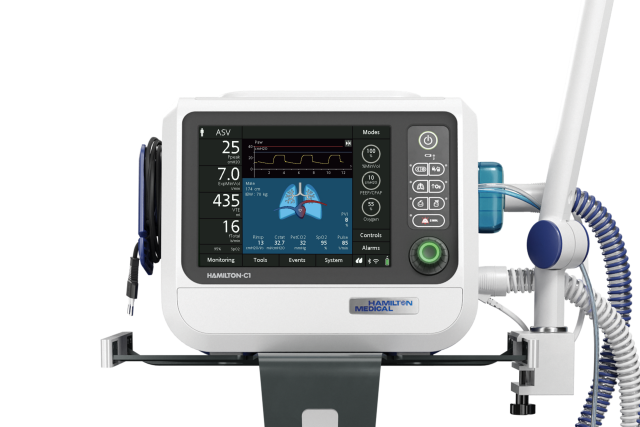
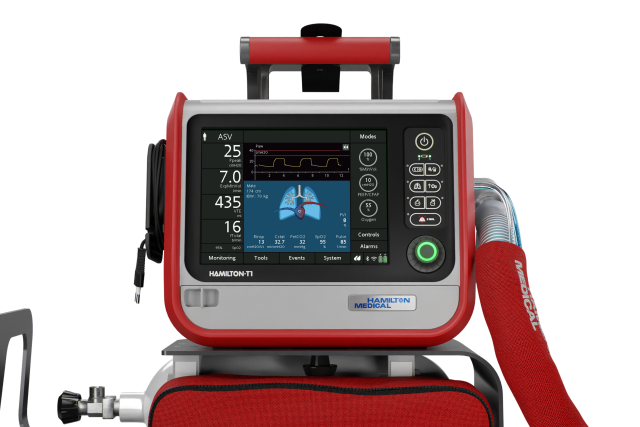
O2 assist 为 HAMILTON-C1 和 HAMILTON-T1 呼吸机的选配功能。

脚注

  • A. 并非在所有市场均有提供
  • B. Except CPR and INTELLiVENT®-ASV®

参考文献

  1. 1. Roca O, Caritg O, Santafé M, et al. Closed-loop oxygen control improves oxygen therapy in acute hypoxemic respiratory failure patients under high flow nasal oxygen: a randomized cross-over study (the HILOOP study). Crit Care. 2022;26(1):108. Published 2022 Apr 14. doi:10.1186/s13054-022-03970-w
  2. 2. Atakul G, Ceylan G, Sandal O, et al. Closed-loop oxygen usage during invasive mechanical ventilation of pediatric patients (CLOUDIMPP): a randomized controlled cross-over study. Front Med (Lausanne). 2024;11:1426969. Published 2024 Sep 10. doi:10.3389/fmed.2024.1426969
  3. 3. Sandal O, Ceylan G, Topal S, et al. Closed-loop oxygen control improves oxygenation in pediatric patients under high-flow nasal oxygen-A randomized crossover study. Front Med (Lausanne). 2022;9:1046902. Published 2022 Nov 16. doi:10.3389/fmed.2022.1046902
  4. 4. Soydan E, Ceylan G, Topal S, et al. Automated closed-loop FiO2 titration increases the percentage of time spent in optimal zones of oxygen saturation in pediatric patients-A randomized crossover clinical trial. Front Med (Lausanne). 2022;9:969218. Published 2022 Aug 25. doi:10.3389/fmed.2022.969218
  5. 5. Mól CG, Vieira AGDS, Garcia BMSP, et al. Closed-loop oxygen control for critically ill patients--A systematic review and meta-analysis. PLoS One. 2024;19(6):e0304745. Published 2024 Jun 12. doi:10.1371/journal.pone.0304745
  6. 6. Trottier M, Bouchard PA, L'Her E, Lellouche F. Automated Oxygen Titration During CPAP and Noninvasive Ventilation in Healthy Subjects With Induced Hypoxemia. Respir Care. 2023;68(11):1553-1560. doi:10.4187/respcare.09866
  7. 7. Erickson EN, Bhakta RT, Tristram D, Mendez MD. Pediatric Bronchiolitis. In: StatPearls. Treasure Island (FL): StatPearls Publishing; January 12, 2025.

Closed-loop oxygen control improves oxygen therapy in acute hypoxemic respiratory failure patients under high flow nasal oxygen: a randomized cross-over study (the HILOOP study).

Roca O, Caritg O, Santafé M, et al. Closed-loop oxygen control improves oxygen therapy in acute hypoxemic respiratory failure patients under high flow nasal oxygen: a randomized cross-over study (the HILOOP study). Crit Care. 2022;26(1):108. Published 2022 Apr 14. doi:10.1186/s13054-022-03970-w

BACKGROUND We aimed to assess the efficacy of a closed-loop oxygen control in critically ill patients with moderate to severe acute hypoxemic respiratory failure (AHRF) treated with high flow nasal oxygen (HFNO). METHODS In this single-centre, single-blinded, randomized crossover study, adult patients with moderate to severe AHRF who were treated with HFNO (flow rate ≥ 40 L/min with FiO2 ≥ 0.30) were randomly assigned to start with a 4-h period of closed-loop oxygen control or 4-h period of manual oxygen titration, after which each patient was switched to the alternate therapy. The primary outcome was the percentage of time spent in the individualized optimal SpO2 range. RESULTS Forty-five patients were included. Patients spent more time in the optimal SpO2 range with closed-loop oxygen control compared with manual titrations of oxygen (96.5 [93.5 to 98.9] % vs. 89 [77.4 to 95.9] %; p < 0.0001) (difference estimate, 10.4 (95% confidence interval 5.2 to 17.2). Patients spent less time in the suboptimal range during closed-loop oxygen control, both above and below the cut-offs of the optimal SpO2 range, and less time above the suboptimal range. Fewer number of manual adjustments per hour were needed with closed-loop oxygen control. The number of events of SpO2 < 88% and < 85% were not significantly different between groups. CONCLUSIONS Closed-loop oxygen control improves oxygen administration in patients with moderate-to-severe AHRF treated with HFNO, increasing the percentage of time in the optimal oxygenation range and decreasing the workload of healthcare personnel. These results are especially relevant in a context of limited oxygen supply and high medical demand, such as the COVID-19 pandemic. Trial registration The HILOOP study was registered at www. CLINICALTRIALS gov under the identifier NCT04965844 .

Closed-loop oxygen usage during invasive mechanical ventilation of pediatric patients (CLOUDIMPP): a randomized controlled cross-over study.

Atakul G, Ceylan G, Sandal O, et al. Closed-loop oxygen usage during invasive mechanical ventilation of pediatric patients (CLOUDIMPP): a randomized controlled cross-over study. Front Med (Lausanne). 2024;11:1426969. Published 2024 Sep 10. doi:10.3389/fmed.2024.1426969

BACKGROUND The aim of this study is the evaluation of a closed-loop oxygen control system in pediatric patients undergoing invasive mechanical ventilation (IMV). METHODS Cross-over, multicenter, randomized, single-blind clinical trial. Patients between the ages of 1 month and 18 years who were undergoing IMV therapy for acute hypoxemic respiratory failure (AHRF) were assigned at random to either begin with a 2-hour period of closed-loop oxygen control or manual oxygen titrations. By using closed-loop oxygen control, the patients' SpO2 levels were maintained within a predetermined target range by the automated adjustment of the FiO2. During the manual oxygen titration phase of the trial, healthcare professionals at the bedside made manual changes to the FiO2, while maintaining the same target range for SpO2. Following either period, the patient transitioned to the alternative therapy. The outcomes were the percentage of time spent in predefined SpO2 ranges ±2% (primary), FiO2, total oxygen use, and the number of manual adjustments. FINDINGS The median age of included 33 patients was 17 (13-55.5) months. In contrast to manual oxygen titrations, patients spent a greater proportion of time within a predefined optimal SpO2 range when the closed-loop oxygen controller was enabled (95.7% [IQR 92.1-100%] vs. 65.6% [IQR 41.6-82.5%]), mean difference 33.4% [95%-CI 24.5-42%]; P < 0.001). Median FiO2 was lower (32.1% [IQR 23.9-54.1%] vs. 40.6% [IQR 31.1-62.8%]; P < 0.001) similar to total oxygen use (19.8 L/h [IQR 4.6-64.8] vs. 39.4 L/h [IQR 16.8-79]; P < 0.001); however, median SpO2/FiO2 was higher (329.4 [IQR 180-411.1] vs. 246.7 [IQR 151.1-320.5]; P < 0.001) with closed-loop oxygen control. With closed-loop oxygen control, the median number of manual adjustments reduced (0.0 [IQR 0.0-0.0] vs. 1 [IQR 0.0-2.2]; P < 0.001). CONCLUSION Closed-loop oxygen control enhances oxygen therapy in pediatric patients undergoing IMV for AHRF, potentially leading to more efficient utilization of oxygen. This technology also decreases the necessity for manual adjustments, which could reduce the workloads of healthcare providers. CLINICAL TRIAL REGISTRATION This research has been submitted to ClinicalTrials.gov (NCT05714527).

Closed-loop oxygen control improves oxygenation in pediatric patients under high-flow nasal oxygen-A randomized crossover study.

Sandal O, Ceylan G, Topal S, et al. Closed-loop oxygen control improves oxygenation in pediatric patients under high-flow nasal oxygen-A randomized crossover study. Front Med (Lausanne). 2022;9:1046902. Published 2022 Nov 16. doi:10.3389/fmed.2022.1046902

BACKGROUND We assessed the effect of a closed-loop oxygen control system in pediatric patients receiving high-flow nasal oxygen therapy (HFNO). METHODS A multicentre, single-blinded, randomized, and cross-over study. Patients aged between 1 month and 18 years of age receiving HFNO for acute hypoxemic respiratory failure (AHRF) were randomly assigned to start with a 2-h period of closed-loop oxygen control or a 2-h period of manual oxygen titrations, after which the patient switched to the alternative therapy. The endpoints were the percentage of time spent in predefined SpO2 ranges (primary), FiO2, SpO2/FiO2, and the number of manual adjustments. FINDINGS We included 23 patients, aged a median of 18 (3-26) months. Patients spent more time in a predefined optimal SpO2 range when the closed-loop oxygen controller was activated compared to manual oxygen titrations [91⋅3% (IQR 78⋅4-95⋅1%) vs. 63⋅0% (IQR 44⋅4-70⋅7%)], mean difference [28⋅2% (95%-CI 20⋅6-37⋅8%); P < 0.001]. Median FiO2 was lower [33⋅3% (IQR 26⋅6-44⋅6%) vs. 42⋅6% (IQR 33⋅6-49⋅9%); P = 0.07], but median SpO2/FiO2 was higher [289 (IQR 207-348) vs. 194 (IQR 98-317); P = 0.023] with closed-loop oxygen control. The median number of manual adjustments was lower with closed-loop oxygen control [0⋅0 (IQR 0⋅0-0⋅0) vs. 0⋅5 (IQR 0⋅0-1⋅0); P < 0.001]. CONCLUSION Closed-loop oxygen control improves oxygenation therapy in pediatric patients receiving HFNO for AHRF and potentially leads to more efficient oxygen use. It reduces the number of manual adjustments, which may translate into decreased workloads of healthcare providers. CLINICAL TRIAL REGISTRATION [www.ClinicalTrials.gov], identifier [NCT05032365].

Automated closed-loop FiO2 titration increases the percentage of time spent in optimal zones of oxygen saturation in pediatric patients-A randomized crossover clinical trial.

Soydan E, Ceylan G, Topal S, et al. Automated closed-loop FiO2 titration increases the percentage of time spent in optimal zones of oxygen saturation in pediatric patients-A randomized crossover clinical trial. Front Med (Lausanne). 2022;9:969218. Published 2022 Aug 25. doi:10.3389/fmed.2022.969218

Introduction We aimed to compare automated ventilation with closed-loop control of the fraction of inspired oxygen (FiO2) to automated ventilation with manual titrations of the FiO2 with respect to time spent in predefined pulse oximetry (SpO2) zones in pediatric critically ill patients. Methods This was a randomized crossover clinical trial comparing Adaptive Support Ventilation (ASV) 1.1 with use of a closed-loop FiO2 system vs. ASV 1.1 with manual FiO2 titrations. The primary endpoint was the percentage of time spent in optimal SpO2 zones. Secondary endpoints included the percentage of time spent in acceptable, suboptimal and unacceptable SpO2 zones, and the total number of FiO2 changes per patient. Results We included 30 children with a median age of 21 (11-48) months; 12 (40%) children had pediatric ARDS. The percentage of time spent in optimal SpO2 zones increased with use of the closed-loop FiO2 controller vs. manual oxygen control [96.1 (93.7-98.6) vs. 78.4 (51.3-94.8); P < 0.001]. The percentage of time spent in acceptable, suboptimal and unacceptable zones decreased. Findings were similar with the use of closed-loop FiO2 controller compared to manual titration in patients with ARDS [95.9 (81.6-98.8) vs. 78 (49.5-94.8) %; P = 0.027]. The total number of closed-loop FiO2 changes per patient was 52 (11.8-67), vs. the number of manual changes 1 (0-2), (P < 0.001). Conclusion In this randomized crossover trial in pediatric critically ill patients under invasive ventilation with ASV, use of a closed-loop control of FiO2 titration increased the percentage of time spent within in optimal SpO2 zones, and increased the total number of FiO2 changes per patient. Clinical trial registration ClinicalTrials.gov, identifier: NCT04568642.

Closed-loop oxygen control for critically ill patients--A systematic review and meta-analysis.

Mól CG, Vieira AGDS, Garcia BMSP, et al. Closed-loop oxygen control for critically ill patients--A systematic review and meta-analysis. PLoS One. 2024;19(6):e0304745. Published 2024 Jun 12. doi:10.1371/journal.pone.0304745

BACKGROUNDThe impact of closed-loop control systems to titrate oxygen flow in critically ill patients, including their effectiveness, efficacy, workload and safety, remains unclear. This systematic review investigated the utilization of closed-loop oxygen systems for critically ill patients in comparison to manual oxygen titration systems focusing on these topics.METHODS AND FINDINGSA search was conducted across several databases including MEDLINE, CENTRAL, EMBASE, LILACS, CINAHL, LOVE, ClinicalTrials.gov, and the World Health Organization on March 3, 2022, with subsequent updates made on June 27, 2023. Evidence databases were searched for randomized clinical parallel or crossover studies investigating closed-loop oxygen control systems for critically ill patients. This systematic review and meta-analysis was performed following the Preferred Reporting Items for Systematic Review and Meta-analysis guidelines. The analysis was conducted using Review Manager software, adopting the mean difference or standardized mean difference with a 95% confidence interval (95% CI) for continuous variables or risk ratio with 95% CI for dichotomous outcomes. The main outcome of interest was the percentage of time spent in the peripheral arterial oxygen saturation target. Secondary outcomes included time for supplemental oxygen weaning, length of stay, mortality, costs, adverse events, and workload of healthcare professional. A total of 37 records from 21 studies were included in this review with a total of 1,577 participants. Compared with manual oxygen titration, closed-loop oxygen control systems increased the percentage of time in the prescribed SpO2 target, mean difference (MD) 25.47; 95% CI 19.7, 30.0], with moderate certainty of evidence. Current evidence also shows that closed-loop oxygen control systems have the potential to reduce the percentage of time with hypoxemia (MD -0.98; 95% CI -1.68, -0.27) and healthcare workload (MD -4.94; 95% CI -7.28, -2.61) with low certainty of evidence.CONCLUSIONClosed-loop oxygen control systems increase the percentage of time in the preferred SpO2 targets and may reduce healthcare workload.TRIAL REGISTRATIONPROSPERO: CRD42022306033.

Automated Oxygen Titration During CPAP and Noninvasive Ventilation in Healthy Subjects With Induced Hypoxemia.

Trottier M, Bouchard PA, L'Her E, Lellouche F. Automated Oxygen Titration During CPAP and Noninvasive Ventilation in Healthy Subjects With Induced Hypoxemia. Respir Care. 2023;68(11):1553-1560. doi:10.4187/respcare.09866

BACKGROUND Automated oxygen titration to maintain a stable SpO2 has been developed for spontaneously breathing patients but has not been evaluated during CPAP and noninvasive ventilation (NIV). METHODS We performed a randomized controlled crossover, double-blind study on 10 healthy subjects with induced hypoxemia during 3 situations: spontaneous breathing with oxygen support, CPAP (5 cm H2O), and NIV (7/3 cm H2O). We conducted in random order 3 dynamic hypoxic challenges of 5 min (FIO2 0.08 ± 0.02, 0.11± 0.02, and 0.14 ± 0.02). For each condition, we compared automated oxygen titration and manual oxygen titration by experienced respiratory therapists (RTs), with the aim to maintain the SpO2 at 94 ± 2%. In addition, we included 2 subjects hospitalized for exacerbation of COPD under NIV and a subject managed after bariatric surgery with CPAP and automated oxygen titration. RESULTS The percentage of time in the SpO2 target was higher with automated compared with manual oxygen titration for all conditions, on average 59.6 ± 22.8% compared to 44.3 ± 23.9% (P = .004). Hyperoxemia (SpO2 > 96%) was less frequent with automated titration for each mode of oxygen administration (24.0 ± 24.4% vs 39.1 ± 25.3%, P < .001). During the manual titration periods, the RT made several changes to oxygen flow (5.1 ± 3.3 interventions that lasted 122 ± 70 s/period) compared to none during the automated titration to maintain oxygenation in the targeted SpO2 . Time in the SpO2 target was higher with stable hospitalized subjects in comparison with healthy subjects under dynamic-induced hypoxemia. CONCLUSIONS In this proof-of-concept study, automated oxygen titration was used during CPAP and NIV. The performances to maintain the SpO2 target were significantly better compared to manual oxygen titration in the setting of this study protocol. This technology may allow decreasing the number of manual interventions for oxygen titration during CPAP and NIV.

Pediatric Bronchiolitis

Erickson EN, Bhakta RT, Tristram D, Mendez MD. Pediatric Bronchiolitis. In: StatPearls. Treasure Island (FL): StatPearls Publishing; January 12, 2025.

Pediatric bronchiolitis is a lower respiratory tract infection primarily caused by viral pathogens. This condition is among the most common illnesses in children aged 2 or younger and the leading cause of hospitalization in this age group. Bronchiolitis is primarily a clinical diagnosis, but viral testing may be necessary in severe cases requiring hospitalization. Identifying the specific viral cause can support infection control measures and prevent nosocomial spread. While most hospitalized infants have identifiable risk factors that increase their susceptibility, otherwise healthy infants and older children can also develop severe infections that necessitate hospitalization. In severe cases, infants with significant respiratory compromise may require mechanical ventilation. Respiratory syncytial virus (RSV) is the primary cause of bronchiolitis, although nearly all respiratory viruses can cause the condition in infants and young children. RSV bronchiolitis significantly contributes to the global disease burden, with approximately 33 million cases annually, 95% of which occur in low-income countries. Recent estimates indicate that around 3.6 million infants are hospitalized for bronchiolitis each year, with up to 118,000 deaths attributed to the condition or related complications. Unfortunately, half of these deaths occur within the first 6 months of life, and 97% of all infant deaths from bronchiolitis are reported in low- and middle-income countries.