




Session expired

Due to inactivity your session has expired. Please login again.

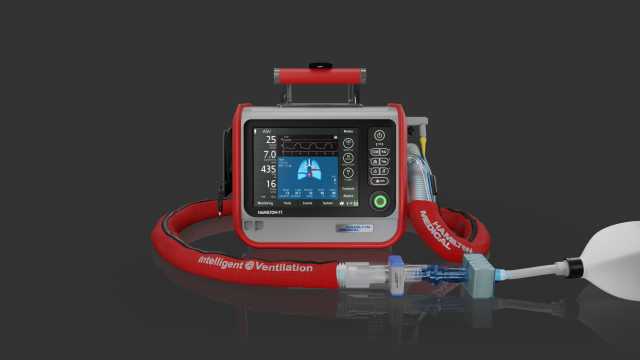
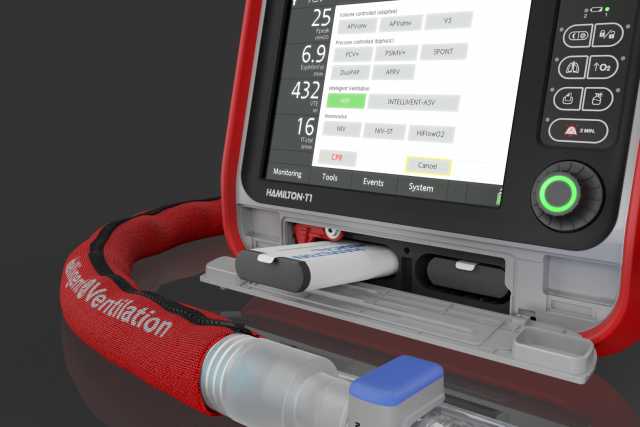
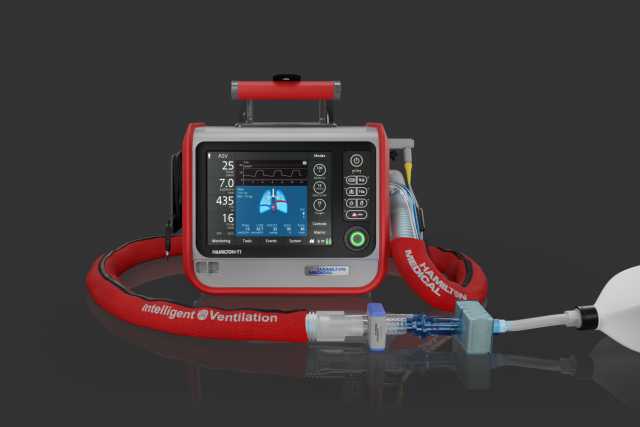
HAMILTON-T1.

Ventilación de confianza para el transporte de pacientes en cuidados intensivos

HAMILTON-T1

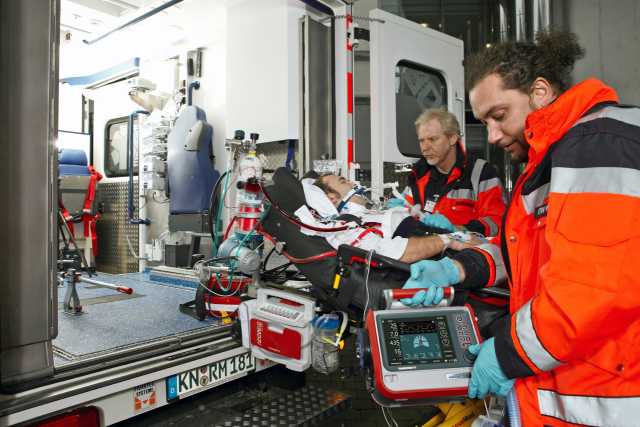
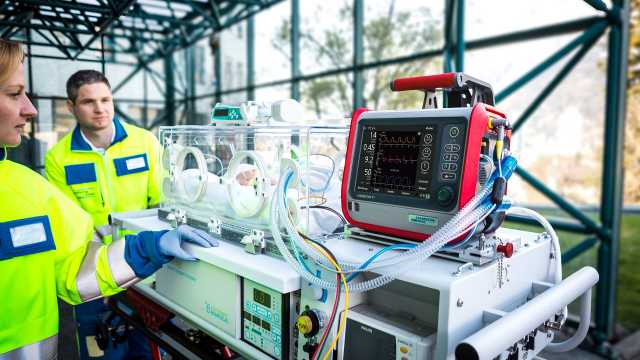
Nuestro especialista en traslados. Para pacientes de todas las edades

  • Respirador de UCI para traslados totalmente equipado
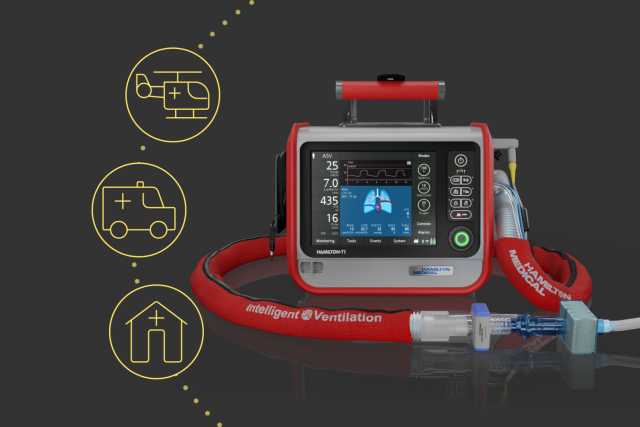
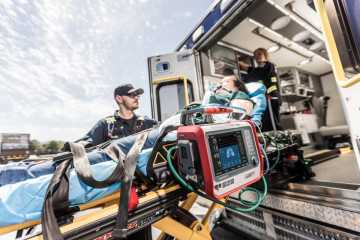
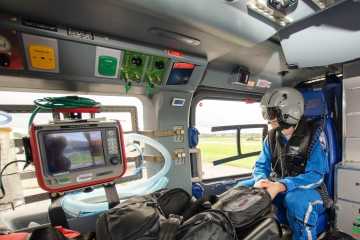
  • Aprobado para traslados por tierra, mar y aire
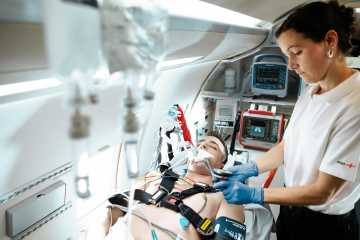
  • Dentro y fuera del hospital
HAMILTON-T1
HAMILTON-T1

Nuestro especialista en traslados. Para pacientes de todas las edades

  • Respirador de UCI para traslados totalmente equipado
  • Aprobado para traslados de pacientes por tierra, mar y aire
  • Dentro y fuera del hospital
HAMILTON-T1

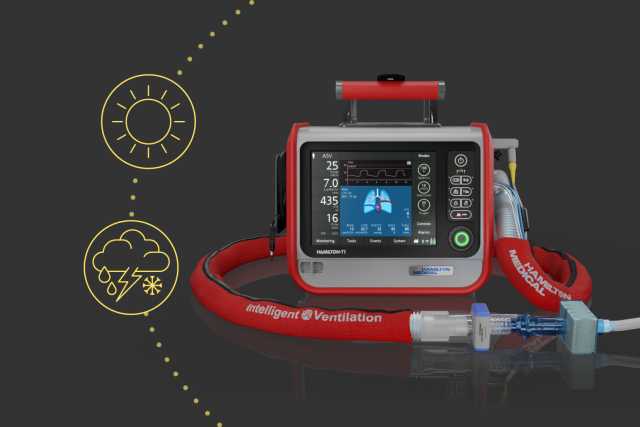
La ley del más fuerte. Para las condiciones más exigentes

  • Temperaturas desde -15 a +50 °C
  • Protección contra la entrada de líquidos IP54
  • Altitud máxima de 7620 metros
  • Carcasa reforzada de gran resistencia con protección contra golpes y a prueba de vibraciones
  • Pantalla resistente y antirreflectante
HAMILTON-T1

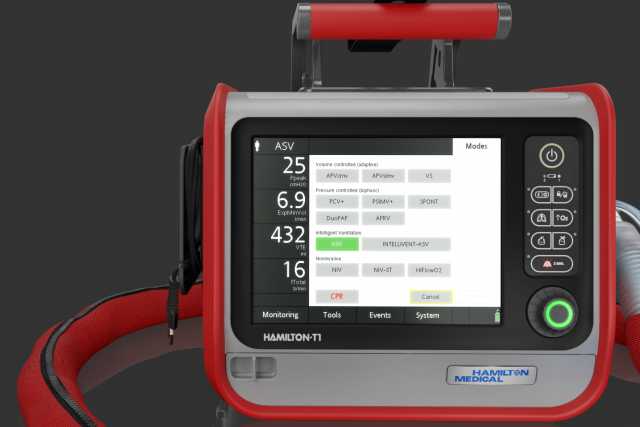
Tratamiento con ventilación continua. Utilice el mismo modo y los mismos ajustes que a pie de cama

  • Modos de ventilación con volumen objetivo y controlada por presión
  • Ventilación adaptable con ASV® e INTELLiVENT®-ASV
  • Ventilación no invasiva
  • Terapia de cánulas nasales de flujo alto
HAMILTON-T1

Extraordinariamente independiente. No requiere aire comprimido y funciona con batería

  • Turbina de alto rendimiento
  • Una batería integrada y una batería intercambiable en funcionamiento
  • Conector adicional para oxígeno a baja presión
HAMILTON-T1

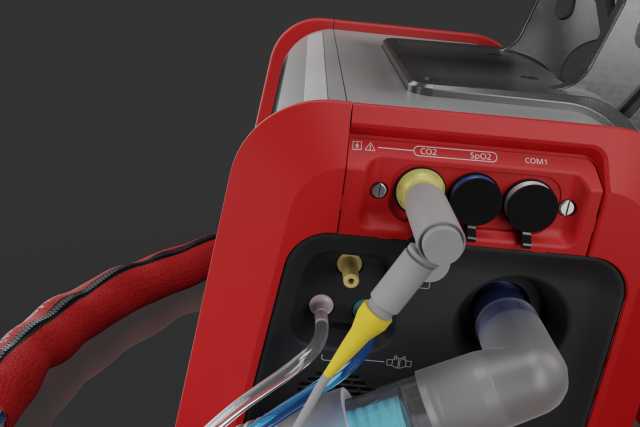
La comunicación es clave. Para una conexión optimizada

Tarjeta de comunicaciones opcional para:

  • Sensores de SpO2 y/o CO2
  • Llamada de enfermera
  • PDMS
  • HAMILTON-H900
  • RS232
HAMILTON-T1

Áreas de uso

Siga aprendiendo

""

Listos para cualquier reto. Con todo lo que necesita

  • Dimensiones (ancho x largo x alto):
    320 x 220 x 270 mm (unidad de ventilación)
    630 x 630 x 1380 mm (sin mango)

    630 x 630 x 1433 mm (con mango)

  • Peso:

    6,5 kg

  • Duración de 4 h con una batería/8 h con dos baterías

  • Batería intercambiable opcional

  • Todos los respiradores de transporte de Hamilton Medical están equipados con el módulo Hamilton Connect.

  • Un protocolo con una interfaz específicamente desarrollada permite conectar dispositivos de terceros para transferir datos del respirador mediante Bluetooth.

  • Modos controlados por presión, con volumen objetivo

  • Ventilación inteligente: ASV®, INTELLiVENT®‑ASV® (No disponible en todos los mercadosA), O2 assist (No disponible en todos los mercadosA)

  • Modos no invasivos (opcionalB)

  • Terapia con flujo alto de oxígeno (opcionalB)

  • Visualización de la mecánica pulmonar (Pulm. dinámico)

  • Visualización de la dependencia del paciente en el respirador

  • Capnografía volumétrica (opcionalB)

  • Monitorización de SpO2 (opcionalB)

¿Le gustaría saber más?
Explore el modelo 3D

Descubra el HAMILTON-T1 desde cualquier ángulo y haga clic en los puntos de información para obtener más detalles.

Gráfico circular que muestra que el 71 % de las organizaciones de rescate aéreo (en Alemania, Austria, Suiza, Italia y Luxemburgo) eligieron el HAMILTON‑T1 para su helicóptero de cuidados intensivos

La opción preferida. Para el 71 % de los helicópteros de cuidados intensivos

Según revela la encuesta HOVER (traspaso de pacientes ventilados en helicópteros de servicios de emergencia médica [HEMS] a la sala de urgenciasC) realizada en línea a organizaciones de rescate aéreo de Alemania, Austria, Suiza, Italia y Luxemburgo, el 71 % de esas organizaciones eligió el HAMILTON-T1 para usarlo en sus helicópteros de cuidados intensivos (Hilbert-Carius, P., Struck, M.F., Hofer, V. et al. Nutzung des Hubschrauber-Respirators vom Landeplatz zum Zielort im Krankenhaus. Notfall Rettungsmed 23, 106–112 (2020). 1​).


Simplifique su flujo de trabajo con funciones inteligentes

Terapia con O2. Oxigenación en el lugar del incidente

La terapia con O2 es una herramienta muy valiosa en la atención prehospitalaria que proporciona una oxigenación mejorada a los pacientes que lo necesitan, sin requerir intubación.

Esta opción le permite implementar una preoxigenación precisa de manera eficaz sobre el terreno.

Nebulizador neumático. Para tratamientos adicionales

El suministro de una ligera nube de partículas medicamentosas en aerosol puede ayudarle a revertir el broncoespasmo, mejorar la eficiencia de la ventilación y reducir la hipercapnia (Dhand R. New frontiers in aerosol delivery during mechanical ventilation. Respir Care. 2004;49(6):666-677. 100). 

Ventilación no invasiva. Su primera línea de defensa

Elija entre los modos NIV, NIV-ST (Solo disponible para HAMILTON-T1a) o CPAP (Solo disponible para HAMILTON-EM7b) para asistirle en una gran variedad de escenarios diferentes y garantizar la mejora de la comodidad del paciente.

En comparación con los respiradores que utilizan aire comprimido, nuestros respiradores accionados por turbina son capaces de proporcionar flujos máximos elevados, lo que garantiza un rendimiento inigualable incluso con fugas importantes.

Ventilación de RCP. Céntrese en las compresiones, no en el respirador

La atención, la velocidad y la precisión son primordiales en los momentos críticos, mientras que las distracciones deben reducirse al mínimo. La ventilación de RCP adapta los ajustes de la ventilación a las situaciones en que se practica RCP conforme a las directrices internacionales (Del Rios M, Bartos JA, Panchal AR, Atkins DL, Cabanas JG, Cao D, Dainty KN, Dezfulian C, Donoghue AJ, Drennan IR, Elmer J, Hirsch KG, Idris AH, Joyner BL, Kamath-Rayne BD, Kleinman ME, Kurz MC, Lasa JJ, Lee HC, McBride ME, Raymond TT, Rittenberger, JC, Schexnayder SM, Szyld E, Topjian A, Wigginton JG, Previdi JK. Part 1: executive summary: 2025 American Heart Association Guidelines for Cardiopulmonary Resuscitation and Emergency Cardiovascular Care. Circulation. 2025;152(suppl):S284–S312. doi: 10.1161/CIR.0000000000001372 101​, Greif R, Lauridsen KG, Djärv T, et al. European Resuscitation Council Guidelines 2025 Executive Summary. Resuscitation. 2025;215 Suppl 1:110770. doi:10.1016/j.resuscitation.2025.110770102).

Le respaldará con acceso rápido a los ajustes preconfigurables, ajuste adecuado de alarma y disparo, y visualización del temporizador de RCP.

Capnografía temporal. Soporte para una toma de decisiones fundamentada

La capnografía proporciona una monitorización de etCO2 continua para evaluar la eficacia de la ventilación, la integridad de las vías aéreas y el estado del paciente en tiempo real.

Ofrece una respuesta inmediata durante la asistencia respiratoria, la gestión ante una parada cardíaca y el traslado, lo que ayuda a tomar decisiones más seguras y fundamentadas.

ASV: Adaptive Support Ventilation®. Soporte para usted y sus pacientes

ASV es un modo de ventilación adaptable que ajusta de forma continua los parámetros de ventilación en función de la mecánica pulmonar y el esfuerzo del paciente.

Esto ayuda a simplificar la ventilación para los equipos de asistencia prehospitalaria al proporcionar un solo modo para los pacientes intubados activos y pasivos, y solo tres parámetros para controlar la eliminación de CO2 y la oxigenación.

O2 assist. Valoración del oxígeno más inteligente en la atención prehospitalaria

O2 assist (No disponible en todos los mercadosc) es una tecnología avanzada de gestión del oxígeno diseñada para optimizar el suministro de oxígeno incluso durante los traslados.

Al ajustar continuamente el suministro de oxígeno, O2 assist mantiene los niveles de SpO2 del paciente dentro del intervalo objetivo definido. Esto reduce el desperdicio de oxígeno (Atakul G, Ceylan G, Sandal O, et al. Closed-loop oxygen usage during invasive mechanical ventilation of pediatric patients (CLOUDIMPP): a randomized controlled cross-over study. Front Med (Lausanne). 2024;11:1426969. Published 2024 Sep 10. doi:10.3389/fmed.2024.1426969103​, Trottier M, Bouchard PA, L'Her E, Lellouche F. Automated Oxygen Titration During CPAP and Noninvasive Ventilation in Healthy Subjects With Induced Hypoxemia. Respir Care. 2023;68(11):1553-1560. Doi:10.4187/respcare.09866104​)104) y la necesidad de realizar intervenciones manuales (Roca O, Caritg O, Santafé M, et al. Closed-loop oxygen control improves oxygen therapy in acute hypoxemic respiratory failure patients under high flow nasal oxygen: a randomized cross-over study (the HILOOP study). Crit Care. 2022;26(1):108. Published 2022 Apr 14. doi:10.1186/s13054-022-03970-w105).

Pulmón dinámico. Claridad de un vistazo

El panel Pulm. dinámico traduce los datos de monitorización en una representación visual fácil de interpretar.

En un único gráfico, podrá ver la compliance, resistencia, SpO2, frecuencia de pulso y actividad espontánea del paciente.

Opción de gafas de visión nocturna. Visión en la oscuridad

Gracias a la opción de gafas de visión nocturna (NVG), el respirador se puede utilizar en la oscuridad de forma segura, sin que afecte a la visibilidad del piloto ni interfiera con dispositivos de visión nocturna.

Puede ajustar el brillo de la pantalla con solo tocar un botón a un nivel adecuado para su uso con gafas de visión nocturna.

INTELLiVENT®-ASV®. Su asistente sobre el terreno

Nuestro modo de ventilación inteligente INTELLiVENT-ASV (No disponible en todos los mercadosc) va un paso más allá que el ASV y le permite pasar de girar los pulsadores a simplemente supervisar los datos.

Reduce el número de interacciones manuales con el respirador (Arnal JM, Garnero A, Novotni D, et al. Closed loop ventilation mode in Intensive Care Unit: a randomized controlled clinical trial comparing the numbers of manual ventilator setting changes. Minerva Anestesiol. 2018;84(1):58-67. doi:10.23736/S0375-9393.17.11963-2106), y permite suministrar ventilación con protección pulmonar a sus pacientes (Bialais E, Wittebole X, Vignaux L, et al. Closed-loop ventilation mode (IntelliVent®-ASV) in intensive care unit: a randomized trial. Minerva Anestesiol. 2016;82(6):657-668. 107).

Pulsioximetría. Para entusiastas de la SpO2

La opción SpO2 ofrece una medición de SpO2 no invasiva integrada y muestra los datos en el respirador para que pueda analizarlos cómodamente.
Le permite detectar hipoxemia rápidamente y evaluar la eficacia de la terapia de oxígeno durante los traslados.

Para pacientes por inhalación de humos, la medición de SpCO con la tecnología Masimo Rainbow proporciona lecturas no invasivas de carboxihemoglobina para facilitar la toma de decisiones fundamentadas en el triaje de pacientes.

Capnografía volumétrica. Mejora de la atención prehospitalaria para los pacientes

La capnografía volumétrica le ofrece información continua sobre la ventilación y la perfusión al medir el CO2 en toda la respiración, lo que le ayuda a detectar cambios en la obstrucción de las vías aéreas, la eficacia de la ventilación o el estado de la perfusión en tiempo real (Blanch L, Romero PV, Lucangelo U. Volumetric capnography in the mechanically ventilated patient. Minerva Anestesiol. 2006;72(6):577-585. 108).

Esto hace que resulte especialmente valiosa durante el traslado de los pacientes, donde las condiciones clínicas puede cambiar rápidamente y es imprescindible contar con datos prácticos de inmediato.

Bucles y tendencias configurables. Mantenimiento bajo control

En la ventilación mecánica, los bucles y tendencias le ofrecen información en tiempo real sobre el estado respiratorio del paciente, por lo que podrá identificar rápidamente problemas como obstrucción de las vías aéreas o asincronía entre el paciente y el respirador.

Esto permite el ajuste preciso de la ventilación durante el traslado, con lo que se obtienen mejores resultados y una atención más segura en la atención prehospitalaria dinámica.

Modos nCPAP. Soporte especializado para los más pequeños

Con el modo nCPAP, los pacientes más pequeños reciben asistencia mediante presión positiva continua en la vía aérea. La adición de nCPAP a su respirador para traslados le ofrece una gama de herramientas más amplia para controlar la asistencia respiratoria en pacientes neonatos de acuerdo con las prácticas recomendadas actuales.

Gordon Miller

Testimonios de clientes

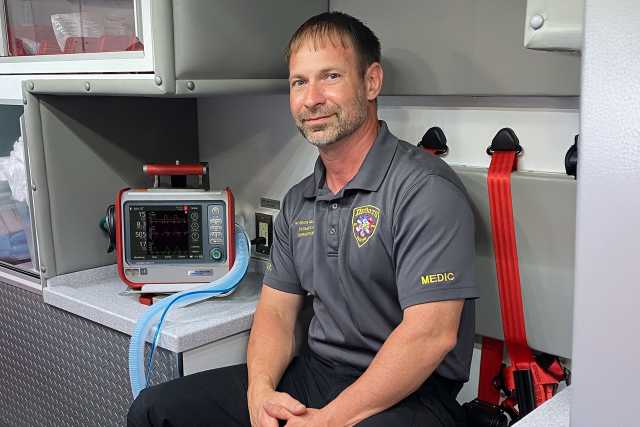
La disponibilidad de modos no invasivos del HAMILTON-T1 me han permitido evitar numerosas intubaciones, reducir los riesgos para los pacientes y mejorar los resultados. En mis 8 años de experiencia con el HAMILTON-T1, apenas he tenido que intubar a un paciente que cumplía los requisitos para NIV en el momento en que comencé a proporcionarle asistencia.

Gordon Miller

Supervisor y responsable de formación
DeSoto Parish EMS, Mansfield, LA, EE. UU.

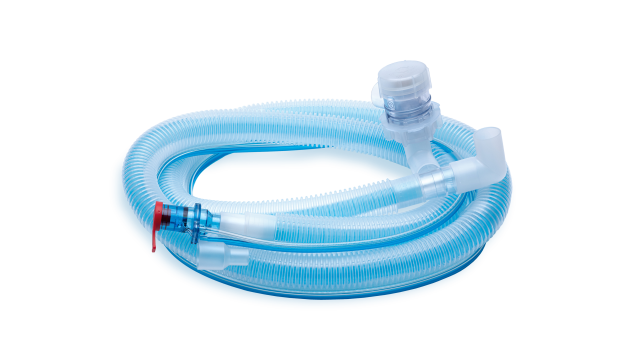
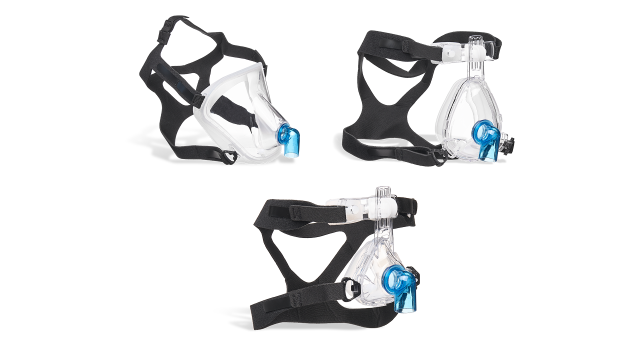
Material fungible práctico

El material fungible básico para el funcionamiento de su respirador

El material fungible básico de Hamilton Medical está diseñado para ofrecer un rendimiento óptimo en combinación con nuestros respiradores. Para garantizar la mayor satisfacción del usuario y la seguridad del paciente, hemos diseñado cada componente para ofrecer total facilidad de uso y cumplir en todo momento las normas de seguridad y calidad más exigentes.

Comience la formación sobre su respirador

""

¡Cójale el truco! Simulaciones y rutas de aprendizaje

El centro de aprendizaje del HAMILTON‑T1 ofrece rutas de aprendizaje fáciles de seguir para que conozca el funcionamiento del respirador y sus tecnologías lo más rápido posible.

Después, podrá evaluar las capacidades que haya adquirido en un entorno seguro con el modelo de paciente virtual de nuestra aplicación VenTrainer.

Nuestros servicios integrales

""

Listos cuando usted lo esté. Su aliado en la asistencia prehospitalaria durante los traslados

El equipo de asistencia prehospitalaria de Hamilton Medical se compromete a ofrecer servicios y asistencia integral de ventilación mecánica durante el transporte en entornos prehospitalarios.

EMS_Prehospital-team_Contact-us

¿Preguntas? Llámenos.

Nuestro equipo de atención prehospitalaria estará encantado de responder a sus preguntas y ofrecerle asesoramiento especializado.

Notas al pie

  • A. No disponible en todos los mercados
  • B. Opcional para el HAMILTON-T1
  • C. Traspaso de pacientes ventilados en helicópteros de servicios de emergencia médica (HEMS) a la sala de urgencias
  • a. Solo disponible para el HAMILTON-T1
  • b. Solo disponible para el HAMILTON-EM7
  • c. No disponible en todos los mercados

Referencias

  1. 1. Hilbert-Carius, P., Struck, M.F., Hofer, V. et al. Nutzung des Hubschrauber-Respirators vom Landeplatz zum Zielort im Krankenhaus. Notfall Rettungsmed 23, 106–112 (2020).
  2. 100. Dhand R. New frontiers in aerosol delivery during mechanical ventilation. Respir Care. 2004;49(6):666-677.
  3. 101. Del Rios M, Bartos JA, Panchal AR, Atkins DL, Cabanas JG, Cao D, Dainty KN, Dezfulian C, Donoghue AJ, Drennan IR, Elmer J, Hirsch KG, Idris AH, Joyner BL, Kamath-Rayne BD, Kleinman ME, Kurz MC, Lasa JJ, Lee HC, McBride ME, Raymond TT, Rittenberger, JC, Schexnayder SM, Szyld E, Topjian A, Wigginton JG, Previdi JK. Part 1: executive summary: 2025 American Heart Association Guidelines for Cardiopulmonary Resuscitation and Emergency Cardiovascular Care. Circulation. 2025;152(suppl):S284–S312. doi: 10.1161/CIR.0000000000001372
  4. 102. Greif R, Lauridsen KG, Djärv T, et al. European Resuscitation Council Guidelines 2025 Executive Summary. Resuscitation. 2025;215 Suppl 1:110770. doi:10.1016/j.resuscitation.2025.110770
  5. 103. Atakul G, Ceylan G, Sandal O, et al. Closed-loop oxygen usage during invasive mechanical ventilation of pediatric patients (CLOUDIMPP): a randomized controlled cross-over study. Front Med (Lausanne). 2024;11:1426969. Published 2024 Sep 10. doi:10.3389/fmed.2024.1426969
  6. 104. Trottier M, Bouchard PA, L'Her E, Lellouche F. Automated Oxygen Titration During CPAP and Noninvasive Ventilation in Healthy Subjects With Induced Hypoxemia. Respir Care. 2023;68(11):1553-1560. doi:10.4187/respcare.09866
  7. 105. Roca O, Caritg O, Santafé M, et al. Closed-loop oxygen control improves oxygen therapy in acute hypoxemic respiratory failure patients under high flow nasal oxygen: a randomized cross-over study (the HILOOP study). Crit Care. 2022;26(1):108. Published 2022 Apr 14. doi:10.1186/s13054-022-03970-w
  8. 106. Arnal JM, Garnero A, Novotni D, et al. Closed loop ventilation mode in Intensive Care Unit: a randomized controlled clinical trial comparing the numbers of manual ventilator setting changes. Minerva Anestesiol. 2018;84(1):58-67. doi:10.23736/S0375-9393.17.11963-2
  9. 107. Bialais E, Wittebole X, Vignaux L, et al. Closed-loop ventilation mode (IntelliVent®-ASV) in intensive care unit: a randomized trial. Minerva Anestesiol. 2016;82(6):657-668.
  10. 108. Blanch L, Romero PV, Lucangelo U. Volumetric capnography in the mechanically ventilated patient. Minerva Anestesiol. 2006;72(6):577-585.

Nutzung des Hubschrauber-Respirators vom Landeplatz zum Zielort im Krankenhaus Sekundäranalyse der HOVER-Umfrage zu beatmeten Notfallpatienten in der Luftrettung

Hilbert-Carius, P., Struck, M.F., Hofer, V. et al. Nutzung des Hubschrauber-Respirators vom Landeplatz zum Zielort im Krankenhaus. Notfall Rettungsmed 23, 106–112 (2020).

New frontiers in aerosol delivery during mechanical ventilation.

Dhand R. New frontiers in aerosol delivery during mechanical ventilation. Respir Care. 2004;49(6):666-677.

The scientific basis for inhalation therapy in mechanically-ventilated patients is now firmly established. A variety of new devices that deliver drugs to the lung with high efficiency could be employed for drug delivery during mechanical ventilation. Encapsulation of drugs within liposomes could increase the amount of drug delivered, prolong the effect of a dose, and minimize adverse effects. With improved inhalation devices and surfactant formulations, inhaled surfactant could be employed for several indications in mechanically-ventilated patients. Research is unraveling the causes of some disorders that have been poorly understood, and our improved understanding of the causal mechanisms of various respiratory disorders will provide new applications for inhaled therapies.

2025 American Heart Association Guidelines for Cardiopulmonary Resuscitation and Emergency Cardiovascular Care

Del Rios M, Bartos JA, Panchal AR, Atkins DL, Cabanas JG, Cao D, Dainty KN, Dezfulian C, Donoghue AJ, Drennan IR, Elmer J, Hirsch KG, Idris AH, Joyner BL, Kamath-Rayne BD, Kleinman ME, Kurz MC, Lasa JJ, Lee HC, McBride ME, Raymond TT, Rittenberger, JC, Schexnayder SM, Szyld E, Topjian A, Wigginton JG, Previdi JK. Part 1: executive summary: 2025 American Heart Association Guidelines for Cardiopulmonary Resuscitation and Emergency Cardiovascular Care. Circulation. 2025;152(suppl):S284–S312. doi: 10.1161/CIR.0000000000001372

European Resuscitation Council Guidelines 2025 Executive Summary.

Greif R, Lauridsen KG, Djärv T, et al. European Resuscitation Council Guidelines 2025 Executive Summary. Resuscitation. 2025;215 Suppl 1:110770. doi:10.1016/j.resuscitation.2025.110770

The 2025 European Resuscitation Council (ERC) Guidelines present the most up-to-date evidence-based guidelines for the practice of resuscitation across Europe. The ERC Guidelines 2025 are based on evidence produced by the International Liaison Committee on Resuscitation (ILCOR) in the form of systematic reviews, scoping reviews, and evidence updates, published as the ILCOR Consensus on Science with Treatment Recommendations. The certainty of evidence of these ILCOR treatment recommendations was used to issue the ERC Guidelines 2025 Recommendations. In some cases, the ERC made good practice statements when evidence was absent for certain topics. If no ILCOR review was available, the ERC writing groups conducted their own reviews to provide recommendations. The ERC Guidelines 2025 cover the epidemiology of cardiac arrest, the role that systems play in saving lives, adult basic life support, adult advanced life support, resuscitation in special circumstances, post resuscitation care, newborn resuscitation and support of transition of infants at birth, paediatric basic and advanced life support, resuscitation ethics, education for resuscitation, and first aid. These guidelines are a framework of recommendations for the approach to out-of-hospital and in-hospital resuscitation; the implementation is achieved locally taking local legislation and health care regulations into consideration.

Closed-loop oxygen usage during invasive mechanical ventilation of pediatric patients (CLOUDIMPP): a randomized controlled cross-over study.

Atakul G, Ceylan G, Sandal O, et al. Closed-loop oxygen usage during invasive mechanical ventilation of pediatric patients (CLOUDIMPP): a randomized controlled cross-over study. Front Med (Lausanne). 2024;11:1426969. Published 2024 Sep 10. doi:10.3389/fmed.2024.1426969

BACKGROUND The aim of this study is the evaluation of a closed-loop oxygen control system in pediatric patients undergoing invasive mechanical ventilation (IMV). METHODS Cross-over, multicenter, randomized, single-blind clinical trial. Patients between the ages of 1 month and 18 years who were undergoing IMV therapy for acute hypoxemic respiratory failure (AHRF) were assigned at random to either begin with a 2-hour period of closed-loop oxygen control or manual oxygen titrations. By using closed-loop oxygen control, the patients' SpO2 levels were maintained within a predetermined target range by the automated adjustment of the FiO2. During the manual oxygen titration phase of the trial, healthcare professionals at the bedside made manual changes to the FiO2, while maintaining the same target range for SpO2. Following either period, the patient transitioned to the alternative therapy. The outcomes were the percentage of time spent in predefined SpO2 ranges ±2% (primary), FiO2, total oxygen use, and the number of manual adjustments. FINDINGS The median age of included 33 patients was 17 (13-55.5) months. In contrast to manual oxygen titrations, patients spent a greater proportion of time within a predefined optimal SpO2 range when the closed-loop oxygen controller was enabled (95.7% [IQR 92.1-100%] vs. 65.6% [IQR 41.6-82.5%]), mean difference 33.4% [95%-CI 24.5-42%]; P < 0.001). Median FiO2 was lower (32.1% [IQR 23.9-54.1%] vs. 40.6% [IQR 31.1-62.8%]; P < 0.001) similar to total oxygen use (19.8 L/h [IQR 4.6-64.8] vs. 39.4 L/h [IQR 16.8-79]; P < 0.001); however, median SpO2/FiO2 was higher (329.4 [IQR 180-411.1] vs. 246.7 [IQR 151.1-320.5]; P < 0.001) with closed-loop oxygen control. With closed-loop oxygen control, the median number of manual adjustments reduced (0.0 [IQR 0.0-0.0] vs. 1 [IQR 0.0-2.2]; P < 0.001). CONCLUSION Closed-loop oxygen control enhances oxygen therapy in pediatric patients undergoing IMV for AHRF, potentially leading to more efficient utilization of oxygen. This technology also decreases the necessity for manual adjustments, which could reduce the workloads of healthcare providers. CLINICAL TRIAL REGISTRATION This research has been submitted to ClinicalTrials.gov (NCT05714527).

Automated Oxygen Titration During CPAP and Noninvasive Ventilation in Healthy Subjects With Induced Hypoxemia.

Trottier M, Bouchard PA, L'Her E, Lellouche F. Automated Oxygen Titration During CPAP and Noninvasive Ventilation in Healthy Subjects With Induced Hypoxemia. Respir Care. 2023;68(11):1553-1560. doi:10.4187/respcare.09866

BACKGROUND Automated oxygen titration to maintain a stable SpO2 has been developed for spontaneously breathing patients but has not been evaluated during CPAP and noninvasive ventilation (NIV). METHODS We performed a randomized controlled crossover, double-blind study on 10 healthy subjects with induced hypoxemia during 3 situations: spontaneous breathing with oxygen support, CPAP (5 cm H2O), and NIV (7/3 cm H2O). We conducted in random order 3 dynamic hypoxic challenges of 5 min (FIO2 0.08 ± 0.02, 0.11± 0.02, and 0.14 ± 0.02). For each condition, we compared automated oxygen titration and manual oxygen titration by experienced respiratory therapists (RTs), with the aim to maintain the SpO2 at 94 ± 2%. In addition, we included 2 subjects hospitalized for exacerbation of COPD under NIV and a subject managed after bariatric surgery with CPAP and automated oxygen titration. RESULTS The percentage of time in the SpO2 target was higher with automated compared with manual oxygen titration for all conditions, on average 59.6 ± 22.8% compared to 44.3 ± 23.9% (P = .004). Hyperoxemia (SpO2 > 96%) was less frequent with automated titration for each mode of oxygen administration (24.0 ± 24.4% vs 39.1 ± 25.3%, P < .001). During the manual titration periods, the RT made several changes to oxygen flow (5.1 ± 3.3 interventions that lasted 122 ± 70 s/period) compared to none during the automated titration to maintain oxygenation in the targeted SpO2 . Time in the SpO2 target was higher with stable hospitalized subjects in comparison with healthy subjects under dynamic-induced hypoxemia. CONCLUSIONS In this proof-of-concept study, automated oxygen titration was used during CPAP and NIV. The performances to maintain the SpO2 target were significantly better compared to manual oxygen titration in the setting of this study protocol. This technology may allow decreasing the number of manual interventions for oxygen titration during CPAP and NIV.

Closed-loop oxygen control improves oxygen therapy in acute hypoxemic respiratory failure patients under high flow nasal oxygen: a randomized cross-over study (the HILOOP study).

Roca O, Caritg O, Santafé M, et al. Closed-loop oxygen control improves oxygen therapy in acute hypoxemic respiratory failure patients under high flow nasal oxygen: a randomized cross-over study (the HILOOP study). Crit Care. 2022;26(1):108. Published 2022 Apr 14. doi:10.1186/s13054-022-03970-w

BACKGROUND We aimed to assess the efficacy of a closed-loop oxygen control in critically ill patients with moderate to severe acute hypoxemic respiratory failure (AHRF) treated with high flow nasal oxygen (HFNO). METHODS In this single-centre, single-blinded, randomized crossover study, adult patients with moderate to severe AHRF who were treated with HFNO (flow rate ≥ 40 L/min with FiO2 ≥ 0.30) were randomly assigned to start with a 4-h period of closed-loop oxygen control or 4-h period of manual oxygen titration, after which each patient was switched to the alternate therapy. The primary outcome was the percentage of time spent in the individualized optimal SpO2 range. RESULTS Forty-five patients were included. Patients spent more time in the optimal SpO2 range with closed-loop oxygen control compared with manual titrations of oxygen (96.5 [93.5 to 98.9] % vs. 89 [77.4 to 95.9] %; p < 0.0001) (difference estimate, 10.4 (95% confidence interval 5.2 to 17.2). Patients spent less time in the suboptimal range during closed-loop oxygen control, both above and below the cut-offs of the optimal SpO2 range, and less time above the suboptimal range. Fewer number of manual adjustments per hour were needed with closed-loop oxygen control. The number of events of SpO2 < 88% and < 85% were not significantly different between groups. CONCLUSIONS Closed-loop oxygen control improves oxygen administration in patients with moderate-to-severe AHRF treated with HFNO, increasing the percentage of time in the optimal oxygenation range and decreasing the workload of healthcare personnel. These results are especially relevant in a context of limited oxygen supply and high medical demand, such as the COVID-19 pandemic. Trial registration The HILOOP study was registered at www. CLINICALTRIALS gov under the identifier NCT04965844 .

Closed loop ventilation mode in Intensive Care Unit: a randomized controlled clinical trial comparing the numbers of manual ventilator setting changes.

Arnal JM, Garnero A, Novotni D, et al. Closed loop ventilation mode in Intensive Care Unit: a randomized controlled clinical trial comparing the numbers of manual ventilator setting changes. Minerva Anestesiol. 2018;84(1):58-67. doi:10.23736/S0375-9393.17.11963-2

BACKGROUND There is an equipoise regarding closed-loop ventilation modes and the ability to reduce workload for providers. On one hand some settings are managed by the ventilator but on another hand the automatic mode introduces new settings for the user. METHODS This randomized controlled trial compared the number of manual ventilator setting changes between a full closed loop ventilation and oxygenation mode (INTELLiVENT-ASV®) and conventional ventilation modes (volume assist control and pressure support) in Intensive Care Unit (ICU) patients. The secondary endpoints were to compare the number of arterial blood gas analysis, the sedation dose and the user acceptance. Sixty subjects with an expected duration of mechanical ventilation of at least 48 hours were randomized to be ventilated using INTELLiVENT-ASV® or conventional modes with a protocolized weaning. All manual ventilator setting changes were recorded continuously from inclusion to successful extubation or death. Arterial blood gases were performed upon decision of the clinician in charge. User acceptance score was assessed for nurses and physicians once daily using a Likert Scale. RESULTS The number of manual ventilator setting changes per 24 h-period per subject was lower in INTELLiVENT-ASV® as compared to conventional ventilation group (5 [4-7] versus 10 [7-17]) manuals settings per subject per day [P<0.001]). The number of arterial blood gas analysis and the sedation doses were not significantly different between the groups. Nurses and physicians reported that INTELLiVENT-ASV® was significantly easier to use as compared to conventional ventilation (P<0.001 for nurses and P<0.01 for physicians). CONCLUSIONS For mechanically ventilated ICU patients, INTELLiVENT-ASV® significantly reduces the number of manual ventilator setting changes with the same number of arterial blood gas analysis and sedation dose, and is easier to use for the caregivers as compared to conventional ventilation modes.

Closed-loop ventilation mode (IntelliVent®-ASV) in intensive care unit: a randomized trial.

Bialais E, Wittebole X, Vignaux L, et al. Closed-loop ventilation mode (IntelliVent®-ASV) in intensive care unit: a randomized trial. Minerva Anestesiol. 2016;82(6):657-668.

BACKGROUND Closed-loop modes automatically adjust ventilation settings, delivering individualized ventilation over short periods of time. The objective of this randomized controlled trial was to compare safety, efficacy and workload for the health care team between IntelliVent®-ASV and conventional modes over a 48-hour period. METHODS ICU patients admitted with an expected duration of mechanical ventilation of more than 48 hours were randomized to IntelliVent®-ASV or conventional ventilation modes. All ventilation parameters were recorded breath-by-breath. The number of manual adjustments assesses workload for the healthcare team. Safety and efficacy were assessed by calculating the time spent within previously defined ranges of non-optimal and optimal ventilation, respectively. RESULTS Eighty patients were analyzed. The median values of ventilation parameters over 48 hours were similar in both groups except for PEEP (7[4] cmH2O versus 6[3] cmH2O with IntelliVent®-ASV and conventional ventilation, respectively, P=0.028) and PETCO2 (36±7 mmHg with IntelliVent®-ASV versus 40±8 mmHg with conventional ventilation, P=0.041). Safety was similar between IntelliVent®-ASV and conventional ventilation for all parameters except for PMAX, which was more often non-optimal with IntelliVent®-ASV (P=0.001). Efficacy was comparable between the 2 ventilation strategies, except for SpO2 and VT, which were more often optimal with IntelliVent®-ASV (P=0.005, P=0.016, respectively). IntelliVent®-ASV required less manual adjustments than conventional ventilation (P<0.001) for a higher total number of adjustments (P<0.001). The coefficient of variation over 48 hours was larger with IntelliVent®-ASV in regard of maximum pressure, inspiratory pressure (PINSP), and PEEP as compared to conventional ventilation. CONCLUSIONS IntelliVent®-ASV required less manual intervention and delivered more variable PEEP and PINSP, while delivering ventilation safe and effective ventilation in terms of VT, RR, SpO2 and PETCO2.

Volumetric capnography in the mechanically ventilated patient.

Blanch L, Romero PV, Lucangelo U. Volumetric capnography in the mechanically ventilated patient. Minerva Anestesiol. 2006;72(6):577-585.

Expiratory capnogram provides qualitative information on the waveform patterns associated with mechanical ventilation and quantitative estimation of expired CO2. Volumetric capnography simultaneously measures expired CO2 and tidal volume and allows identification of CO2 from 3 sequential lung compartments: apparatus and anatomic dead space, from progressive emptying of alveoli and alveolar gas. Lung heterogeneity creates regional differences in CO2 concentration and sequential emptying contributes to the rise of the alveolar plateau and to the steeper the expired CO2 slope. The concept of dead space accounts for those lung areas that are ventilated but not perfused. In patients with sudden pulmonary vascular occlusion due to pulmonary embolism, the resultant high V/Q mismatch produces an increase in alveolar dead space. Calculations derived from volumetric capnography are useful to suspect pulmonary embolism at the bedside. Alveolar dead space is large in acute lung injury and when the effect of positive end-expiratory pressure (PEEP) is to recruit collapsed lung units resulting in an improvement of oxygenation, alveolar dead space may decrease, whereas PEEP-induced overdistension tends to increase alveolar dead space. Finally, measurement of physiologic dead space and alveolar ejection volume at admission or the trend during the first 48 hours of mechanical ventilation might provide useful information on outcome of critically ill patients with acute lung injury or acute respiratory distress syndrome.